


For people learning German and planning to take a language certificate exam, familiarizing themselves with the ECL exam before the official test is an essential preparation step. In particular, for those aiming for B1 level, understanding the ECL B1 sample test structure will make the preparation process more focused. In addition to sample tests, choosing suitable ECL exam preparation materials also plays an important role. An effective study plan should combine strengthening German knowledge, practicing each skill, and completing practice tests under conditions similar to the actual exam.
What Is the ECL Exam? Why Should You Practice Before Taking It?
ECL practice tests help learners become familiar with the exam
ECL practice tests can be used as a training tool to help learners better understand the requirements of the exam. By completing practice tests, you can identify what types of content you need to handle, assess your current German proficiency, and determine which skills need improvement.
Practicing with tests also helps learners develop the habit of completing tasks within a time limit. This is important because during the actual exam, understanding the knowledge alone is not enough. Candidates must also know how to read the instructions, identify the information they need to find, and complete the tasks within the allotted time.
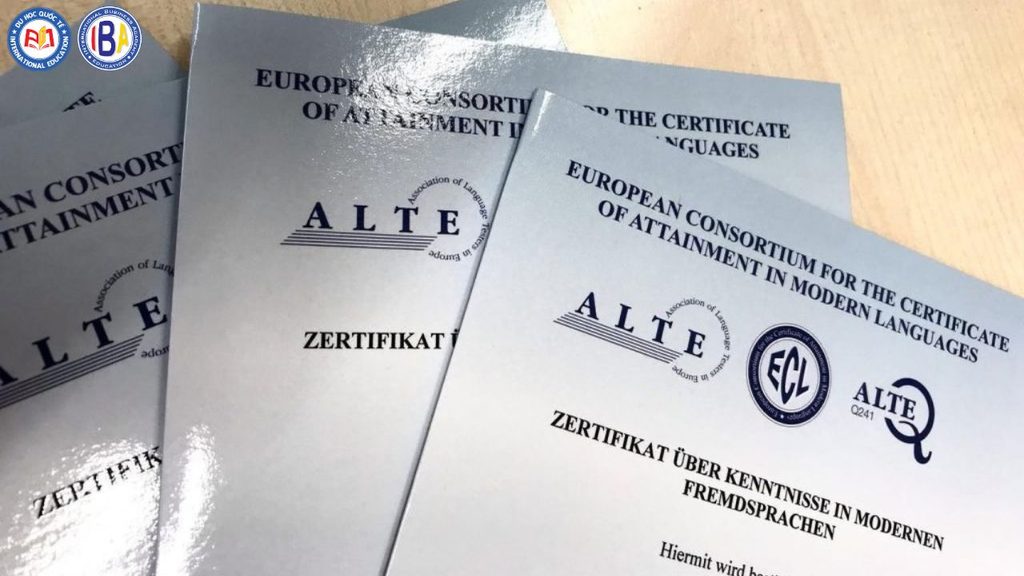
Who should practice ECL B1 tests?
Those preparing to take the B1-level exam should start working on sample tests after developing a certain foundation in vocabulary and grammar. This may include people learning German for study, overseas study, vocational study, or work.
If you have just started learning German, you should not immediately do practice tests continuously. In the initial stage, focus on building a solid foundation. Once your knowledge is relatively stable, practicing with tests will be more effective.
How is test practice different from learning German?
Learning German focuses on building knowledge and language-use ability. In contrast, test practice focuses on applying what you have learned to solve specific tasks.
For example, you may know a grammatical structure but still take a long time when encountering a question in an exam. Test practice helps you turn knowledge into task-solving skills while also identifying mistakes you frequently make.
What Sections Are Included in the ECL B1 Sample Test Structure?
To prepare effectively, learners need to understand the ECL B1 sample test structure and the objective of each skill. Understanding the structure does not mean memorizing the test; it helps you know which abilities you need to prepare.
Reading comprehension in the ECL B1 sample test
Reading comprehension requires learners to process information in German and identify content that matches the requirements of the task.
When practicing reading, you should focus on the ability to:
- Identify the main idea of the text.
- Find specific information.
- Identify keywords.
- Understand the relationships between ideas.
- Infer information based on context.
A common mistake is trying to translate every sentence into Vietnamese before answering. This approach can easily cause you to waste a lot of time. Instead, read the questions first, identify the information you need to find, and then return to the text to look for relevant words or phrases.
With the ECL B1 sample test structure, reading practice should be carried out regularly using familiar topics such as work, study, family, health, shopping, travel, and everyday life.

What should you prepare for the listening comprehension section?
Listening comprehension is a skill that needs regular practice because listening ability cannot be improved simply by studying vocabulary on paper.
When doing the listening section, you should pay attention to:
- Who is speaking?
- What topic is being discussed?
- What information does the speaker want to convey?
- Where are the time, place, or numbers mentioned?
- Does the speaker agree, disagree, or express an opinion?
Before listening, quickly read the questions and identify the information you need to pay attention to. If you miss a detail, do not stop for too long to think about it because you may continue missing the information that follows.
The writing section of the B1 exam
The writing skill requires learners to express ideas in German clearly, logically, and in accordance with the task requirements.
When practicing writing, pay attention to three main parts:
Introduction: Introduce the topic or purpose of the writing.
Body: Develop the required ideas and provide appropriate reasons, information, or opinions.
Conclusion: Summarize or provide a final comment.
In addition to content, learners also need to check grammar, spelling, verb conjugation, articles, noun gender, and the use of linking words.
Do not memorize a single essay and apply it to every task. A more effective approach is to practice multiple topics so that you have the ability to change the content according to actual requirements.
The speaking section requires reflex training
The speaking section requires learners to use German to present ideas and interact. Therefore, simply memorizing vocabulary or sentence structures is not enough.
You should practice situations such as:
- Self-introduction.
- Talking about your family.
- Talking about work or study.
- Describing a topic.
- Expressing a personal opinion.
- Agreeing or disagreeing with a viewpoint.
- Exchanging information with your conversation partner.
When practicing speaking according to the ECL B1 sample test structure, focus on natural expression and connecting ideas. If you forget a word, learn to rephrase it using simpler words instead of stopping the conversation completely.

Summary table of skills to practice
| Skill | Focus areas | Practice method |
|---|---|---|
| Reading | Main ideas, detailed information | Read texts by topic |
| Listen to | Keywords, important information | Listen to audio regularly |
| 30 – 35 | Structure, grammar, linking words | Write by topic |
| Speaking | Reflexes, expression, interaction | Practicing speaking regularly |
Common Task Types When Practicing for the ECL B1 Exam
Reading tasks and how to identify keywords
When doing the reading section, do not start by translating the entire text. Look at the questions first to know what information you need to find.
Then identify the important keywords and find the corresponding content in the text. In many cases, the answer does not repeat the exact wording from the text but is expressed using synonyms.
Listening tasks and how to retain information
For the listening section, focus on the content rather than trying to understand every word.
You can practice by listening to an audio clip several times:
- First listening: understand the topic.
- Second listening: identify the main information.
- Third listening: check the parts that were not clear.
- Then review the vocabulary and pronunciation.
This method helps listening ability improve more steadily than simply listening once and moving on to new content.
Writing tasks and how to develop ideas
Before writing, spend a short amount of time carefully reading the requirements and creating an outline. This helps limit rambling and prevent you from leaving out important points.
You should also prepare a group of commonly used linking words, such as words expressing cause, result, addition, contrast, or sequence.
Speaking tasks and how to improve reflexes
One effective method is to practice speaking aloud instead of only thinking about the answer in your head.
You can choose a topic, spend some time preparing, and then present it yourself. Afterwards, listen to your recording to check pronunciation, grammar, and places where you hesitate.
How to Prepare Effectively for the ECL B1 Exam
Assess your level before starting
Before using ECL practice tests for preparation, you should take a level assessment. The purpose is not to get a high score immediately but to identify where you are weak.
If your reading is good but your listening is weak, spend more time on listening. If your vocabulary is good but your writing is not coherent, increase your writing practice instead of simply continuing to learn more new words.
Allocate study time to each skill
A balanced study schedule can allocate relatively equal amounts of time to the four skills. However, if one skill is clearly weaker, you can spend more time on that area.
For example, one study session can combine:
- Reviewing vocabulary and grammar.
- Practicing listening.
- Doing reading exercises.
- Writing a paragraph on a topic.
- Practicing speaking for a short period.
The important thing is to practice consistently rather than studying too much for a few days and then taking long breaks.
Practice tests in stages
The preparation process can be divided into four stages.
Stage 1 – Familiarization: Learn about the task types and requirements of each skill.
Stage 2 – Skill-by-skill practice: Complete separate exercises for listening, speaking, reading, and writing.
Stage 3 – Complete practice tests: Take the test under conditions similar to the actual exam.
Stage 4 – Error analysis: Record mistakes, identify their causes, and practice the areas that need improvement.
This approach is more effective than completing dozens of tests while only checking whether the answers are right or wrong.
Common mistakes when practicing tests
Some learners complete many practice tests but see no improvement in their results. The cause often lies in the way they practice.
You should avoid:
- Doing tests without reviewing your answers.
- Only checking the answers without identifying the reasons for mistakes.
- Memorizing answers.
- Ignoring the speaking section.
- Not practicing writing.
- Not setting a time limit.
- Only studying question types you have already encountered.
The goal of test practice is to improve your ability to handle new situations, not to memorize a fixed set of answers.
What ECL Exam Preparation Materials Should You Prepare?
ECL exam preparation materials for listening
For listening, choose audio materials appropriate for B1 level and containing content close to real-life situations.
You can combine textbooks, listening practice audio, conversations, and German-language content appropriate for your level. When listening, do not focus only on understanding everything; instead, concentrate on recognizing important information.
Reading materials at B1 level
Reading materials should be organized by topic so that you can improve reading comprehension while expanding your vocabulary.
You can start with familiar topics and gradually increase the difficulty. After each reading, record new words and make sentences with words that are likely to be used frequently.
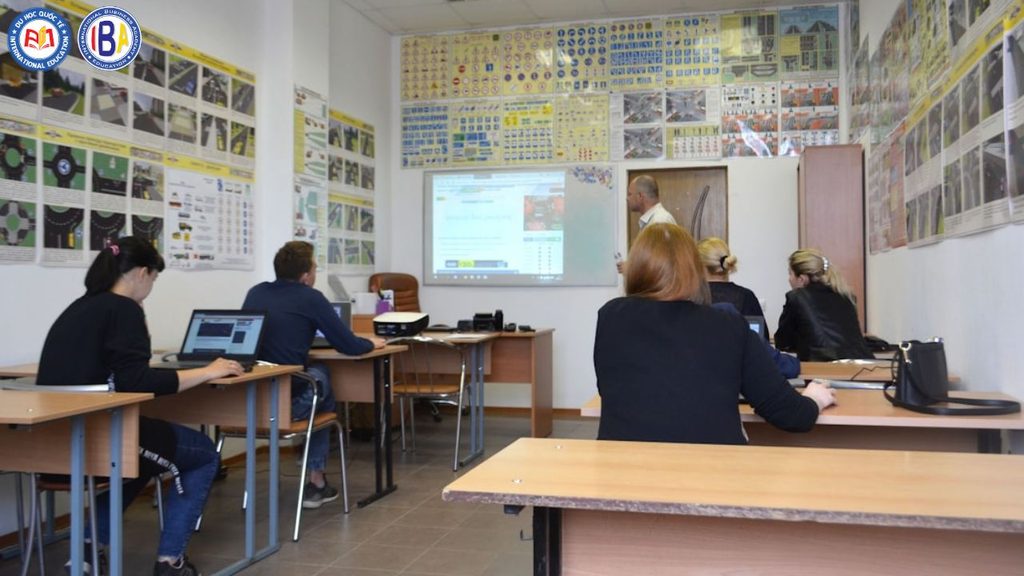
Writing and speaking practice materials
For writing, prepare a list of topics and practice developing an essay for each topic. After each piece, check grammar mistakes and wording.
For speaking, you can use topic-based question sets and then record yourself presenting the answers. If you have a teacher or study partner, practicing conversations will help improve your reflexes.
Should you use sample tests as ECL exam preparation materials?
Yes. ECL exam preparation materials should include sample tests so that learners can become familiar with the structure and requirements of the exam.
However, sample tests should not be the only learning resource. If you only do practice tests without supplementing vocabulary, grammar, and communication skills, you may have difficulty when the exam changes its topics or question formats.
How should you learn vocabulary to support test practice?
Instead of learning isolated word lists, learn vocabulary by topic and in phrases. For example, when studying the topic of work, combine nouns, verbs, and expressions that commonly appear in the same context.
After learning new words, use them in spoken sentences or written paragraphs. Putting vocabulary into practice will help you remember it longer and apply it more easily when doing exercises.
How to Take the ECL B1 Exam Efficiently to Optimize Your Time
Read the instructions carefully before answering
Some mistakes do not result from a lack of knowledge but from misunderstanding the requirements. Therefore, before answering, take time to read the task carefully and determine exactly what you need to do.
Do not spend too much time on one question
If you encounter a difficult question, mark it and move on to the next section if the exam conditions allow. Spending too much time on one question may leave you without enough time to complete the remaining sections.
Review the writing section
After completing the writing task, take time to check:
- Are the verbs conjugated correctly?
- Are the nouns capitalized?
- Are the articles appropriate?
- Does each sentence have all the necessary components?
- Are there any spelling mistakes?
- Are all the ideas included?
This is a simple step, but it can help you identify many avoidable mistakes.
Record mistakes after each practice session
You should create a personal error log to track your learning progress.
| Error category | Example cause | Improvement direction |
|---|---|---|
| Vocabulary | Cannot remember words | Review by topic |
| Grammar | Confuse structures | Do supplementary exercises |
| Listen to | Cannot catch keywords | Practice listening regularly |
| 30 – 35 | Missing ideas | Create an outline beforehand |
| Speaking | Slow reflexes | Practice speaking aloud |
After a few weeks, the error log will help you identify which problems occur most frequently and adjust your study plan.
Important Notes When Using ECL Practice Tests for Preparation
Do not memorize answers
The purpose of ECL practice tests is to help you become familiar with task types and develop your ability to apply knowledge. If you only memorize the answers to sample tests, you will have difficulty handling different content or question formats.
Do not neglect speaking and writing skills
These are two skills that require practical practice over time. Reading a lot of materials can help expand your vocabulary, but it cannot replace practicing speaking and writing.
Combine sample tests with supplementary materials
An effective study plan should combine ECL exam preparation materials with sample tests, textbooks, and skill-building exercises.
You can use tests to assess your abilities and then return to study materials to strengthen areas where your knowledge is weak. As you improve, gradually increase the number of complete practice tests.
Assess your level before registering for the exam
Do not rely only on your personal feelings to decide whether you are ready. Try taking several tests under time-limited conditions and track your results over multiple attempts.
If your results are not yet stable, spend more time strengthening your knowledge before taking the official exam.

Frequently Asked Questions About the ECL Exam
Is the ECL B1 exam difficult?
The difficulty level depends on each person's German foundation and ability to apply their knowledge. People with good vocabulary, grammar, and communication skills generally adapt more easily to the task types.
What sections are included in the ECL B1 sample test structure?
Learners need to prepare listening, speaking, reading, and writing skills. During preparation, you should learn about the specific requirements of the exam and consult official materials available at the time of registration to keep the information accurate and up to date.
Can I prepare by myself using sample tests?
Yes. However, you should combine the ECL B1 sample tests with suitable textbooks and ECL exam preparation materials. If you only do practice tests without strengthening your foundational knowledge, the effectiveness will be limited.
When should I start practicing with tests?
You can take practice tests after developing a certain foundation. During the initial stage, prioritize learning knowledge and practicing each skill. Once you are familiar with the B1 level, you can move on to complete practice tests.
Does doing many practice tests guarantee good results?
No. More important than the number of tests is the ability to analyze and correct mistakes. After each test, identify why you made mistakes and what you can do to avoid repeating them.
How should I choose ECL exam preparation materials?
Prioritize materials that match your level, have clear content, cover all skills, and include practical exercises. For listening, choose materials with audio; for writing and speaking, choose materials with topics and guidance on how to develop responses.
Conclusion
Practicing ECL tests before the official exam helps learners understand the task types, manage their time proactively, and assess their abilities more accurately. For B1 level, understanding the ECL B1 sample test structure is the foundation for building a suitable preparation plan for each skill.
In addition to sample tests, you should combine ECL exam preparation materials with textbooks and listening, reading, writing, and speaking exercises. Most importantly, after each practice test, take time to analyze your mistakes and strengthen weak areas of knowledge instead of simply checking the answers.
If you are looking for a structured German learning pathway and need guidance throughout your preparation, PDT Education can accompany you in developing a study plan that suits your goals. You can learn more about the training programs and German learning pathways at PDT Education.