

What Are the Requirements for Studying Abroad in Germany? Practical PDT Experiences
Studying in Germany is not just a dream of a quality education but also a journey that requires careful preparation in many aspects. This article carries a calm tone, sharing practical information and experiences distilled from actual work with many young people and families in Vietnam, from the unit PDT International Education. You will see clearly the necessary conditions, the choice of educational paths, and the accompanying challenges to be able to plan reasonably.
1) Requirements and paths to Germany: University or vocational training (Ausbildung)
Germany has many opportunities for students and young workers, but the requirements for each path will be different. Understanding the differences helps you avoid missed plans and save time. Here are the core points that many of you need to grasp before deciding.
Requirements for university study in Germany
- Possess an equivalent high school diploma or a recognized Hochschulzugangsberechtigung (HZB) in Germany. At many schools, your application will need to be reviewed by Uni-Assist or the corresponding admission authority.
- Language certification suitable for the program. German-taught programs usually require DSH or TestDaF at an equivalent level; for English-taught programs, you need IELTS/TOEFL and may have to provide proof of English proficiency from a Vietnamese university.
- The application file includes transcripts, academic records, language certificates, CV, letter of motivation (Motivationsschreiben), and recommendation letters (if any). Some schools also require interviews or specific essays for each program.
- The application process can start the year before the course begins and sometimes requires going through Uni-Assist or local admission authorities.
- Preliminary financial requirements to prove you have enough for living expenses and tuition (many cases offer free tuition but you must have living capital for at least one year). Typically, financial proof is considered a crucial part of the visa application.

One point to note is that quite a few programs in Germany currently offer instruction in English. However, even when participating in an English program, you are still encouraged to improve your German to have easier internship and job opportunities after graduation. In practice, many students find that the flexibility of the German labor market comes from the ability to communicate in basic German and an understanding of German work culture.
Requirements for vocational training (Ausbildung) in Germany
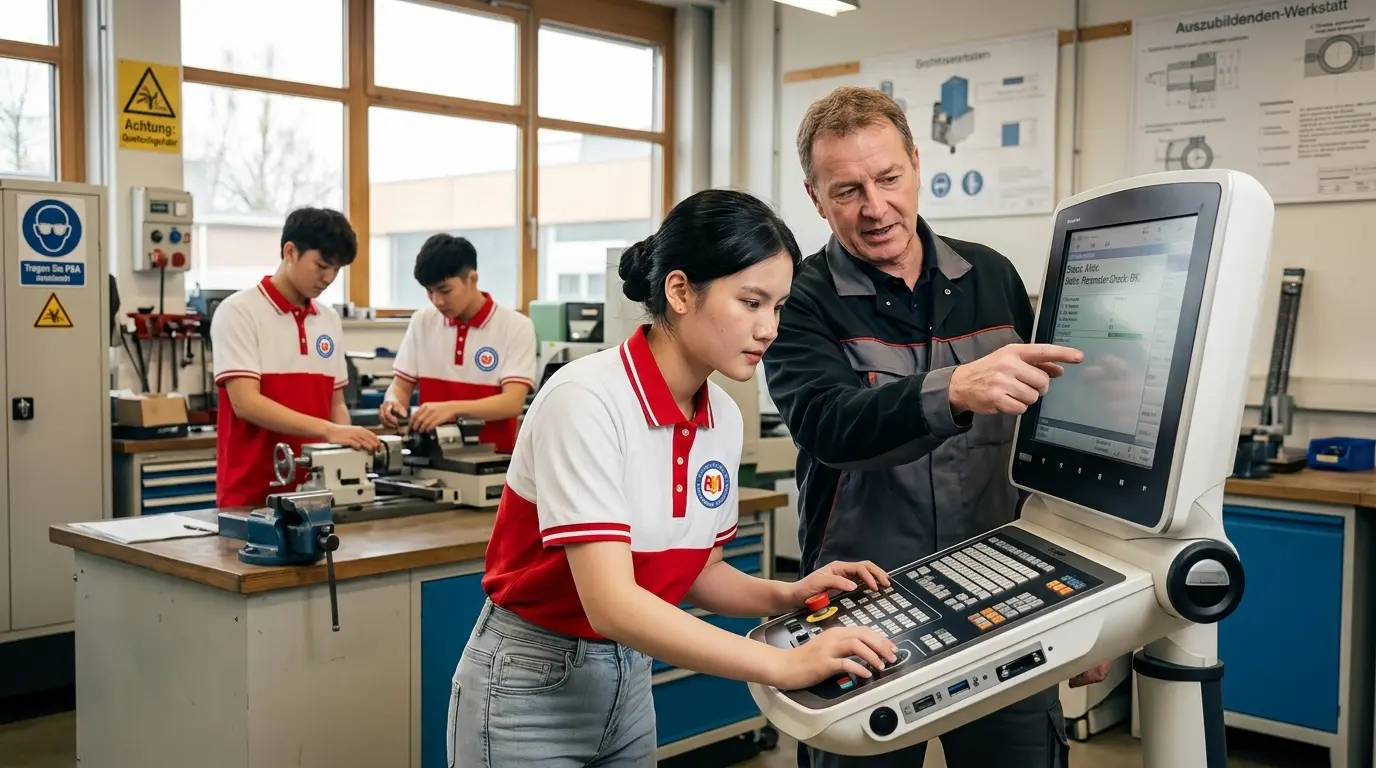
For career choices, Germany has the Ausbildung system, which combines learning at a vocational school (Berufsschule) and working at a partner company. This path provides a paid opportunity and can lead to signing a long-term employment contract after completing the program.
- German at a minimum level of B1-B2 is a common requirement to be able to hear and understand work instructions, communicate with colleagues, and participate in lectures at the Berufsschule. In some technical and craft industries, employers may require higher levels or additional specialized German courses.
- Employers, when accepting you into an Ausbildung, will provide an internship salary and arrange time for classes at the vocational school. Vocational training usually lasts from 2-3 years depending on the profession and the regulations of each state.
- The application includes a German CV, language certificates (usually B1-B2), recommendation letters, along with relevant degrees or training certificates in Vietnam. Proving practical capacity or certain experience can be an advantage during the interview round.
- The application process usually begins several months before you plan to start the Ausbildung. Some professions will require early recruitment and have interview rounds with partner companies.
Unlike the form of university study in many other countries, Ausbildung focuses on you both learning in class and having practical work time at the enterprise. This provides the advantage that you have an income, have work experience early on, and have the potential for faster advancement after graduation.
2) Practical PDT Experiences: Roadmap, challenges, and student stories
In practical work with many young people and families in Vietnam, we have noticed some common challenges but also many opportunities if clearly planned. Below is content distilled from successful applications and discussions with students in 2024.
Reference roadmap and practical lessons
| Stage | Typical time | Tasks and notes |
|---|---|---|
| Kick-off and goal setting | 2-6 weeks | Clearly define between the university path or Ausbildung; confirm priority industries |
| Foundational German and English | 6-9 months | Set goals to reach level B1-B2 or equivalent for German; can start English if needed for English programs |
| Prepare application and research programs | 1-3 months | Collect transcripts, certificates, CV, motivation letter; contact recruitment partners or companies to understand requirements |
| Application submission and interview | 2-4 months | Complete the application as required, perform interviews and/or essays as required by each program |
| Visa application and financial arrangement | 3-5 months | Prepare financial proof, health insurance, accommodation, and living plan in Germany |
| Arrival in Germany and integration | 1-2 months after visa issuance | Arrive at residence, participate in supplementary German courses (if needed), get used to the environment and work culture |
According to 2024 data from the unit, more than 70% of students achieved their short-term goals after 6-12 months, including obtaining a suitable study spot or internship recruitment. In other words, a large portion of young people, after careful step-by-step preparation, were able to confidently prepare for their journey.

Benefits and challenges
- Benefits: Have income during the study process, job opportunities right in Germany after completing the program, and conditions to join a large professional network.
- Challenges: Requirement for German and a stable language foundation; understanding visa and financial regulations; balancing study and work, especially when you do not have relatives in Germany.
- Solution/Reality: Start nurturing German from Vietnam with foundational courses before going to Germany; accumulate records and participate in program introduction sessions early to grasp application and interview times; calculate costs and have backup financial sources.
Student story: Ha Anh and the heartwarming journey from Vietnam to Germany
Ha Anh, 23 years old, from Hai Phong, shared her story as a journey that began with 6 months of German training at a center in Hanoi. After achieving the desired B1 and B2 levels, Anh decided to follow the Ausbildung path in the automotive repair industry at a company in Dresden. The process of searching for a partner company was not always smooth; Anh had to participate in 4 interview rounds and submit many personal introduction pieces, but thanks to perseverance and careful preparation, Anh received a paid training contract and began her journey in Germany in September of last year.
During the registration and visa application process, Anh encountered some difficulties such as proving financial resources and health insurance requirements. The consulting team at the unit supported her in drafting a financial plan, listing living costs in Dresden, and providing suggestions for suitable health insurance for foreigners. After getting the visa, Anh set off and is currently living in a shared apartment with several other students. Every afternoon, Anh spends time on her vocational course and internship work; additionally, she received an advancement opportunity when completing the course and was hired by the company as an assembly worker in a large project in an industrial zone.
Ha Anh's story clearly shows that a methodical plan and appropriate support can take us from language learning to actual work in Germany, which is the goal of many young people when starting their study abroad journey.

Practical advice
- Invest time in learning German right from Vietnam: a goal of B1-B2 before going abroad will make you more confident in interviews and communication with German employers.
- Proactively research and connect with recruitment partners or training programs in Germany early, do not leave your application in a “check-in for later” status.
- Prepare a mature application: certified transcripts, language certificates, German CV (or English depending on the program), recommendation letters, and a personalized motivation letter for each program.
- Deeply examine financial and insurance factors: use a projected cost table for the first year and have backup sources available to avoid financial pressure when first arriving abroad.
- Should participate in meetings or webinars of the consulting unit to understand the process, timing, and specific requirements for each program.
3) Conclusion and action: how far will you go with a proper plan?
The difficulty of the studying in Germany journey does not lie only in submitting applications or applying for visas. The key is whether you have a realistic plan, appropriate English/German preparation, and a reliable support network. For many young people, starting from small steps and persistently pursuing the plan will help you get closer to your dream than sitting and waiting for opportunities to come on their own.

In addition to language equipment, you will need to understand the difference between a learning environment and a working environment in Germany. Many professions have practical and internship requirements from the first months, so participating in supplementary courses and finding internship opportunities is very important. According to internal data from the unit in 2024, more than 70% of students were able to find suitable study programs or internship positions after the initial preparation phase.
If you are considering this path, start with a small step: define goals, list the necessary certificates, and schedule each part of the journey. You are not alone on this path: many people have gone before and are ready to share experiences so you don't get lost. If you want advice and a specific roadmap for your situation, contact PDT International Education for support from a unit experienced in working with Vietnamese and German students.
The right direction will help you save time, optimize the preparation process, and increase the chances of success. Whether you choose university or Ausbildung, the important thing is to start today, continue learning, and act consistently step by step.