

Demand for skilled worker immigration to Germany is rising sharply as the country faces a shortage of more than 400,000 workers. New policies for the 2026–2026 period are opening up more opportunities for Vietnamese workers. This article provides a detailed analysis of the immigration pathway and the latest immigration laws.
Overview of Skilled Worker Immigration to Germany in 2026
The German government is stepping up efforts to attract talent from non-EU countries. Skilled worker immigration to Germany has become a top priority. This pathway offers highly stable career opportunities.
The Current Labour Shortage in Germany
Germany is facing a severe labour shortage crisis. Many industries are unable to recruit enough highly qualified personnel. An ageing population is making the problem even worse. According to experts at PDT International Education, this is the ideal time to prepare your application.
The Key Benefits of This Immigration Pathway
Immigrating to Germany as a skilled worker offers many benefits. You can enjoy high salaries and excellent welfare benefits. Germany's healthcare system is among the best in the world. Your children will receive free education. The route to applying for citizenship is also significantly shorter.

Occupational Sectors Prioritised for Fast-Track Processing
Not all industries have the same processing times. Sectors facing labour shortages are given priority. Engineering and healthcare consistently top the list. Participating in a vocational nursing training programme is a very smart choice. It helps you secure a job immediately.
- Nursing and elderly care.
- IT engineers and software developers.
- Mechanical, automation and manufacturing engineers.
- Restaurant and hotel professionals and chefs.
- Professional electricians and refrigeration and air-conditioning repair technicians.
- Data analysts and network administrators.
- Logistics staff and supply chain managers.
| Industry Group | Starting Salary (Estimated) | Staff Shortage Rate | Visa Processing Time |
|---|---|---|---|
| Healthcare & Nursing | 2,800 – 3,500 EUR/month | Very High (Over 70%) | Very Fast (4–6 weeks) |
| Information Technology | EUR 3,500 – 4,500/month | High (Around 65%) | Fast (6–8 weeks) |
| Mechanical Engineering & Technology | EUR 3,000 – 4,000/month | High (Around 60%) | Fast (6–8 weeks) |
| Hospitality and Hotel Management | EUR 2,300 – 2,800/month | Medium to High (50%) | Standard (8–10 weeks) |
Updates to Germany's New Immigration Laws in 2026
The introduction of Germany's new 2026 immigration law brings significant breakthroughs. The German government aims to simplify administrative procedures as much as possible, with the goal of attracting highly skilled workers more quickly.
The Opportunity Card (Chancenkarte) and Recent Changes
The Opportunity Card operates on a transparent points-based system. You can travel to Germany to look for work within a 12-month period. The assessment criteria include qualifications, work experience and language skills. This is a highly flexible pathway to skilled worker immigration to Germany.
Lower Minimum Salary Threshold for the EU Blue Card
The EU Blue Card has become more accessible. The minimum salary threshold for the Blue Card has been significantly reduced. This makes it easier for recent graduates to qualify. IT and mathematics professionals benefit from the lowest salary thresholds.
Relaxed Qualification Recognition Requirements (Anerkennung)
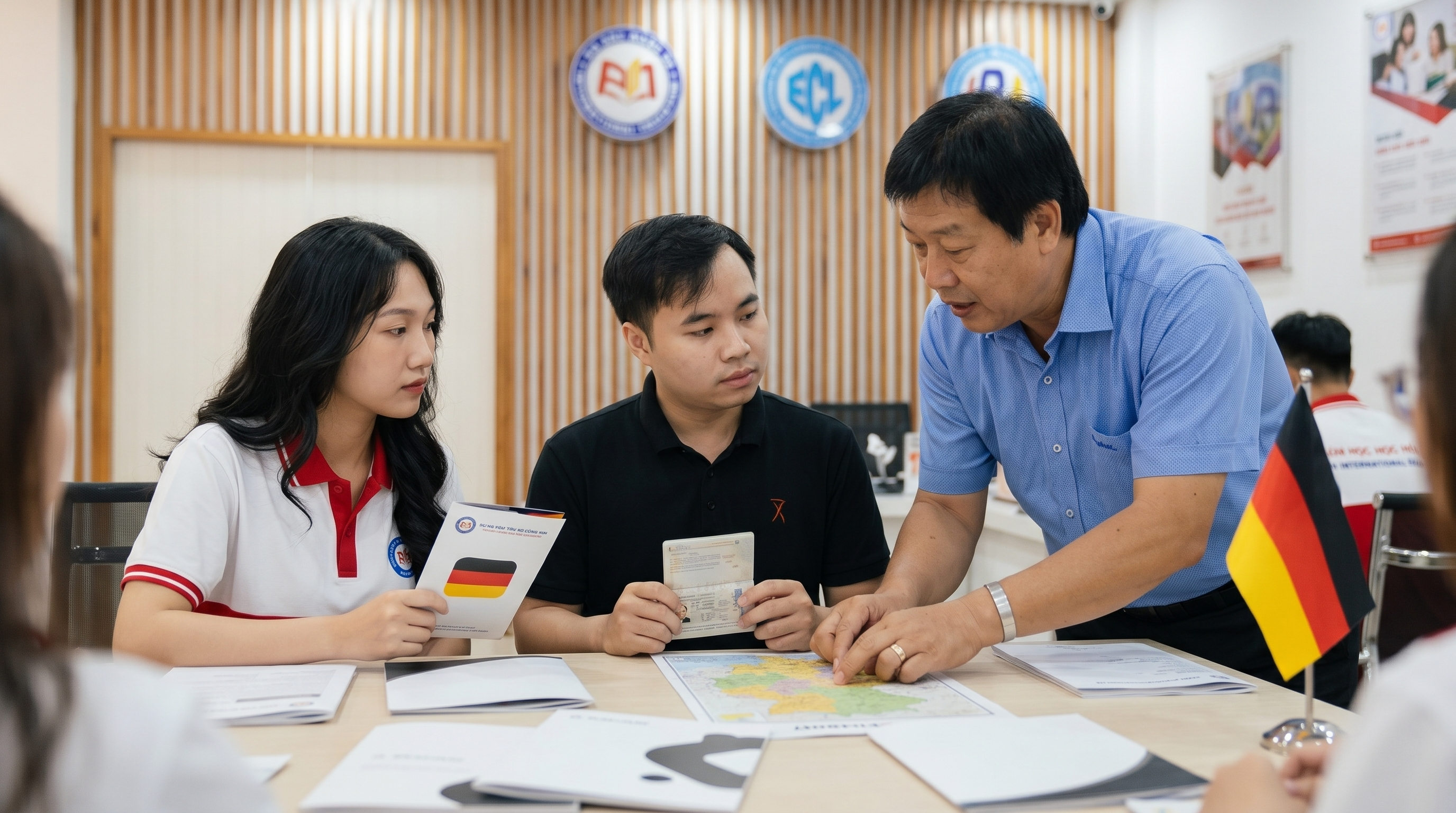
The process of recognising foreign qualifications used to be very complicated. Now, you can move to Germany and start working while your application is still being processed. Qualification recognition partnerships help shorten waiting times. This regulation saves applicants a considerable amount of money.
- Transparent points-based system for the Job Seeker Opportunity Card.
- Lower minimum salary requirements for the EU Blue Card.
- Allows applicants to work while awaiting qualification recognition.
- Reduces the eligibility period for German citizenship to five years.
- Makes it easier for workers to bring their families with them.
- Allows greater flexibility when changing fields of study or jobs.
| Updated Criteria | Previous Regulations (Before 2026) | New Immigration Law (2026) |
|---|---|---|
| EU Blue Card (Minimum Salary) | Approximately EUR 58,400 per year | Approximately EUR 43,800 per year (or lower, depending on the occupation) |
| Find a job | Six-month Job Seeker Visa – Challenges | Opportunity Card (Chancenkarte) – Valid for up to 1 year |
| Qualification Recognition | Must be obtained before travelling to Germany | You can work while waiting for your qualifications to be recognised |
| Apply for Citizenship | Usually requires 8 years of residence | Reduced to just 5 years (or 3 years with successful integration) |
Requirements for Fast-Track Skilled Worker Immigration to Germany
To successfully settle in Germany as a skilled worker, you must meet strict eligibility criteria. Thorough preparation of your application documents will determine your chances of obtaining a visa. Do not overlook any step.
Standard German Language Proficiency Requirements
Your language proficiency determines how successful you will be. The minimum requirement is generally a German language certificate at B1 level. Some technical occupations may accept an A2 certificate. Good listening comprehension helps you avoid risks in the workplace.
Updated Financial Proof Requirements
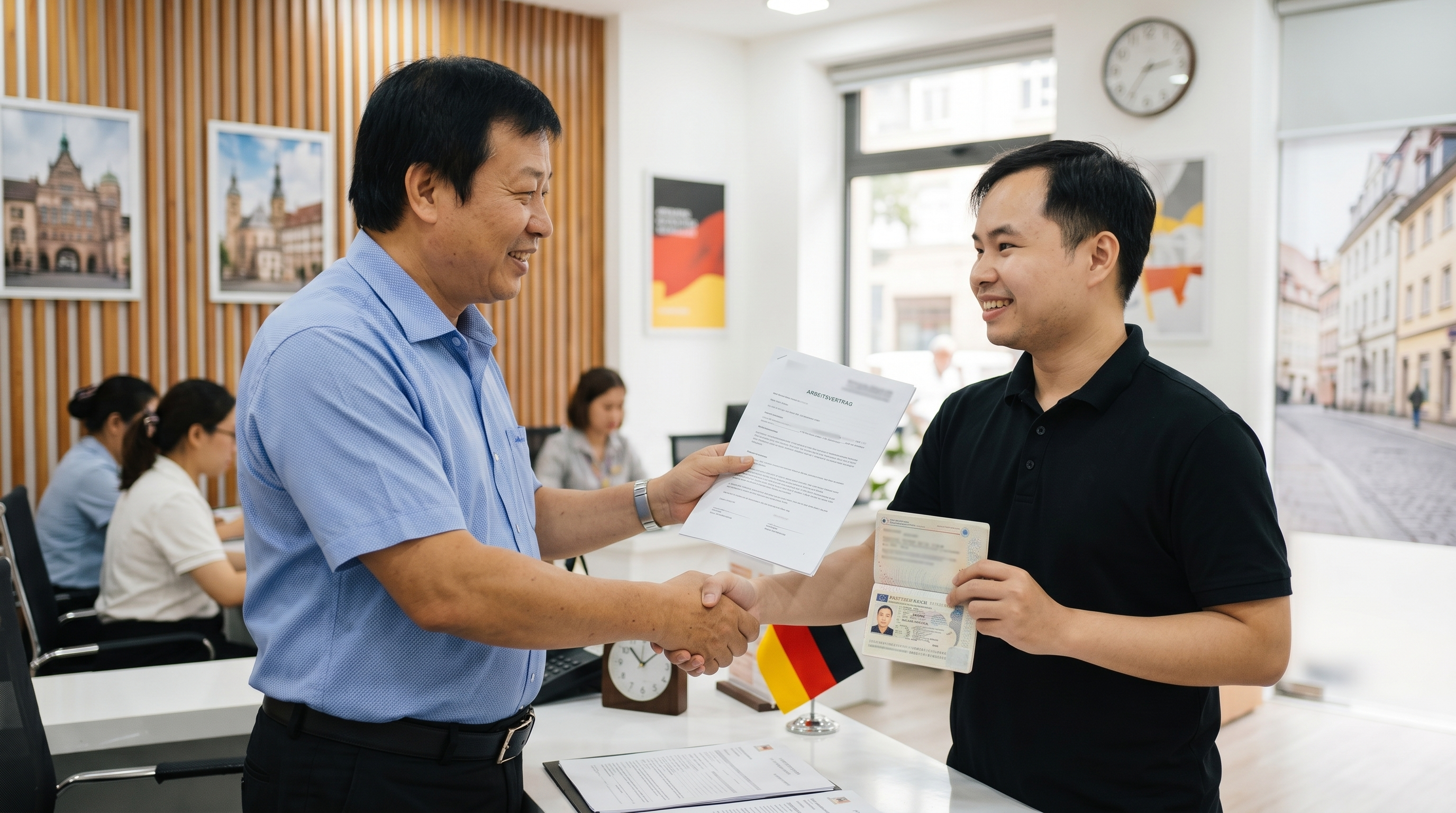
A blocked account is a mandatory requirement when applying for Visa. The required amount for proof of financial resources is regularly updated and may change each year. You must demonstrate that you have sufficient funds to cover your living expenses while looking for a job. Make sure your source of funds is transparent.
Practical Work Experience Requirements
Work experience is a significant advantage. German employers highly value candidates with practical professional skills. Based on PDT EDUCATION's experience, applicants with two years of work experience have a very good chance of success. Your experience must be relevant to your qualification.
- A university degree or a recognised vocational qualification certificate.
- A German Goethe or telc certificate at B1 level or above.
- A blocked bank account (Sperrkonto) with the required balance.
- A valid employment contract from a company in Germany.
- A CV (Lebenslauf) in the standard European format.
- A motivation letter (Motivationsschreiben) clearly outlining your goals.
| German Language Level | Level of Job Readiness | Chances of Obtaining a Residence Visa |
|---|---|---|
| A2 (Basic) | Only suitable for unskilled work. | Low; further language study is required. |
| B1 (Intermediate) | Able to communicate in everyday work situations. | High; meets the basic requirements of the new law. |
| B2 (Upper Intermediate) | Work independently and understand specialist terminology | Very high, with excellent career advancement opportunities |
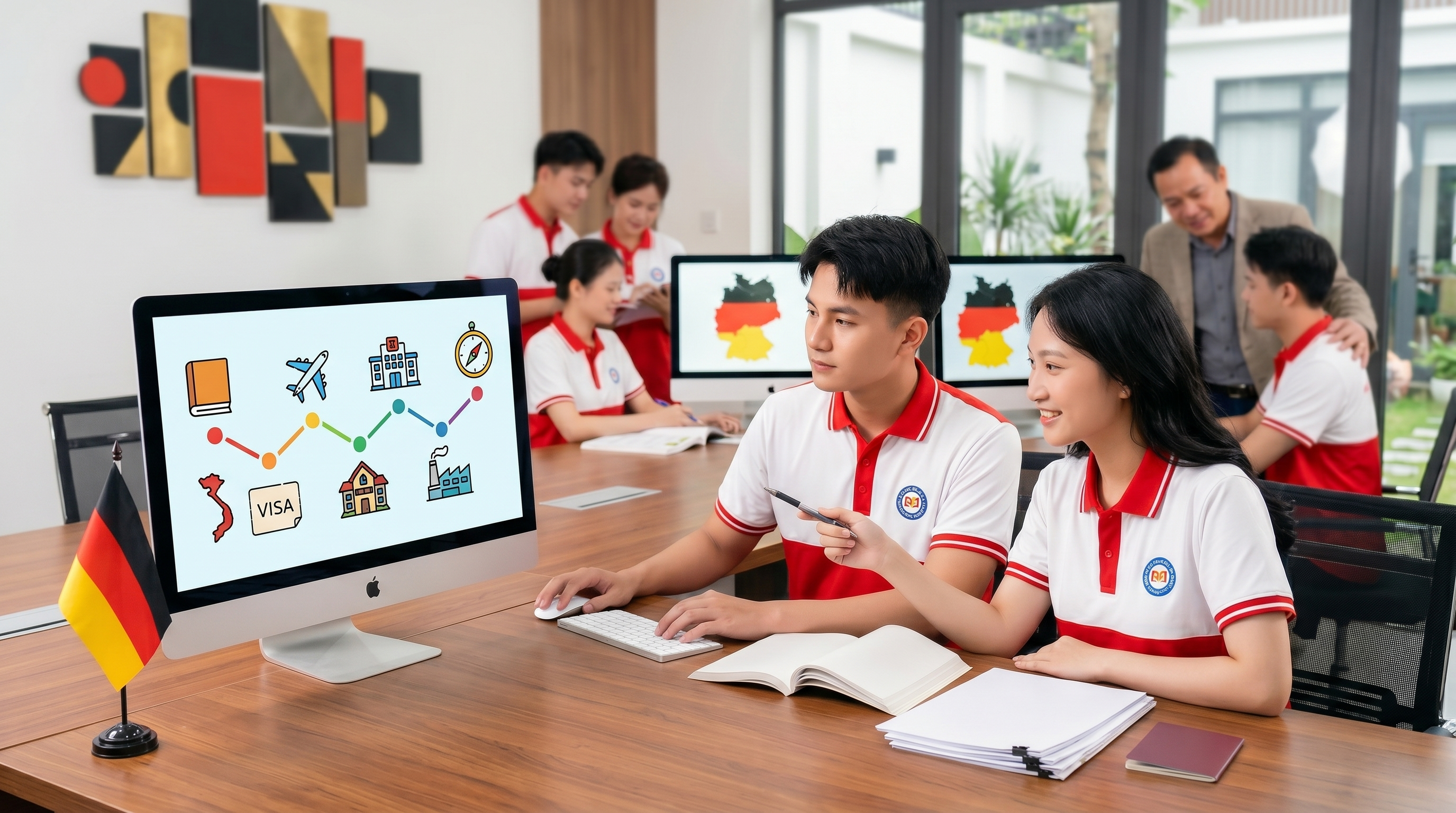
A Safe Preparation Roadmap for Skilled Worker Immigration to Germany
A skilled worker immigration pathway to Germany should be planned at least one year in advance. Rushing the process often leads to documentation errors. Proceed carefully, one step at a time.
Step 1: Assess Your Application and Plan Your Career Path
First, you need to have your qualifications translated and legalised by the relevant authorities. Check your qualifications against the German education system. Choose a profession that matches your interests and market demand. Do not choose a field simply because it is currently popular.
Step 2: Improve Your Language Skills and Apply for a Visa
Learning German requires considerable patience. You should register for a language proficiency examination as soon as you reach the required level. Then submit your visa application to the Embassy. Make sure you prepare thoroughly for the interview.
Step 3: Integrating into German Culture and the Working Environment
Once you arrive in Germany, cultural integration is extremely important. Complying with workplace discipline and local laws is mandatory. Taking integration courses will help you expand your social network. Punctuality is highly valued in Germany.
- Have all documents translated into German and notarised.
- Submit an application for qualification recognition (Anerkennung).
- Enrol in a high-quality intensive German language course.
- Open a blocked bank account and arrange health insurance.
- Find an employer and sign an employment contract.
- Submit your visa application and prepare for your departure.
- Register your residential address as soon as you arrive in Germany.
| Stage of the Immigration Process | Tasks to Complete | Estimated Timeframe |
|---|---|---|
| Initial preparation | Language learning, document translation and career selection | 6 – 9 months |
| Document processing | Apply for qualification recognition and find employment | 3 – 5 months |
| Completing the procedures | Apply for a visa, open a bank account and book flight tickets | 1–2 months |
| Practical adaptation | Register your residence and familiarise yourself with the new environment | 3 – 6 months |
In conclusion, Germany's skilled worker immigration programme is creating unprecedented opportunities for Vietnamese people. Thanks to the latest immigration laws, the procedures have become much more flexible and straightforward. However, thorough preparation in terms of language proficiency and professional skills remains the key to success. Having accurate information helps you save both time and money.
- Labour shortages are creating significant opportunities.
- The Opportunity Card offers greater flexibility when looking for a job.
- A B1-level German language certificate is the minimum requirement.
- Recognition of foreign qualifications has become easier.
- Choosing the right priority sector can help speed up the application review process.
- The naturalisation process is significantly shortened.
PDT EDUCATION We are always by your side as you pursue your European dream. We provide a transparent, cost-effective and secure pathway.