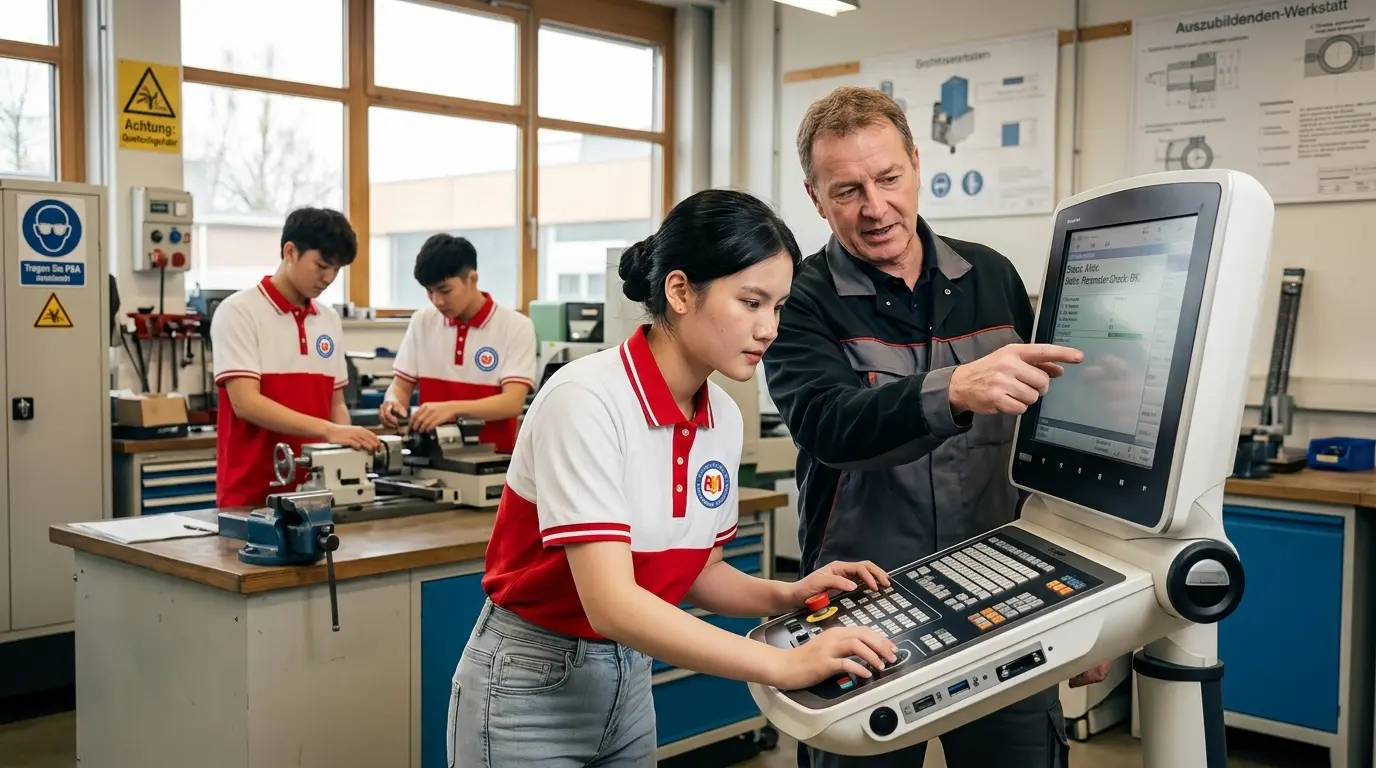


In recent years, vocational training in Germany has become an attractive choice for many young Vietnamese people who wish to both study and work while building a stable career in Europe. Not only famous for its strong economy, Germany is also highly regarded for its structured vocational training system, which is closely linked to practice and the actual recruitment needs of businesses.
Unlike purely academic study abroad models, vocational training in Germany opens up a more practical path, suitable for those who want to start working early, earn an income during their studies, and accumulate professional experience from the beginning.
Overview of Vocational Training in Germany
Vocational training in Germany is a training program that combines theoretical learning at a vocational school with hands-on practice directly at an enterprise. Learners are not only trained in their specialty but also get early exposure to a professional working environment according to German standards.
The highlight of this model lies in its high applicability. Instead of only studying theory for many years, students are exposed early to actual work, thereby shortening the gap between learning and doing.

Why Does Germany Attract International Vocational Students?
Germany is one of the countries with a great demand for human resources, especially in the fields of technology, services, and social care. The shortage of skilled labor has led the German government to expand policies for accepting international workers and students through vocational training programs.
Besides, a safe living environment, good social welfare, and opportunities for long-term settlement are also factors that make many young people consider choosing this path.
Who is Suitable for Vocational Training in Germany?
Not everyone needs to pursue a traditional university path. Vocational training in Germany is suitable for:
- People who want to learn a trade linked to actual employment
- People who wish to have an income early during their studies
- People who do not emphasize academic degrees but focus on skills
- People with an orientation to work and live long-term in Germany
More importantly, learners need to have a spirit of discipline, the ability to adapt to a serious working environment, and a readiness to learn in an international environment.
Basic Roadmap for Vocational Training in Germany
A common roadmap usually includes the following main steps:
Identify the Right Profession
Choosing a profession from the beginning plays a crucial role. Learners should consider based on personal interests, their own abilities, and recruitment needs in Germany. Currently, vocational training occupations in Germany often focus on high-practice groups with stability and long-term job opportunities.
Prepare Language Proficiency
German language is a mandatory requirement in most vocational training programs. Good German language skills help students integrate easily, study effectively, and work smoothly in a corporate environment.
Sign the Vocational Training Contract
Students will sign a training contract directly with a company in Germany. This is a major difference from traditional study abroad, as the enterprise plays a direct role in the training process and pays a practical salary.
Apply for a Visa and Move to Germany for Study
After completing the application, students proceed to apply for a visa and prepare for the journey of studying and working in Germany according to the registered roadmap.
What is Special About Vocational Training Occupations in Germany?
Germany's vocational training system is famous for its rigor, discipline, and emphasis on skills. Training programs are built based on the actual needs of the labor market, ensuring that graduates can work immediately.
Currently, vocational training occupations in Germany often focus on the service group, engineering, mechanics, restaurants – hotels, social care, and many other fields with high demand for human resources.
The strength of the program is that learners not only study to get a certificate but are also trained in working skills, professional attitudes, and industrial manners – factors that are highly valued by German enterprises.
Costs and Financial Support During Vocational Training
One of the reasons many people choose vocational training in Germany is that the cost is more reasonable compared to university study abroad. During the vocational training process, students usually receive an allowance or practical salary from the enterprise, helping to cover most living expenses.
In addition, some programs also offer vocational training scholarships in Germany or financial support from enterprises, training organizations, and education funds. This helps reduce economic pressure and creates conditions for students to focus on studying and working.
Opportunities After Graduating from Vocational Training in Germany
After completing the vocational training program, students have many options:
- Continue working at the enterprise that provided the training
- Move to another enterprise in the same field
- Extend a long-term work visa
- Study at higher training levels if eligible
With a vocational degree recognized in Germany, job and career development opportunities are very open, not only within Germany but also in other European countries.

Challenges to Prepare for Before Departing
Besides opportunities, vocational training in Germany also comes with certain challenges. Learners need to prepare mentally to adapt to:
- A disciplined and serious work culture
- Pressure of studying in parallel with working
- Differences in language and lifestyle
- High requirements for responsibility and professional attitude
Careful preparation in terms of psychology, language, and soft skills will help the learning process in Germany take place more smoothly.
Should You Choose Vocational Training in Germany Instead of University?
There is no absolutely right choice for everyone. However, for those who want to quickly join the labor market, accumulate practical experience, and have an orientation for long-term work in Europe, vocational training in Germany is a path worth considering.
This form is suitable for modern training trends, where practical skills and competence are valued higher than pure theoretical degrees.

Conclusion
Going for vocational training in Germany is a practical direction for young people who want to both learn a trade and work while building a sustainable career in Europe. With a clear roadmap, high job opportunities, and a professional training environment, this is a suitable choice for those who prioritize skills and practical experience.
To prepare for this journey systematically, you can research and receive advice from PDT Education – a unit with experience in German language training and vocational training consultancy for Germany. PDT accompanies students from the stage of career orientation and application preparation until they move to Germany to study and work, helping you feel more secure on your chosen path.