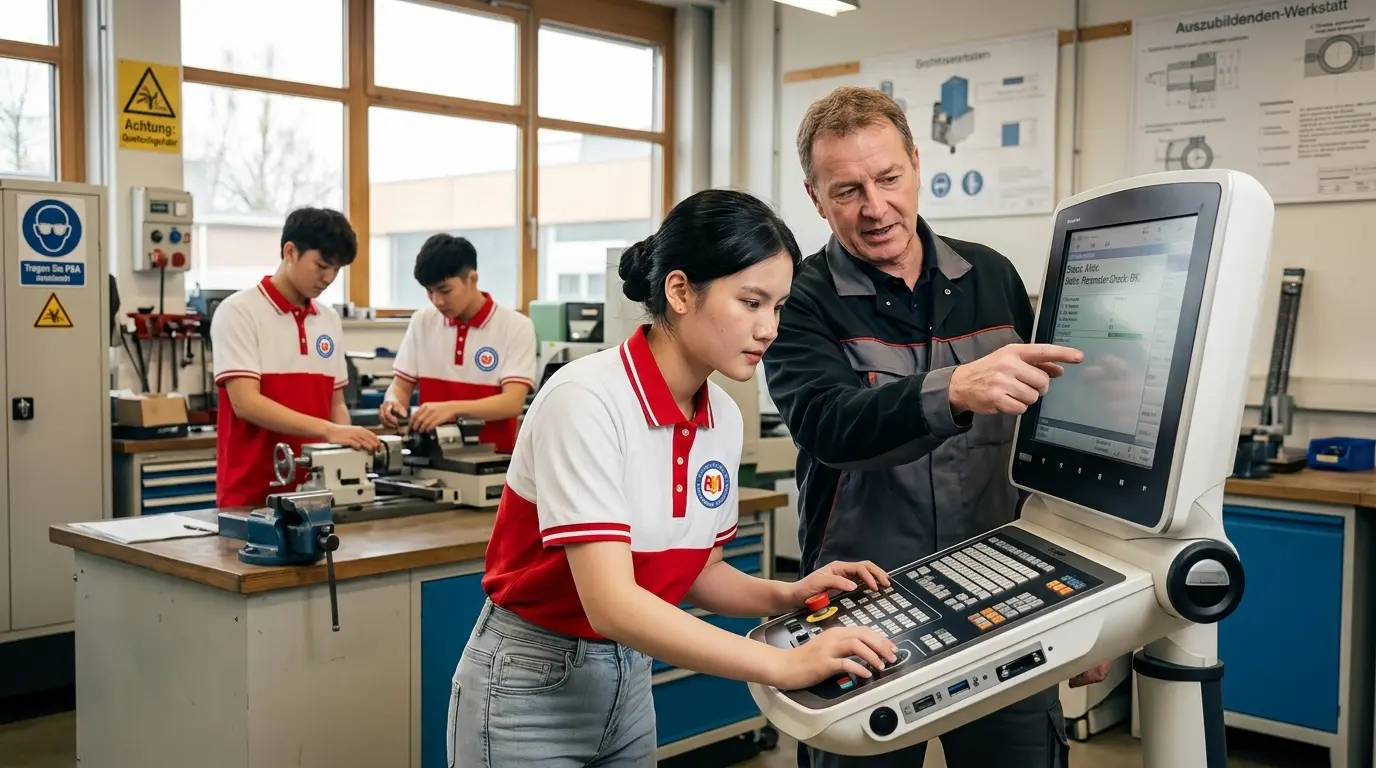


In recent years, the phrase “should I do vocational training in Germany” has appeared more and more on forums, groups, and in career counseling sessions. Many young people see this as a new “turning point” instead of the traditional university path. But amidst a sea of conflicting information, how do you know if this choice is truly right for you?
The article below will analyze the opportunities and challenges in a realistic and clear way, helping you answer the question: should you study vocational training in Germany – based on your circumstances, abilities, and personal goals.
What is vocational training in Germany? Why is it increasingly attractive?
Vocational training in Germany (Ausbildung) is a dual study-and-work model. Students will:
- Learn theory at a vocational school
- Practice directly at a business
- Receive a monthly allowance
Training duration usually lasts 2–3.5 years depending on the industry. After graduation, students have the opportunity to work long-term in Germany if they meet all conditions.
The attraction of this model comes from:
- Low study costs or tuition exemption
- Earn a salary during the learning process
- Clear immigration opportunities
- Labor demand in Germany is high, especially in technical and service fields
Therefore, many young people start to wonder: should they study vocational training in Germany instead of studying at a local university?

Clear benefits of vocational training in Germany
Earn while you learn
Unlike university study, vocational students are paid an internship salary by the business. The salary varies by industry and school year, enough to cover part of the living expenses if spent reasonably.
This helps reduce financial pressure on families and trains early independence.
High job opportunities after graduation
Germany is facing a labor shortage in many fields. Sectors like nursing, restaurants – hotels, mechanics, electricity – electronics... always need human resources.
If the program is completed well, the possibility of being retained to work is very high. This is one of the reasons why many people lean towards the option of whether to study vocational training in Germany instead of choosing another direction.

Qualifications recognized in Europe
Vocational certificates in Germany have high value and are seriously evaluated for training quality. This opens up job opportunities not only in Germany but also in other European countries.
Safe and professional living environment
Germany is famous for its discipline, good social security system, and stable living environment. This helps many parents feel secure when their children choose to study here.
But it's not for everyone
Before deciding, you need to clearly recognize the difficulties you may encounter.
Language barrier
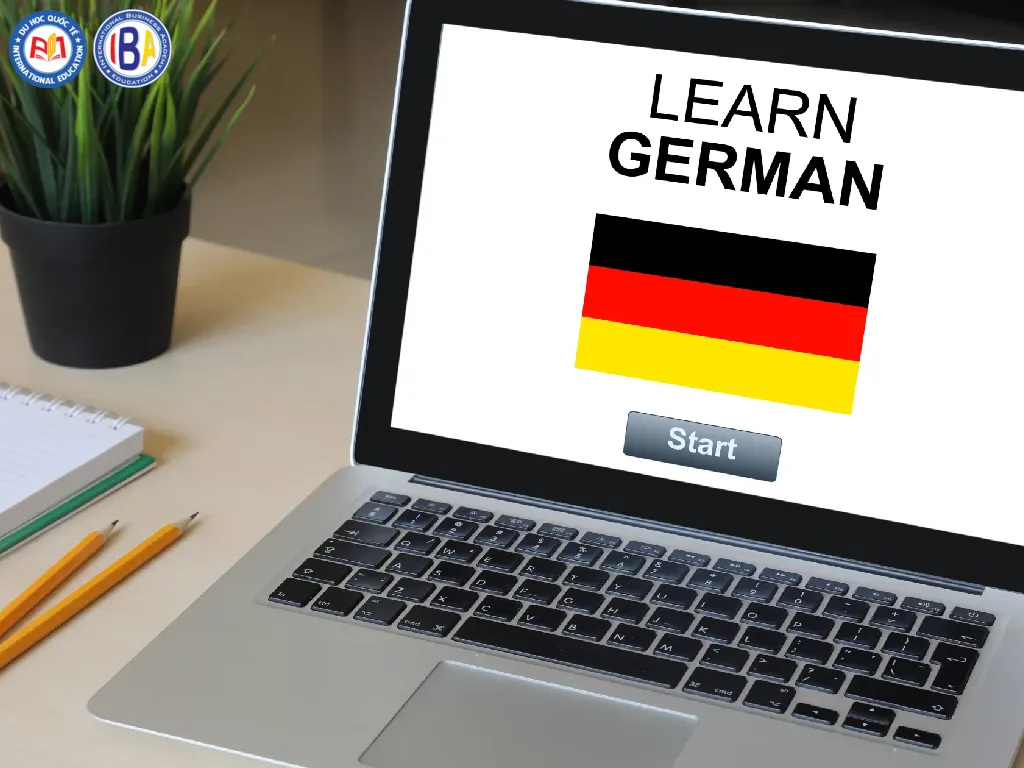
German is not an easy language to learn. To participate in a vocational program, you usually need to reach B1 or B2 level. Learning a language requires time, discipline, and perseverance. If you are not truly determined, this can be a major obstacle.
Pressure to adapt culturally
Differences in weather, communication culture, and work style can cause shock in the beginning.
Living far from home and being completely independent is also a significant psychological challenge. Therefore, when considering whether to study vocational training in Germany, you need to ask yourself: am I ready to leave my comfort zone?
High discipline and self-motivation
The vocational training system in Germany requires professionalism. Being late, lacking responsibility, or failing to complete tasks can affect the training contract.
This is not a “try it out” environment, but a real working process.
Popular vocational training occupations in Germany today
Choosing the right major is a decisive factor for long-term success. Among the vocational training occupations in Germany, some popular groups include:
- Nursing
- Restaurant – Hotel
- Mechanics – electronics
- Construction
- Logistics
- Information Technology
Each industry has its own characteristics regarding physical requirements, skills, and personality. For example:
- Nursing needs patience and good communication skills.
- Mechanics requires technical thinking and health.
- Restaurants – hotels require flexibility and the ability to withstand pressure.

Vocational training in Information Technology in Germany – a new trend?
In the digital age, many people are interested in IT vocational training in Germany. This is an industry with high demand for human resources and attractive income levels after graduation.
However, entry requirements are also stricter:
- Good math and logic foundation
- High self-study ability
- Problem-solving mindset
If you love technology and have a clear orientation, this could be a worthwhile choice to consider.
Comparison: Vocational training vs. University – which path to choose?
To answer the question of whether to study vocational training in Germany, you can compare for yourself:
| Criteria | Vocational Training | University |
| Time | 2–3.5 years | 3–4 years |
| Tuition fee | Low or free | Can be high |
| Income while studying | Yes | No |
| Practicality | Very high | Depends on industry |
| Opportunity to stay | Clear | Depends on industry |
If you are inclined towards practice, want to start working early and prioritize stability, vocational training is the right choice. If you love in-depth research or are oriented towards academia, university will be more suitable.
The role of consulting agencies in this journey
Vocational training applications in Germany involve many steps: learning the language, applying for a training contract, applying for a visa, preparing legal documents...
Therefore, choosing a reputable German vocational training company is an important factor to avoid risks.
When looking for a consulting agency, you should:
- Clearly check legal information
- Look up feedback from former students
- Request transparent costs
- Do not believe in “100% pass” commitments”
Transparency and professionalism will help you save time, costs, and limit errors.
Questions you need to answer before deciding
Before asking others if you should study vocational training in Germany, ask yourself:
- Am I ready to learn German seriously for 6–12 months?
- Am I willing to do practical skilled work?
- What is my long-term goal – settlement or experience?
- Does my family support and prepare stable finances?
If most of the answers are “Yes”, then this might be the right direction.
A realistic perspective: Not an easy path, but worth it if suitable
Vocational training in Germany is not a “rosy path”. You will have to:
- Learn a new language
- Work seriously like a full-time employee
- Adapt to a completely different environment
But in return, you have:
- International practical experience
- Clear job opportunities
- Stable income
- Long-term development potential in Europe
So, instead of asking generally if you should study vocational training in Germany, change the question to: “Is vocational training in Germany suitable for my personality, ability, and goals?”

Conclusion & Advice for you
Whether or not to study vocational training in Germany does not depend on trends, but on your long-term goals, language learning ability, and readiness to adapt. Once you have identified the right major and are mentally prepared, this journey can completely become a major turning point in your career.
If you need advice on a specific roadmap, choosing the right major, and professional application support, PDT International Education is a specialized unit in German vocational training, accompanying students from the language learning stage until they are stable in Germany. You can find more official information and the latest program updates at website to be supported in detail by the professional team.