Germany has always been known for its globally recognized quality of higher education, reasonable living costs and tuition compared to many other countries, along with an extensive corporate network supporting students after graduation. However, to meet the requirements for master's studies in Germany and maximize career opportunities for vocational students, you need to clearly understand the admission requirements, application processes, and certain necessary preparations. This article provides a practical perspective, from the experience of PDT International Education – a vocational study abroad consultancy and master's degree requirement unit in Germany in Vietnam – so you can visualize a step-by-step approach confidently and effectively.
Requirements for master's studies in Germany

Below is a common framework of conditions, along with practical notes you may encounter when applying.
Degrees and academic levels
You must have a bachelor's degree relevant to the applied major. The application should include transcripts, graduation certificates, and proof of degree recognition in Germany (via Anabin or equivalent certification). Some programs require a bachelor's degree with a specialized link to the master's program (such as engineering, IT, management...). Certain specific fields also require a deep academic background or interviews, entrance exams, so prepare well for academic projects and research experience.
Language certificates
Depending on the language of instruction of the program:
- English: IELTS ≥ 6.5 or TOEFL iBT ≥ 90 (subject to change by school). Some schools are more flexible if you have degrees proving equivalent proficiency.
- German: DSH-2 or TestDaF (equivalent to level B2–C1). If studying a preparatory program, you can start from A1–A2 and progress to DSH-2 in Germany.
Additional documents and records
Includes: Detailed CV, letters of recommendation, motivation letter, official transcripts. It is necessary to clearly demonstrate the connection between the previous field of study and the master's program. Creative fields such as design, architecture, and fine arts must have a portfolio.
Application methods
- Direct application: Some schools allow application via the school's online portal.
- Via UniAssist: Many schools use this system to receive applications. You need to check if your chosen school belongs to UniAssist.
Admission letter & proof of finances
After being accepted, you will receive an admission letter. To apply for a visa, you need:
- Financial proof (about 11,000–12,000 EUR/year)
- Valid health insurance
- Passport, photos, language certificates, relevant documents
Tuition fees & living expenses
- Tuition fees: Public universities are usually tuition-free, only charging a semester fee of 250–350 EUR/semester. Private schools or special programs may charge high tuition fees.
- Living costs: Depending on the city, ranging from 700–1,100 EUR/month. Large cities like Berlin and Hamburg have higher costs than small regions or suburbs.
| Condition | Notes / Examples |
|---|---|
| Related degree | Bachelor's degree suitable for the entrance exam major; recognized certification in Germany (Anabin/evaluation partner). |
| Language certificates | English: IELTS/TOEFL; German: DSH-2 or TestDaF depending on the program. |
| Additional records | CV, motivation letter, recommendation letter, transcripts, portfolio (design/architecture group), academic references. |
| Application & process | Direct at the school or via UniAssist depending on the school; main enrollment periods are usually in the fall (Wintersemester) and some majors have summer enrollment (Sommersemester). |
| Visa and insurance | Minimum financial proof for visa, mandatory health insurance. |
| Tuition & living costs | Tuition at public schools is usually 0-350 EUR/semester; living costs 700-1,100 EUR/month. |
Practical observations from German education industry reference data show that candidates with qualified records and full preparation often have a chance to receive admission letters from prestigious schools. According to DAAD (Deutscher Akademischer Austauschdienst) data in recent years, the majority of masters trained in Germany have the opportunity to find jobs in their field after graduation within 12 months, with fluctuations depending on the industry from about 60-75%.

Career opportunities for international students at PDT
In the context of the German labor market's increasing shortage of labor in engineering, IT, healthcare, and logistics, vocational students have many opportunities to study and work at the same time; or after graduation can find jobs in their field with support from consultants and German partners. For vocational students in Vietnam considering a transition path to Germany, this is a useful reference framework to shape academic and career plans.
Prominent opportunities for vocational students related to the following popular program groups:
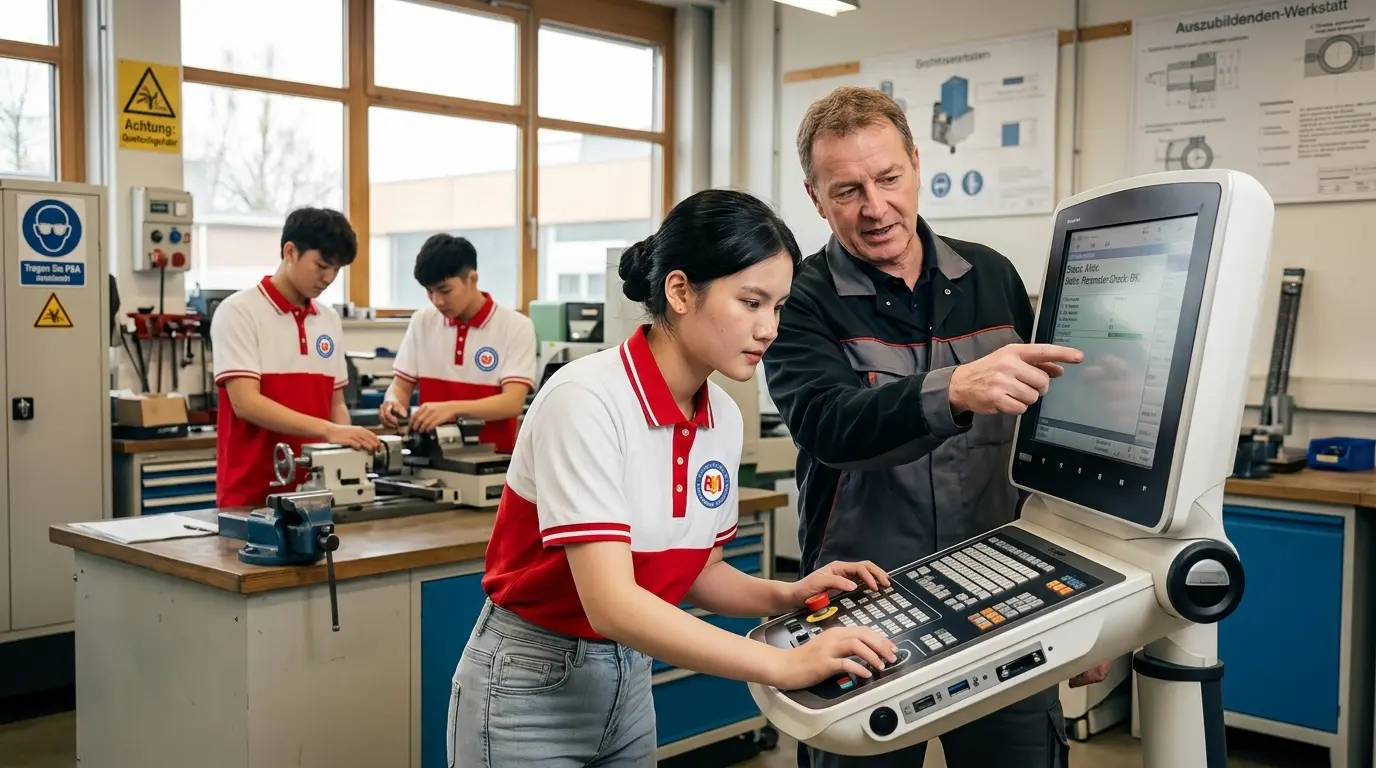
- Ausbildung (vocational training combined with work): This is the traditional route in Germany, where you both study and work at a company. After completing the training period, you may have the opportunity to continue working and transition to a stable position within the enterprise.
- Duale Studium (the connection point between school study and company internship): The dual study model allows you to receive a bachelor's degree while having practical work experience, increasing job opportunities after graduation.
- Transition to relevant master's or business administration programs: Those with a background in technical professions, ICT, or supply chain management can continue with master's programs at a Fachhochschule (university of applied sciences) or university with consideration of records and language certificates.

Studying for a Master's in Germany – Choose PDT for detailed advice, a clear roadmap, and wide-open opportunities
Studying for a Master's in Germany is becoming a trend chosen by many Vietnamese students thanks to the high-quality education system, low or free tuition, and opportunities for settlement after graduation. However, the admission conditions for Master's level in Germany are not simple, requiring candidates to have a university degree matching the major, standard German or English proficiency, and detailed academic records.

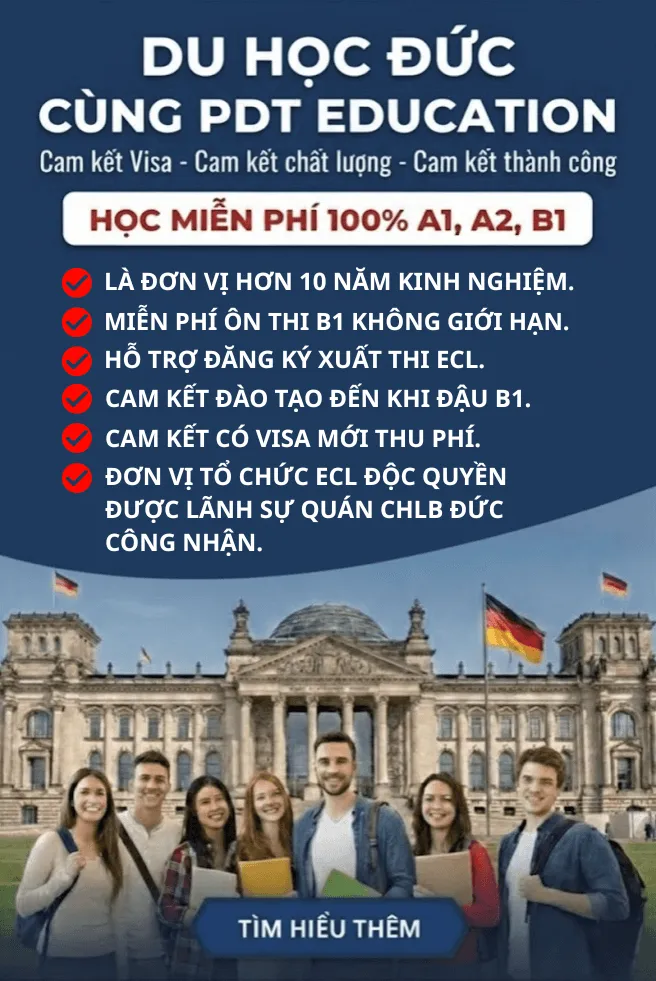
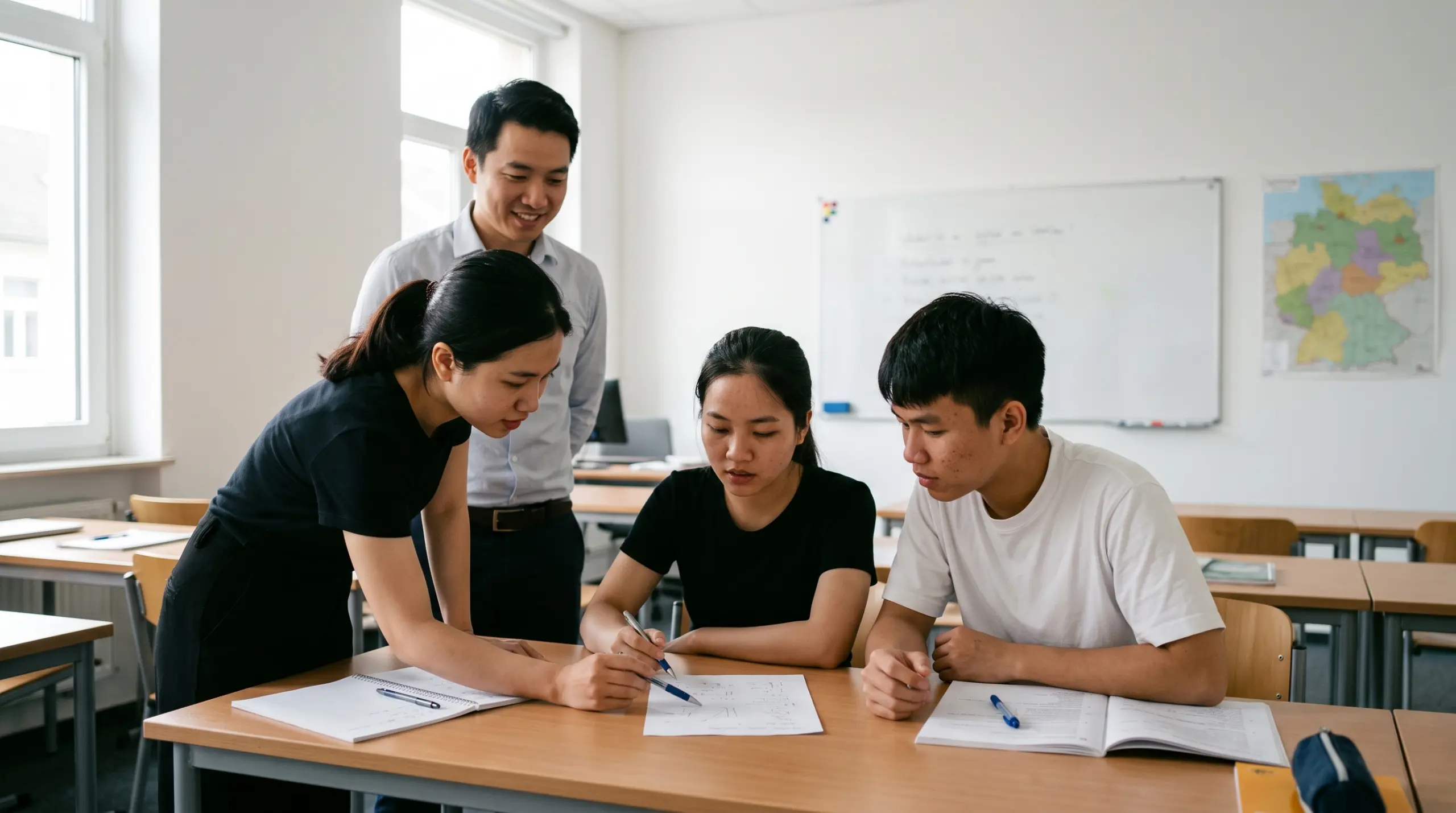
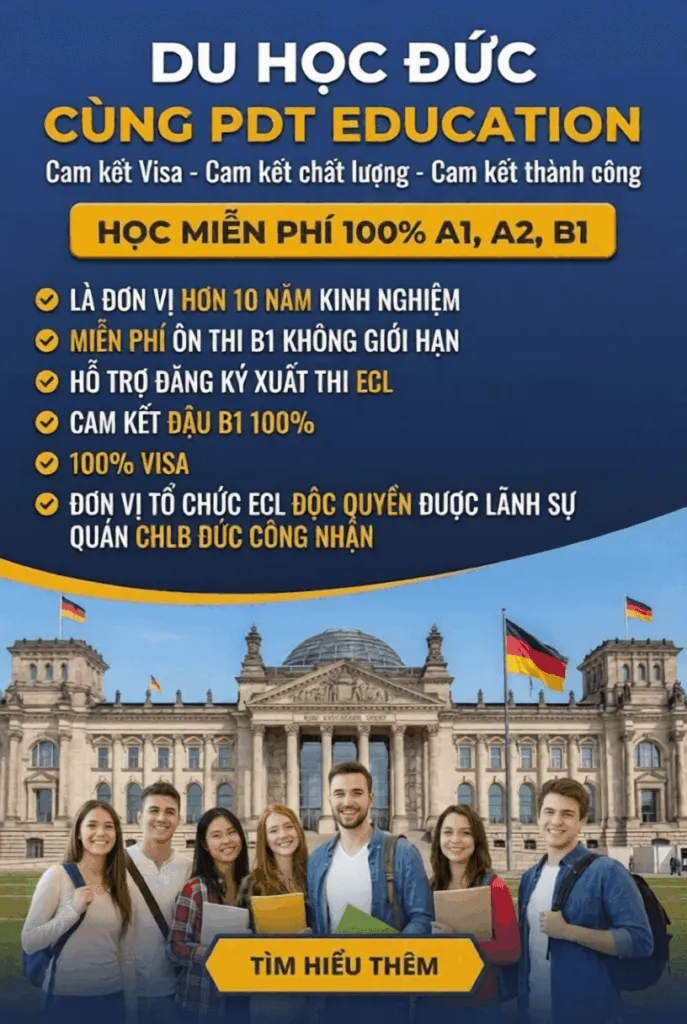
At PDT, you will be advised in detail by specialized personnel on each entry condition of German universities, from transcripts, suitable majors, language requirements (ECL or IELTS certificates), to how to write a Motivation Letter and academic CV of international standards. The center also has a clear German language learning roadmap with Vietnamese lecturers and native teachers like Mr. Heiko and Mr. Sonny teaching from A1 to B1, ensuring students are closely tutored until requirements are met.
With a competitive package fee, divided into 5 flexible installments, and a commitment to only collect fees when a visa is granted, PDT helps students feel secure in their studies without worrying about financial burdens. The visa success rate is nearly 100%, along with many study promotion scholarships for students who achieve B1 on their first exam attempt.
PDT does not just stop at teaching the language, but is also a place where you are strategically oriented for a Master's study suitable for your ability and career goals, thereby opening the door to Germany's prestigious university system.

Conclusion on requirements for master's studies in Germany
Requirements for master's studies in Germany and career opportunities for vocational students at PDT depend on your preparation and long-term plans. Understanding entry requirements, language certificates, application processes, and how to take advantage of vocational paths combined with work will help you seize opportunities better. At the same time, having support from partners and centers with connection networks in Germany will help you go in the right direction and reduce challenges when abroad.
If you are considering a master's path in Germany or want to learn more about vocational study routes, start by planning your language and records. Vocational study abroad consultancy centers in Vietnam can provide specific information about each school, requirements, and enrollment times. You can contact us for advice on records, scheduling studies, and connecting with partners in Germany. Thorough preparation will help you confidently enter your educational and career journey in a country with many opportunities like Germany.
If you want to find out more or receive specific support: please contact the center to find out and plan a personal roadmap for vocational study and master's in Germany. Starting today can be the first step for a solid and meaningful professional career in the future.