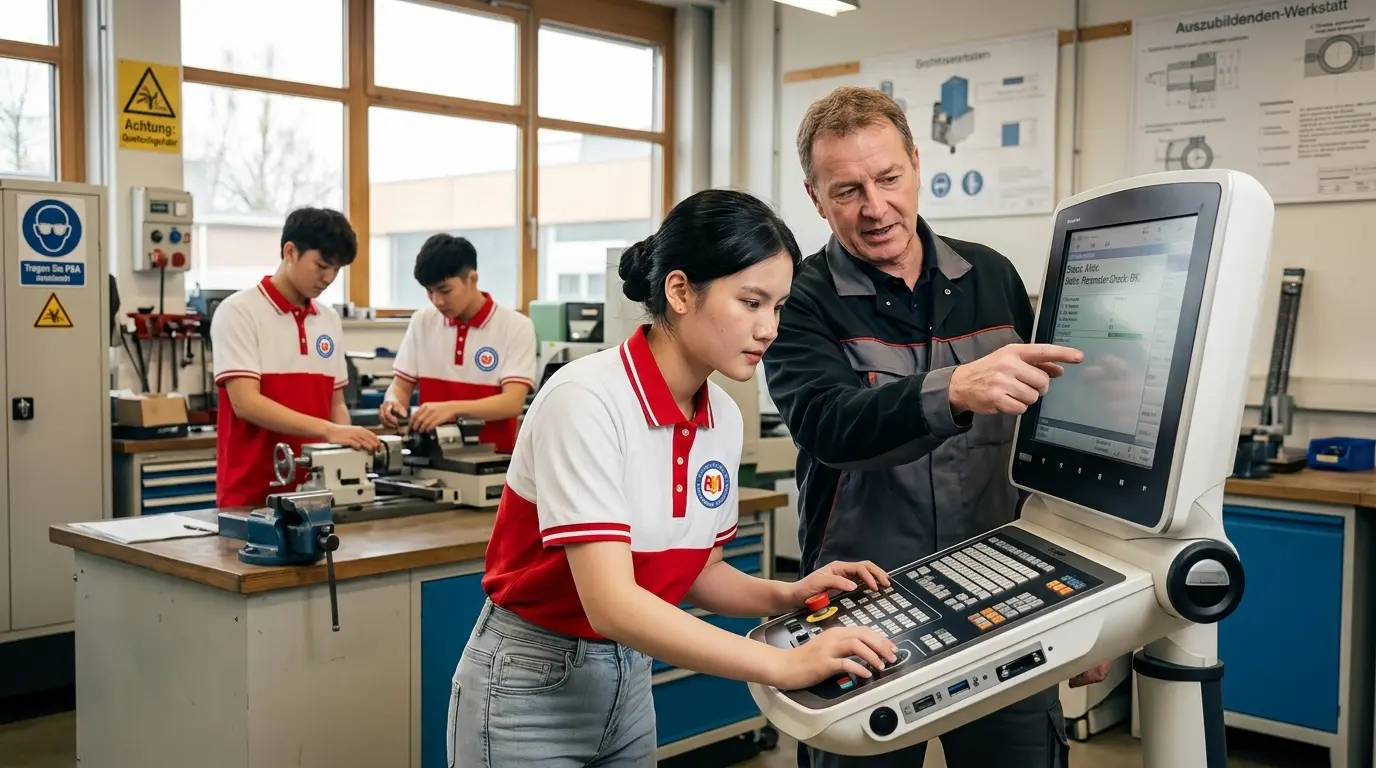


Learning about the part-time salary while studying in Germany helps you be financially proactive and plan your studies effectively. With vocational training in Germany, the Ausbildung salary in Germany provides a stable income right during the training process, while also opening up opportunities for permanent residency in Germany after graduation when meeting the requirements for a German residence visa conversion.
About vocational training in Germany and economic attraction
Vocational training in Germany attracts thousands of Vietnamese students every year thanks to low costs and high job opportunities. According to data from the German Academic Exchange Service (DAAD) in 2023, more than 10,000 international students are in vocational training in Germany, with Vietnam among the top 10 source countries. The topics of part-time salaries when studying in Germany and opportunities for settlement in Germany after graduation are particularly important because they help students cover costs and build a long-term future.
The article analyzes real data from official sources, specific case studies, and potential challenges. You will learn how to evaluate actual income, the settlement process, and the factors that determine success.
Why is the overtime pay rate important?
The overtime salary helps vocational students in Germany cover 70-80% of their living expenses. Data from Make it in Germany shows that students are allowed to work 20 hours/week during the semester and full-time during breaks. However, actual income depends on the profession and German language proficiency.
Many students expect high salaries but encounter initial difficulties due to language. The article will clarify the gap between expectations and reality.

Settlement Opportunities – Reality or Promise?
Germany lacks 400,000 skilled workers annually according to the Bundesagentur für Arbeit 2024 report. Vocational study abroad creates a residency pathway via an 18-month job-seeking visa after graduation. However, the success rate is only about 60-70% depending on the industry.
- Assess B2 German proficiency level before deciding on a career
- Calculating the actual cost of living in the target city
- Comparing part-time wages across industries: Nursing vs Mechanical
- Verify the Ausbildung program has German corporate partners
- If you lack experience, prioritize learning the language for 6-12 months before departure
Actual overtime salary when studying abroad in Germany
Legal regulations on working hours and minimum wage
German law allows vocational students to work a maximum of 20 hours/week, with no limit on hours during summer break. The national minimum wage (Mindestlohn) from 1/1/2024 is 12.41 EUR/hour. Students working part-time at Lidl supermarkets or restaurants receive 12-14 EUR/hour.
Average monthly income: 800-1.200 EUR depending on working hours and weekends. However, taxes and insurance deduct 20-25%, leaving 600-900 EUR net.
Compare salary levels by popular industries
Nursing industry: 13-16 EUR/hour at hospitals. Mechanical engineering: 14-18 EUR/hour at BMW factories. IT: 18-22 EUR/hour but requires good German and professional skills.
| Profession | Hourly rate (EUR) | Advantages | Limitations |
|---|---|---|---|
| Nursing | 13-16 | Multiple shifts, flexible hours | High pressure, late hours |
| Mechanics | 14-18 | High salary, night shift bonus | Good health required |
| IT/Network | 18-22 | Highest income | High competition, B2 German level required |
| Restaurant/Hotel | 12-14 | Easy to find jobs | Low tips for foreigners |

Germany residency opportunities after vocational training
visa-pathways-and-legal-requirements
After graduating from Ausbildung (3 years), students are granted an 18-month job-seeking visa. Finding a job in the right field within the first 6 months reaches a rate of 75% according to the BAMF 2023 report. After having an employment contract >1 year, switch to an EU Blue Card visa or permanent residency.
Requirements: German B2, recognized vocational qualification, minimum salary of 45,300 EUR/year (2024). Shortage occupations such as Nursing only require 41,000 EUR/year.
High-demand industries and settlement rates
Top 5 sectors: Nursing (90% successful settlement), Mechanical Engineering (85%), IT (80%), Electrical (75%), Restaurant (60%). Data from 'Make it in Germany' tracking 5,000 international students 2020-2023.
| Profession | Settlement rate | Advantages | Challenges |
|---|---|---|---|
| Nursing | 90% | Severe labor shortage | High work pressure |
| Mechanics | 85% | Starting salary 3,500 EUR | Competition from the EU |
| IT | 80% | High salary 4.500+ EUR | Good German language skills required |
| Industrial electricity | 75% | Many locations in Bavaria | Shift 3 on duty |
| Cuisine | 60% | Easy to get an initial job | Low pay, long hours |

- Choose schools with a rate placement >80%
- Building a network with businesses starting from Year 2 of Ausbildung
- Starting Salary Comparison: Bavaria vs Berlin (500 EUR difference)
- If German is weak, join the language-vocational integration program
- Verification with EU-recognized 'Ausbildung'
Actual costs and financial calculation framework
Cost of living analysis by city
Berlin: Rent 450 EUR, living expenses 350 EUR, total 800 EUR/month. Munich: Rent 650 EUR, total 1,050 EUR. Average part-time salary of 900 EUR is enough to live in Berlin, but short 150 EUR in Munich.
Numbeo 2024 data shows that costs in Germany are twice as high as in Vietnam, but salaries are commensurate.
Financial capability assessment framework
- Calculate total first-year costs: Tuition + Living expenses + Airfare + Insurance
- Estimated overtime pay: Hours/week × Hourly pay × 4.3 weeks × 0.75 (after tax)
- Deficit = Cost – Income. If >300 EUR/month → High risk
- {
"translations": [
"Select city: If the budget is <1.000 EUR → Berlin/Dresden, avoid Munich"
]
} - Prepare a reserve fund of 12,000 EUR for the first year
Practical example: A student in Leipzig spends only 700 EUR/month in total costs, with a part-time salary of 850 EUR → 150 EUR surplus to send home to their family.
Common financial risks
Many students run out of money after 3 months because they don't look for work immediately. Solution: Study the language for 6 months in Vietnam to reach B1, and apply for part-time jobs before leaving. Avoid expensive cities if you lack skills.
Common challenges and mistakes to avoid
Language issues and work culture
80% of Vietnamese students face difficulties with Pünktlichkeit (punctuality) and direct Kommunikation. Result: Missing out on good part-time job opportunities. Solution: Participate in a 600-hour integration course in Germany (free of charge).
Mistakes in choosing majors and schools
Choosing hot trending majors instead of personal interests leads to a 15-20% dropout rate according to DAAD. For example: Studying IT but not liking coding, changing majors costs 1 year.
| Mistake | Consequences | Solution |
|---|---|---|
| Choose-a-major-by-salary | Drop out of higher education | Test-nang-luc-truoc-6-thang |
| To Germany with A2 level | No overtime | |
| No enterprise network | Difficult to settle | Participate in job fairs from year 2 |
- Test Goethe B1 before signing the study abroad contract
- Visiting German businesses through internship programs
- If under 23 years old, priority is given to dual programs (study + work)
- Check the poor quality school blacklist at Azubi.de
- Building a standard German CV from freshman year

Conclusion: Decisions based on individual capacity
In summary, vocational study in Germany brings an additional income of 800–1,500 EUR/month and high settlement opportunities, around 70–90% depending on the industry. However, success depends heavily on German language proficiency (minimum B2), choosing the right profession, and a clear financial plan. The most common risks are language weakness and lack of budget preparation.
To increase the success rate, you should have a reserve fund of over 12,000 EUR, a language level from B1+, and good health. If these conditions are met, the possibility of achieving your goal will be very high. Before deciding, please re-check your language level, calculate your finances, and consult official information to choose the most suitable path.
If you still have concerns about the procedures, costs, or the roadmap for vocational study in Germany, PDT International Education can accompany and support you in a systematic way. With over 10 years of experience, PDT provides advice on career selection, financial planning, guidance on proof of funds, interview coaching, and completing documents as required. Contact PDT to build a plan that fits your abilities and goals, helping you become more confident and proactive on your journey to vocational training in Germany.