

living-costs-in-germany-per-month-and-career-orientation-secrets
When thinking about vocational study in Germany, many students only focus on tuition fees and forget that monthly living expenses can take up a large part of the budget. This article provides a friendly tone, practical reference figures, and specific suggestions for you to plan your finances and determine the right career path from the start. From the perspective of PDT International Education – a German language training and vocational study consultancy in Vietnam, living costs in Germany are a factor you must understand clearly to focus on the process of studying and working in your chosen country.
Monthly living expenses in Germany – reference levels and management tips
Living costs in Germany depend heavily on the city you live in, the type of accommodation, and your consumption style. Large cities like Berlin, Berlin, Munich, or Hamburg often have higher living costs in Germany compared to small and medium-sized cities like Leipzig or Dresden. Below is a general reference table to help you visualize the minimum and maximum monthly cost range in some popular cities for vocational students.

| City | Shared room rent (EUR/month) | Utilities (electricity, water, trash, etc.) EUR/month | Health insurance EUR/month | Food EUR/month | Public transportation EUR/month | Phone & Internet EUR/month | Contingency for other expenses EUR/month | Total estimate EUR/month |
|---|---|---|---|---|---|---|---|---|
| Berlin | 350-520 | 60-110 | 105-160 | 180-230 | 80-100 | 25-40 | 40-70 | 1,030-1,440 |
| Munich | 550-800 | 80-140 | 105-170 | 200-250 | 80-110 | 30-50 | 50-90 | 1,100-1,780 |
| Hamburg | 420-640 | 70-120 | 105-160 | 190-240 | 80-110 | 28-45 | 50-80 | 1,043-1,410 |
| Leipzig | 320-480 | 50-90 | 105-150 | 160-210 | 70-100 | 25-40 | 40-70 | 1,020-1,270 |
| Dresden | 320-480 | 50-90 | 105-150 | 160-210 | 70-100 | 25-40 | 30-60 | 1,000-1,230 |
| Cologne | 350-520 | 70-110 | 105-160 | 180-230 | 80-110 | 28-45 | 40-70 | 1,053-1,230 |
Quick notes on the table above:
- The rent range varies greatly between central and suburban areas. In big cities, the risk increases because housing prices and living costs in Germany are higher.
- Health insurance costs are mandatory and usually calculated based on public or private insurance types, ranging from about 105-170 EUR/month depending on the level of benefits and region.
- Food and public transport are two factors that can be optimized if you live frugally and choose the appropriate means of travel.
During the preparation process, one reality to note: living costs in Germany will be paid monthly and depend on the study period and whether you have unexpected monthly living expenses in Germany. According to figures from German vocational education partners and 2024 reference data, a large portion of students can build a reasonable budget if they proactively plan their spending and take advantage of “moderate consumption” options or areas with reasonable rents. According to 2024 data from partners and statistical sources on living costs in Germany, more than 70% of students participating in vocational programs can cover their monthly living expenses in Germany when they know how to manage their budget and work part-time legally.
Secrets to career orientation when studying vocational training in Germany
Vocational study (Ausbildung) in Germany is not just about learning theory but is also closely linked to practice and work experience at enterprises. This is a path that helps you obtain both a vocational certificate and an income during the study process. Below are practical steps and useful advice shared by experts and the reality of students who have participated in programs at our partners.

Orientation for choosing the right profession
- The German labor market perspective is in dire need of technical sectors, healthcare, green technology, and high-quality services in hotels and restaurants. Choosing a sector with stable recruitment demand will make it easier for you to find an apprenticeship position and, after graduation, have the opportunity to stay and work long-term.
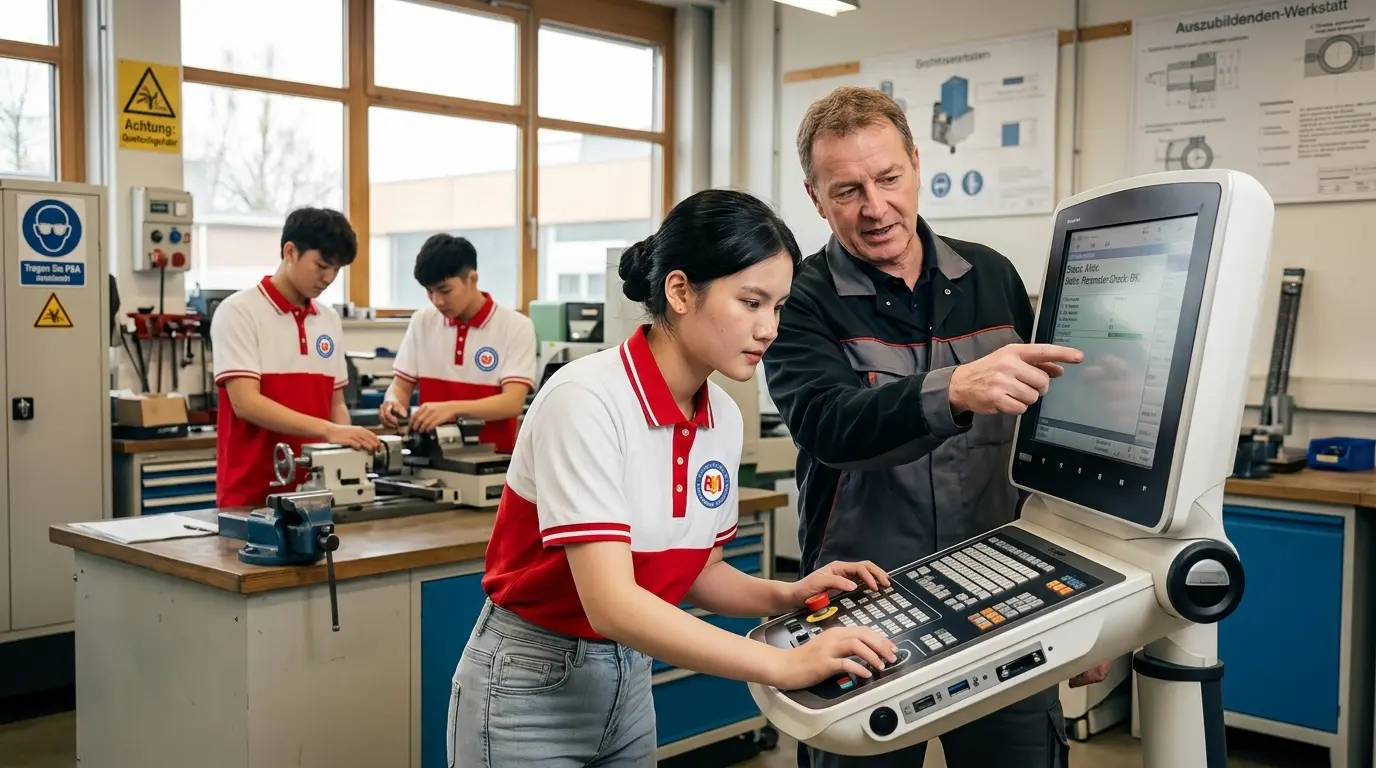
- The important thing is to base it on personal strengths and career goals. For example: if you enjoy working with electrical systems and automation, industrial electricity or automation sectors in Germany have many paid internship programs, accompanied by vocational education at schools and companies.
- For newcomers, connection programs between consulting units and German businesses can help you choose the right sector suitable for your current German language level and ability to meet company requirements.
Ausbildung roadmap and how to apply it
- Typically, Ausbildung lasts 2-3 years, including: practical work at the company (practicing 3-4 days/week) and studying at a vocational school (Berufsschule) 1-2 days/week. You will receive a salary during the training period, depending on the sector and region.
- Language requirements to participate in the program are usually at B1-B2 level before starting and then upgraded to B2-C1 to communicate well in the working environment and with colleagues as well as teachers at the vocational school.
- The visa application process and joining the program often involve support from the center or partners of the German recruitment unit, including preparing documents, language certificates, and interviewing with partner companies.

How to prepare finances and living arrangements for the vocational training path
- Set a budget for the first month as soon as you receive accommodation and startup costs (rent deposit, health insurance, study equipment). You can estimate about 1,000-1,500 EUR for the first month depending on the city and type of stay.
- Allocate fixed spending for rent and utilities first; set aside a small portion for unexpected monthly living expenses in Germany and necessary study materials.
- During the Ausbildung period, many students are paid a very stable salary from partner companies, suitable for covering living costs in Germany and helping to save for language tuition fees or purchasing professional tools.
Real stories from students
The story below illustrates a real case from a student who participated in a vocational training program at a German partner. The student wishes to remain anonymous, so it is retold under a pseudonym.
“I came from Hanoi with a dream of working in electrical engineering – automation and was supported by a vocational study consulting unit with a network of partners in Germany. In the first month in Berlin, I rented a room in a shared apartment with 2 other friends and had to worry about a housing cost of about 420 EUR/month. Thanks to the language support and document preparation from the program, after the first 6 months, I reached a relatively stable German level and started the Ausbildung course at a technical company. The starting gross salary was about 900-1,100 EUR/month and, along with living costs in Germany, was managed under 1,300 EUR/month. After 18 months, I signed an official contract with the company and continued to study at the vocational school. From there, my experience and skills improved, and currently, I expect to continue staying to work after graduation.”
Through this story, you can clearly see two important factors: prior preparation and the link between training programs and real businesses. Sometimes the support of centers and partners can shorten the path to a career, helping you study while receiving a salary and accumulating practical experience.

Key issues to note from practical experience
- Prepare a budget even before flying: Reserve at least 2-3 months of living costs in Germany, especially for the first month. Look for areas with reasonable rents or shared apartment formats to reduce living costs in Germany.
- Invest in basic German before starting the program to be able to communicate and participate in classes at Berufsschule more easily.
- Choose programs that are closely linked with businesses and can provide a career roadmap after finishing the Ausbildung. This gives you the opportunity to work in Germany and have a clear path for the future.
- Prepare documents carefully: Language certificates, academic transcripts, and recommendation letters will help you convince employers and vocational schools more quickly.
- Financial reality and bills: Spend time tracking spending and setting a monthly budget to avoid shortages. Set aside a small fund for medical fees and insurance. In case of emergency, you can contact the student support unit or immigration authorities for advice.

Conclusion – Career orientation with confidence
Monthly living expenses in Germany are an important part of a vocational study plan, but they are not an insurmountable barrier if you have a clear strategy, choose the right career, and receive support from the student community and long-term vocational education partners. Understanding average spending, planning a reasonable budget, and proactively seeking career opportunities will help you get closer to your goals.
If you are considering a vocational study program in Germany and need a realistic perspective from experts, start with a consultation session with specialists at the unit. The important thing is that you have a specific financial plan, German language at a level sufficient to participate in courses and work, and a clear career roadmap from the vocational school and partner company. PDT will be one of the supports helping you access German training programs and partners, while providing practical information for you to step forward with confidence.
Find out more at PDT Education to start your nursing journey in Germany today!