
In recent years, the demand for learning German has increased sharply in Vietnam – from purposes of studying abroad, working, and settlement to the desire to experience European culture. However, many people often feel German is “tough” because of its complex grammar system and different pronunciation. In fact, if you have a clear roadmap and suitable methods, you can completely conquer this language in a way that is easier and more interesting than you imagine.
Why are more and more people learning German?
There are 3 main reasons why German becomes attractive:
Open career opportunities
Germany is one of the strongest economies in the world, always having a demand for human resources in nursing, engineering, mechanics, IT... Many German businesses look for personnel who can speak German, opening up good income and a professional working environment.
Reasonable study abroad costs
Compared to other Euro-American countries, Germany has low tuition fees, even free at many public universities. This can only be taken advantage of if you have the required German language proficiency.
Cultural and travel experiences
German brings you closer to local life, helping you deeply understand the culture, cuisine, customs, and life of German-speaking countries like Germany, Austria, and Switzerland.
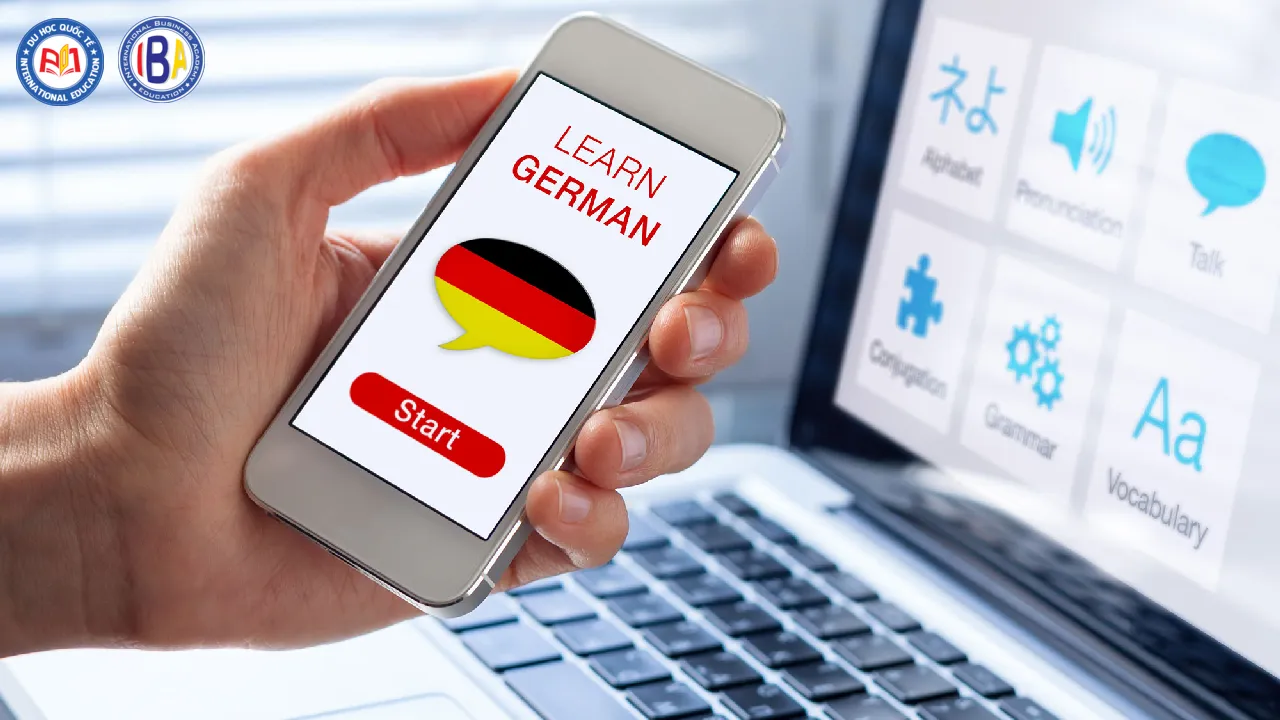
Is German really as difficult as many people think?
Many people complain that German is “twice as difficult as English” because of noun gender, declensions, long sentences, complex compound words... But if you observe closely, German has significant advantages:
- Clear pronunciation system: written words – spoken sounds almost match.
- Logical compound words: understanding each component allows you to guess the general meaning.
- Grammar has rules: complex but not “irrational” like many other languages.
- Roadmap according to standards CEFR clear: A1 – A2 – B1 – B2 – C1 – C2.
The most important point is not whether the language is hard or easy, but how you approach learning it. Many people give up halfway not because German is difficult, but because they start with the wrong method or have no long-term plan.
German learning roadmap for beginners: Where to start?
Learning German will be easier if you divide it into small stages and define clear goals.
A1 – A2 Phase: Getting familiar and building foundations
At this stage, you should focus on:
- Standard pronunciation
- Basic vocabulary
- Common sentence patterns
- Familiarize with sentence structures and noun genders – cases
This is the most important stage. If you learn the wrong pronunciation from the start, you will have to correct it for a very long time later.
B1 – B2 Phase: Flexible language use
When moving up to B1 and B2 levels, you will learn more:
- More complex tenses
- In-depth vocabulary by topic
- Writing letters, writing emails
- Communicating in German in many practical situations
Level B1 is the minimum requirement for many working and vocational training programs in Germany.
C1 Phase and above: Using it like a native speaker
If the goal is university entrance or specialized work, you need level C1 to:
- Understand long and complex lectures
- Present logical viewpoints
- Write theses and academic reports
Regardless of your level, the most important thing is a suitable learning method, not chasing the number of lessons while forgetting applicability.
German learning methods to help you progress faster
Learn by context – do not rote learn vocabulary
Learning by context helps you remember longer and understand how to use words in the right situation. Instead of memorizing “100 new words every day”, learn 5–10 words but put them into example sentences or conversations.
Listen a lot from the beginning
Don't wait until a high level to listen to German. Even if you don't understand everything, getting used to the intonation helps you:
- Pronounce better
- Identify words faster
- Be confident when communicating
- You can listen to podcasts, watch short videos, or listen to the radio.
- Practice speaking every day even for just 5 minutes
Many people are afraid to speak for fear of making mistakes, but in fact, the more mistakes the better, because that is how you progress. If you don't have a study partner, talk to yourself in front of a mirror or record it to listen back.

Learn through supporting applications
A quality German learning app can help you practice vocabulary, listening – speaking – reading – writing flexibly. However, applications are only supporting tools; do not depend 100%.
Write short diaries in German
Every day write a few simple lines:
- What you did today
- How you feel
- One thing you learned
This helps increase language reflexes and memorize sentence structures.
Should you learn German at a center or self-study?
The answer depends on your goals and discipline.
Self-study at home is suitable when:
- You have the ability to organize your own time
- The goal is learning for basic communication
- You like flexible progress
However, self-study easily leads to wrong pronunciation or misunderstanding structures if there is no one to correct them.
Learning at a center or with a suitable teacher when:
- You want to take certificates A1–C1
- You need someone to guide grammar methodically
- You find it difficult to maintain a self-study habit
Conclusion
Learning German will be much easier when you have a clear roadmap, reasonable methods, and a regular practice environment. The most important thing is to start with small steps, maintain the habit, and apply the language to daily life.
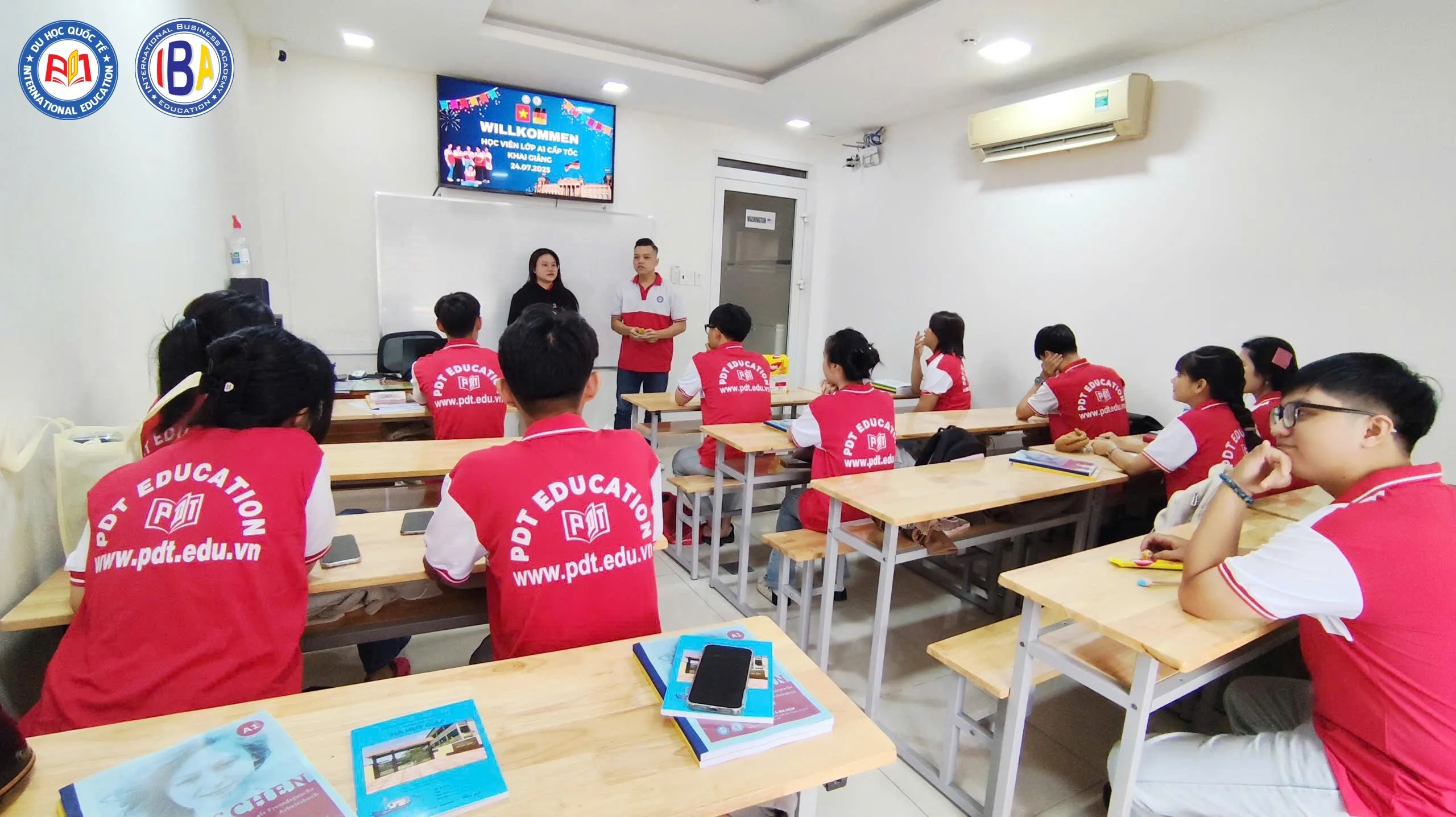
If you want more methodical guidance, PDT Education is a suitable choice. The center provides German courses from A1 to B2, small class sizes, dedicated teachers, and a clear roadmap for both beginners and certificate learners. You can find detailed information or contact PDT for advice.