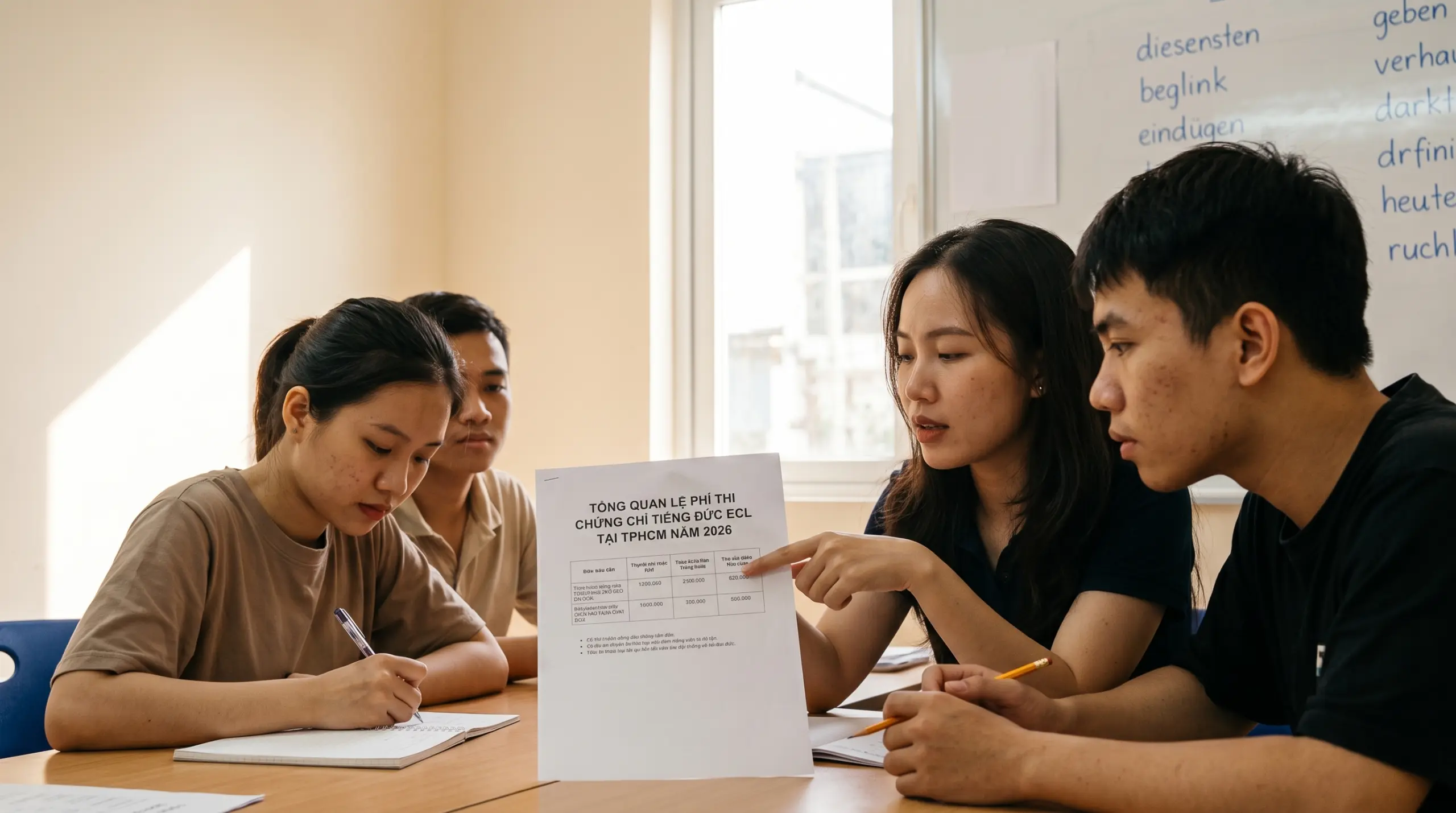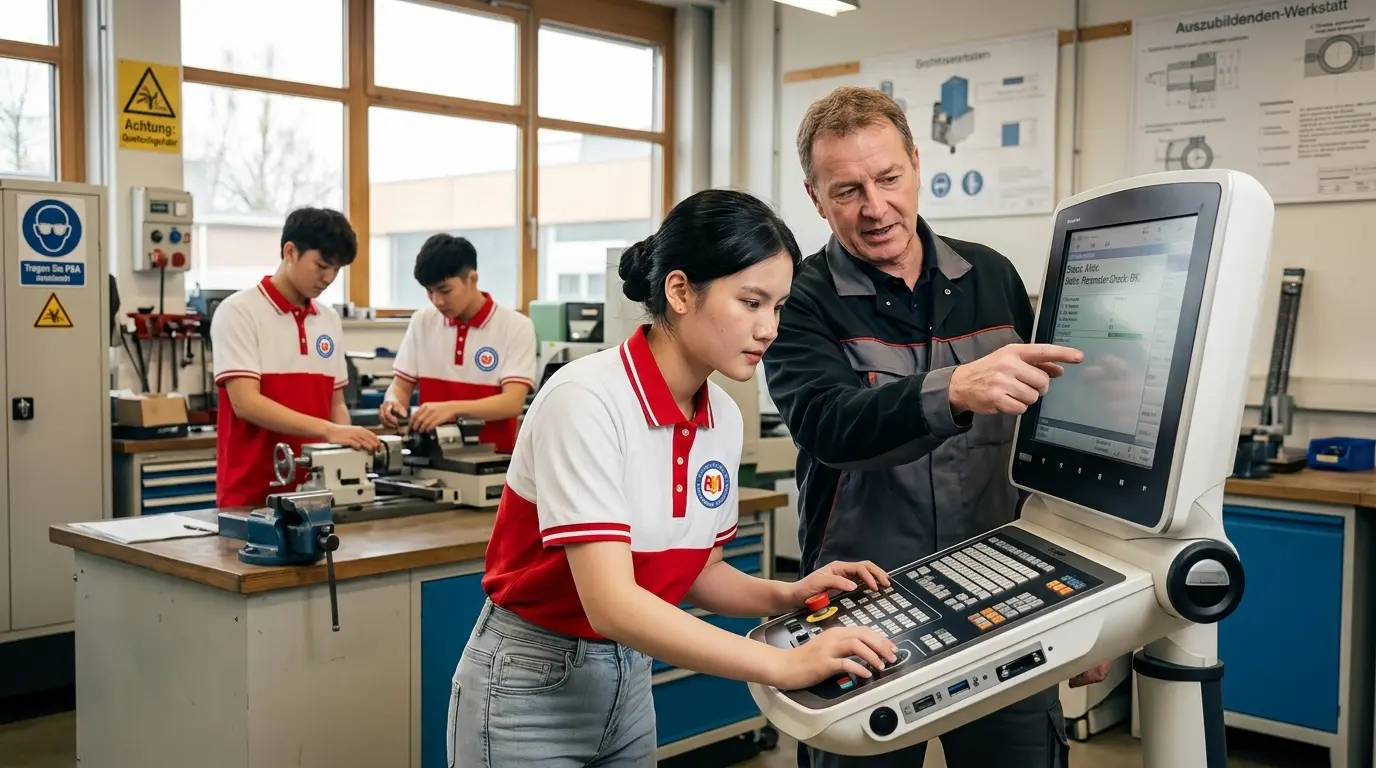


Taking the German B1 exam is an important milestone for those learning the language to work or study abroad. Many people wonder if the German B1 exam is difficult, where to start, how to learn B1 vocabulary, and how to practice German B11 speaking to achieve good results. Especially if you plan to study vocational training in Germany, taking the German B1 exam becomes even more urgent. The article below will help you clearly see the exam structure, difficulty level, effective review methods, and how to connect the B1 certificate with your future career path.

What is the German B1 exam and why is it important?
The German B1 exam is a language proficiency test at the intermediate level according to the Common European Framework of Reference for Languages (CEFR). At this level, learners are expected to be able to use German in familiar situations such as studying, working, and basic social communication.
B1 – The milestone of transforming from basic to application
If A1 and A2 focus on foundations, then B1 marks the stage where you start “living” with the language. Learners can:
- Understand the main content of common conversations.
- Write simple emails and job application letters.
- Present personal opinions on familiar topics.
- Participate in short discussions without depending too much on the interlocutor.
Therefore, taking the German B1 exam is not just about passing an exam but also a step to confirm that you have the ability to use German relatively independently.
The role of B1 in vocational training in Germany
For those aiming for vocational training, the B1 certificate is often an important condition in the application. This level helps you:
- Understand the content of vocational training.
- Communicate basically at the workplace.
- Integrate into a new living environment.
Therefore, serious preparation for the exam not only helps you get the certificate but also creates a solid foundation for your journey of learning and working in Germany.
Is the German B1 exam difficult?
This is a common question: is the German B1 exam difficult? The answer depends on each person's foundation, learning method, and level of practice.

Difficulty level from the perspective of the exam structure
The B1 exam usually consists of four skills: Listening – Speaking – Reading – Writing. Each part tests a specific competence:
- Listening: Understand information from conversations and announcements.
- Reading: Grasp main ideas in emails, advertisements, and short articles.
- Writing: Compose letters, responses, or present opinions.
- Speaking: Direct communication, presenting viewpoints, and discussion.
Difficult or easy lies not in the volume of knowledge but in the ability to apply it flexibly. If you are used to learning grammar in isolation with little practice, the Speaking and Writing parts will be major challenges.
Reasons why many people find it “difficult”
- Lack of vocabulary by topic.
- Little practice of realistic communication reflexes.
- Unbalanced skill learning (focusing only on grammar).
- Unfamiliarity with previous exam formats.
However, with a clear path and appropriate methods, the German B1 exam is entirely within the reach of serious learners.
Methods for learning B1 vocabulary and comprehensive development
At this level, vocabulary plays a decisive role in expression. Learning B1 vocabulary should not stop at individual memorization but needs to be linked to context.

Learn B1 vocabulary by topic
Some common topic groups include:
- Work and professions
- Education and training
- Family and society
- Health and lifestyle
- Living environment
Instead of learning long lists, you should:
- Memorize words in clusters (collocations).
- Create your own example sentences related to yourself.
- Review periodically using mind maps or flashcards.
Combine vocabulary with writing skills
When learning new words, apply them immediately to short paragraphs. For example, after learning the professional topic, you can write a paragraph introducing yourself and your future orientation. This way helps vocabulary move from “knowing” to “usable”.
>>> See more here.
Practicing German B11 Speaking: Secrets to passing the speaking part
The Speaking part is often the biggest concern. Many people look for ways to practice German B11 speaking with the desire to improve reflexes and confidence.
Understand the speaking exam structure
This part usually consists of:
- Self-introduction.
- Discussion on a familiar topic.
- Planning or coming up with a common solution with the partner.
The important point is not to speak too complexly but to speak clearly, coherently, and to the point.
Effective ways to practice speaking
Practice according to familiar topic templates: Prepare outlines for common topics such as work, study, hobbies, and travel. Once you have a “skeleton”, you just need to change details to suit each topic.
Record and self-evaluate: Recording helps you recognize pronunciation errors, hesitations, or word repetitions. From there, you adjust your expression to be more natural.
Increase communication reflexes: Instead of memorizing the lesson, practice answering questions randomly. You can practice with classmates or teachers to create a realistic interactive environment.
Effective German B11 speaking practice does not require complex techniques, but requires persistence and regular practice.
B1 exam review path linked to vocational training goals in Germany
If your goal is vocational training, taking the German B1 exam should be placed in an overall plan.

Build a solid foundation from A2
Before entering B1, make sure you clearly understand sentence structures, basic tenses, and verb conjugation. A weak foundation will make learning B1 heavy.
Combine exam practice and communication practice
Don't just do grammar exercises. You should:
- Do mock exams under real-time conditions.
- Join German language clubs.
- Watch videos, listen to intermediate-level podcasts.
This helps you get used to real language, which is essential for the future vocational training environment.
Prepare mentally for the exam
A stable mindset helps you maximize your ability. Before the exam day:
- Review the exam structure.
- Sleep enough and keep a comfortable spirit.
- Avoid cramming too much new content.
The German B1 exam will be less stressful if you see it as a step to check the learning process rather than a scary “barrier”.
Conclusion: Passing B1 is not just a certificate, but a stepping stone for the future
Taking the German B1 exam is not just about passing an exam but is also an important stepping stone for the journey of vocational training in Germany. When you have a systematic B1 vocabulary learning path and practice German B11 speaking with the right method, you can completely and confidently conquer this exam.
If you need a professional companion from the language learning stage to the vocational training application preparation, PDT International Education is an option worth considering. PDT provides German training programs according to a clear path and supports comprehensive vocational training consultancy, helping you firmly reach B1 and be ready for the future in Germany.
>>> See other topics: Reputable German Center PDT: Successful Vocational Training in Germany?