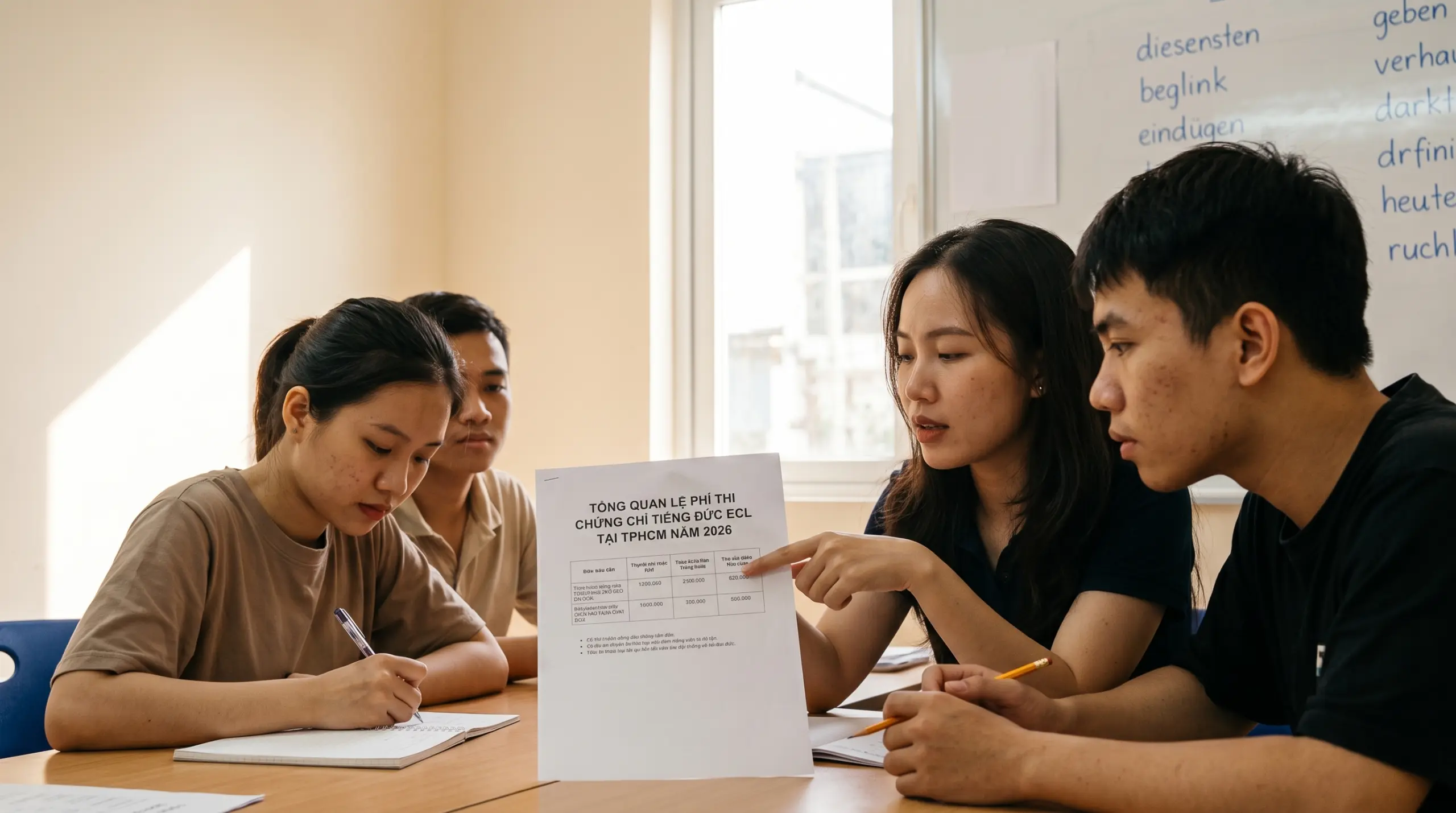


Practicing the german b1 writing exam with the correct structure and scoring criteria is an important step to conquer the exam confidently and effectively. At this level, the german b1 writing task not only requires a solid vocabulary and grammar base but also demands the ability to develop ideas clearly, logically, and appropriately for each prompt type. Mastering how to build a layout, link sentences, and present viewpoints will help you score maximum points and avoid common mistakes when doing the B1 writing task.
Why the German B1 writing exam decides the vocational study journey?
The German B1 writing exam is a key part of the Goethe-Zertifikat B1 exam. This section tests the ability to express ideas clearly and logically in German. For vocational training in Germany, a B1 certificate is a mandatory requirement under Ausbildung Visa regulations.
According to statistics from the Goethe-Institut Vietnam in 2023, 68% of candidates fail the writing section due to a lack of clear structure. Many students at PDT EDUCATION face difficulties because they do not grasp the standard exam format.
This article provides a practical writing framework, illustrative examples, and a check-list. You will learn how to achieve 70/100 points in the writing section – a safe level for visa Germany.
Mr. Nguyen Van Hung (May 2024 B1 course) only scored 55 points in the writing section the first time. After 4 weeks of practicing according to the 4-part framework, he scored 82 points in the September 2024 exam. He is currently studying mechanical engineering in Berlin.
Ms. Le Thi Mai (nursing vocational course) wrote the wrong Brief format and only got 48 points. After mastering the structural checklist, she scored 78 points and received her Ausbildung visa in November 2024.
Standard structure of the German B1 writing exam
The B1 writing exam consists of 2 parts: Brief (letter/email) 80-100 words and Mein Tag / Beschreibung (140-160 words). Time: 60 minutes. Maximum score 100, pass from 60 points.
Goethe requires the Brief to have 5 clear parts: Anrede, Einleitung, Hauptteil, Schluss, Grußformel. The storytelling/description part needs 4 logical paragraphs with appropriate connectors.
Writing Framework for Brief (Letter/Email) B1
- Anrede: Sehr geehrte Frau Müller / Lieber Max,
- Einleitung (2-3 sentences): Ich schreibe Ihnen, weil… / Vielen Dank für Ihren Brief
- Hauptteil (4-5 sentences): Answer 3 bullets in the prompt + 1 self-added idea
- Schluss (2 sentences): Ich freue mich auf Ihre Antwort / Mit freundlichen Grüßen
- Check: Sufficient 80 words, correct format, no spelling errors
Practical example: Prompt “Brief an Firma – asking about Ausbildung”. PDT students wrote all 5 parts and achieved 38/40 points.
Comparison table of common B1 Brief errors
| Common Error | Score impact | How to overcome them | Correct example |
|---|---|---|---|
| Forgot Anrede | -8 points | Write name correctly + Sehr geehrte/Lieber | Sehr geehrte Frau Schmidt, |
| Did not answer all 3 bullets | -12 points | Order 1., 2., 3. answered clearly | 1. Ich interessiere mich für… |
| Messy Hauptteil | -10 points | Each idea in a short paragraph | Zuerst möchte ich… |
| Forgot Grußformel | -5 points | Mit freundlichen Grüßen | Mit freundlichen Grüßen Nguyen Van A |
Tips for writing Part 2: Mein Tag / Beschreibung effectively
Part 2 requires storytelling (ein Erlebnis) or description (mein Tag/Wochenende). Length 140-160 words, 4 clear paragraphs. Use Perfekt + Präteritum tenses.
4-paragraph formula for B1 storytelling
- Paragraph 1 – Einleitung: Wann, wo, with whom? (Gestern bin ich mit Freunden…)
- Paragraph 2 – Aufbau: What happened? 3-4 main events
- Paragraph 3 – Höhepunkt: Climax / most impressive event
- Paragraph 4 – Schluss: Ending + emotions (Es war toll/ Ich habe viel gelernt)
PDT students applying this formula score an average of 36/40 points for Part 2. Important connectors: zuerst, dann, plötzlich, schließlich, danach.
Mandatory B1 vocabulary checklist
- Word count: 140-160 words (excluding proper names)
- Perfekt tense: haben/sein + Partizip II (Ich habe gegessen)
- Connectors: zuerst-dann-plötzlich-zuletzt
- Describe emotions: toll, interessant, langweilig, aufregend
- Adjektivdeklination: einen tollen Tag, interessante Bücher
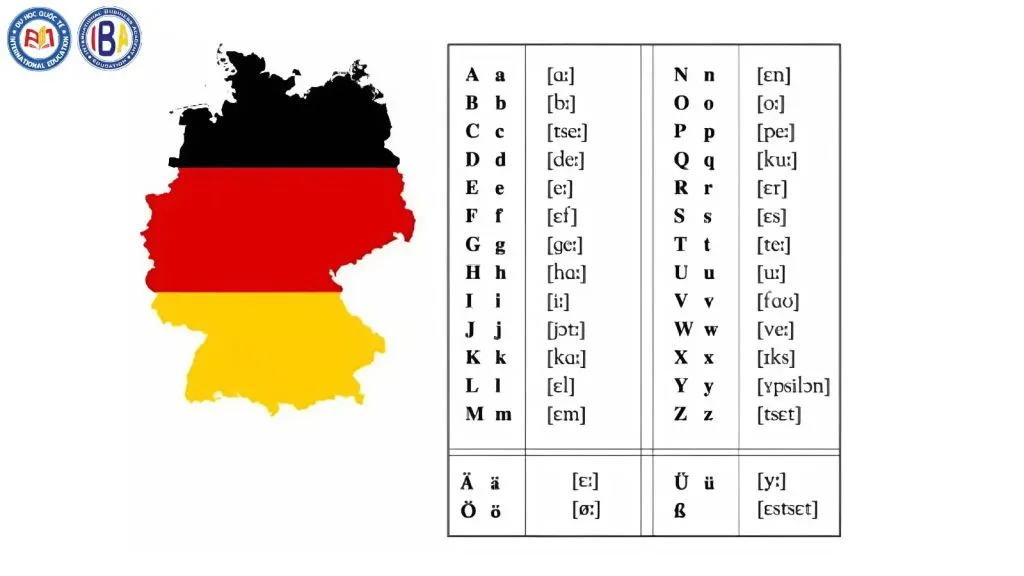
- Spelling check: ss/ß, ae/ä, oe/ö
Analysis of actual B1 exam prompts
The Goethe B1 exam has 6 fixed Brief types and 4 Part 2 types. Mastering patterns helps write fast and stay on point. Among them, 6 common B1 Brief types often encountered:
| Prompt type | Recipient | Advantages | Limitations |
|---|---|---|---|
| Frage nach Ausbildung | Firma | Vocab for vocational training ready, simple structure | Need specialized vocabulary |
| Beschwerde | Firma/Hotel | Standard formula: Problem-Lösung | Easy to write too harshly and lose points |
| Einladung | Freund | Informal language, easy to write | Forget time/location details |
| Umzug/Bewerbung | Vermieter/Firma | Clear pattern | Complex housing/vocational vocab |
| Urlaub planen | Reisebüro | Familiar travel vocab | Need specific data |
| Probleme mit Nachbarn | Vermieter | Standard structure | Difficult polite language |

Practice & self-grading B1 writing effectively
Goethe publishes detailed band descriptors. Understanding criteria helps self-improvement before the real exam.
Goethe B1 Schreiben Scoring Table
| Criteria | 25 points | 20 points | 15 points |
|---|---|---|---|
| Aufgabenbewältigung | Full answer + creative ideas | Answered all 3 points | Missing 1-2 main points |
| Gliederung | 4-5 clear parts | Has basic structure | Confusing, hard to follow |
| Satzstruktur | Diverse Nebensätze | Basically correct grammar | Many basic errors |
| Wortschatz | B1+ diverse vocabulary | Standard B1, little repetition | Poor vocab, repeating words |
Checklist for self-grading B1
- Word count: Brief 80-100, Teil 2 140-160
- Check format: 5 parts Brief / 4 paragraphs Teil 2
- Mark connectors: 6-8 words (zuerst, dann, aber, weil…)
- Find grammar errors: 3+ errors = rewrite
- Vocab check: Are there characteristic B1 words? (Aufenthalt, Bewerbung, Ausbildung…)
- Compare Goethe band descriptors: Aim for 20+/25 per criterion

4-week roadmap to achieve B1 writing 80+ points
Roadmap based on the 80/20 method: focus on 20% of skills that create 80% of the score.
Week 1: Master Brief format
- Do 7 sample Goethe Brief prompts (1 prompt/day)
- Copy 10 sample Briefs from the 25-point band
- Self-grade according to the 5-criteria checklist
- Rewrite 3 buggy essays >3 grammar errors
Expected result: Brief stable at 32+/40 points.
Weeks 2-3: Part 2 storytelling + vocab
- Vocab list of 200 most common B1 words
- Practice 14 storytelling prompts (Mein Tag, Urlaub, Erlebnis…)
- Record yourself reading, check pronunciation of connectors
- Ask a teacher to grade the first 7 essays
Week 4: Full test + fix errors
Do 4 full 60-minute real exam prompts. Focus on recurring errors. Real exam aim 80+ points.
Conclusion: Key to success in the B1 writing exam
A successful German B1 writing exam is achieved when mastering the 5-part Brief structure + 4-paragraph storytelling. Applying the self-grading checklist helps increase scores significantly by 10-15 points. Each student has different strengths: some are good at vocab but weak in structure, others are good at format but lack ideas. Adjust the roadmap according to personal strengths. Refer to official Goethe sample exams and band descriptors. Follow the channel PDT International Education to update the latest exam questions. Wish you soon achieve B1 and conquer your German dream!