A B1 German certificate is an important milestone for those planning to study in Germany in the future. This is not only a mandatory requirement for many vocational training and university preparatory programs but also a foundation that helps learners confidently integrate into living, studying, and working in a German-speaking environment. However, many people are still vague about the true value of a B1 German certificate, the differences between B1, B2, and C1 German certificates, as well as an effective learning roadmap starting from the German alphabet and the CMMB German system. This article will help you understand comprehensively, define the right learning direction, and prepare best for your long-term journey to study in Germany.
B1 German Certificate and Its Decisive Role in German Study Abroad Profiles
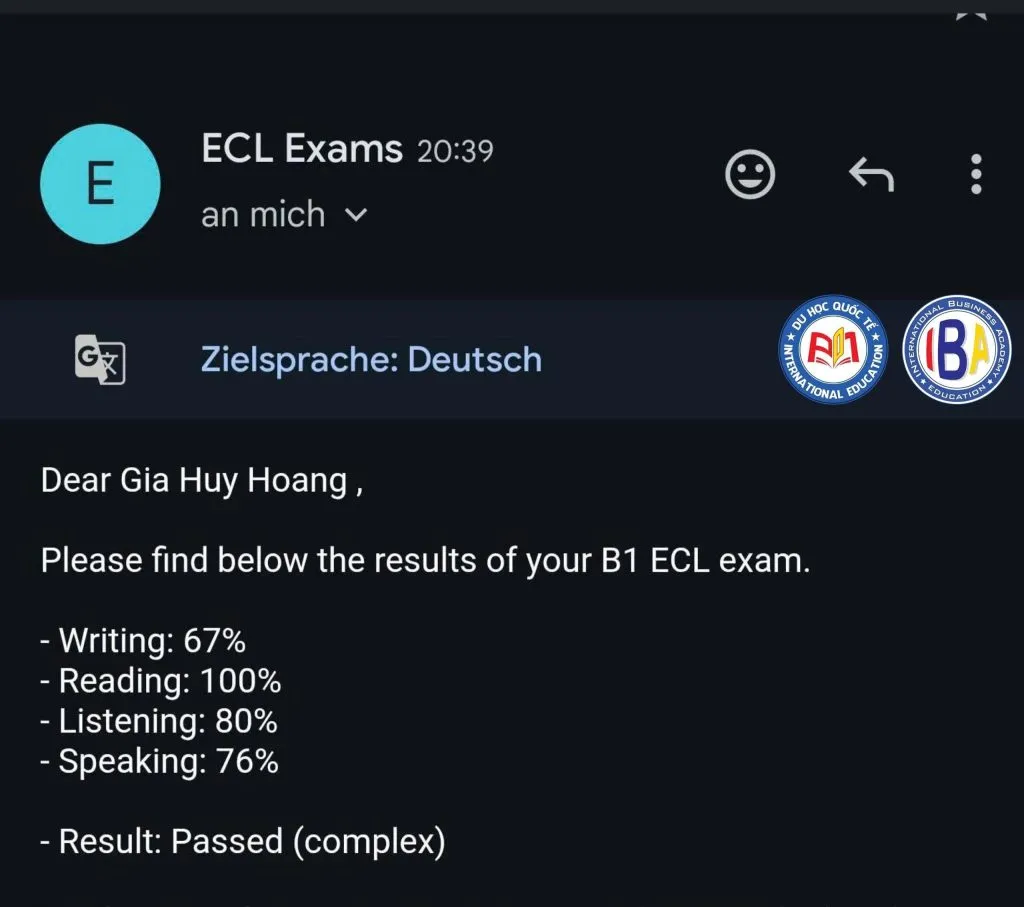
A B1 German certificate is considered the first door opening the path to studying in Germany for the majority of Vietnamese students. At this level, learners are assessed as having the ability to use German independently at an intermediate level, sufficient for daily communication and accessing basic learning environments in Germany. This is a common requirement in vocational training programs, preparatory studies, or visa applications to study in Germany.
With a B1 German certificate, learners can understand familiar conversations, handle daily situations such as shopping, renting a house, traveling, and exchanging information with teachers or colleagues. This is especially important because when you go to Germany, you will have to be completely independent in an environment using 100% German.
Compared to B2 and C1 German certificates, the B1 level does not yet require the ability to use complex academic language. However, without reaching B1, learners are almost ineligible to proceed further in the study abroad roadmap. Therefore, a B1 German certificate is not just a certification but also a measure of the initial ability to adapt to the German environment.
For those with long-term goals, investing seriously in a B1 German certificate will help shorten the time to advance to higher levels. A solid B1 foundation will create a favorable premise for obtaining B2 and C1 German certificates later on.
Distinguishing B1, B2, and C1 German Certificates to Define Learning Goals
Many people starting to learn German often ask whether they should stop at a B1 German certificate or continue studying for B2 or C1. In reality, each level serves a different goal, and not everyone needs to reach C1 from the beginning.
A B1 German certificate is suitable for those newly arriving in Germany for vocational training, preparatory studies, or needing a certificate to complete a visa profile. At this level, learners can communicate in familiar situations, present simple personal opinions, and understand content that is not too specialized.
A B2 German certificate requires the ability to use German more flexibly, especially in academic and professional environments. Someone with B2 can attend higher professional programs, communicate effectively at work, and access academic materials at a fair level.
Meanwhile, a C1 German certificate is a high level, usually required for university programs taught entirely in German or fields requiring intensive linguistic competence. Those who reach C1 have the ability to express complex ideas, debate, and write academically close to a native speaker level.
For the majority of Vietnamese students, a reasonable strategy is to focus on achieving a B1 German certificate first, then continue studying for B2 and C1 once in Germany. This helps reduce learning pressure and makes good use of the native environment.
Learning Roadmap to Achieve a B1 German Certificate from Scratch
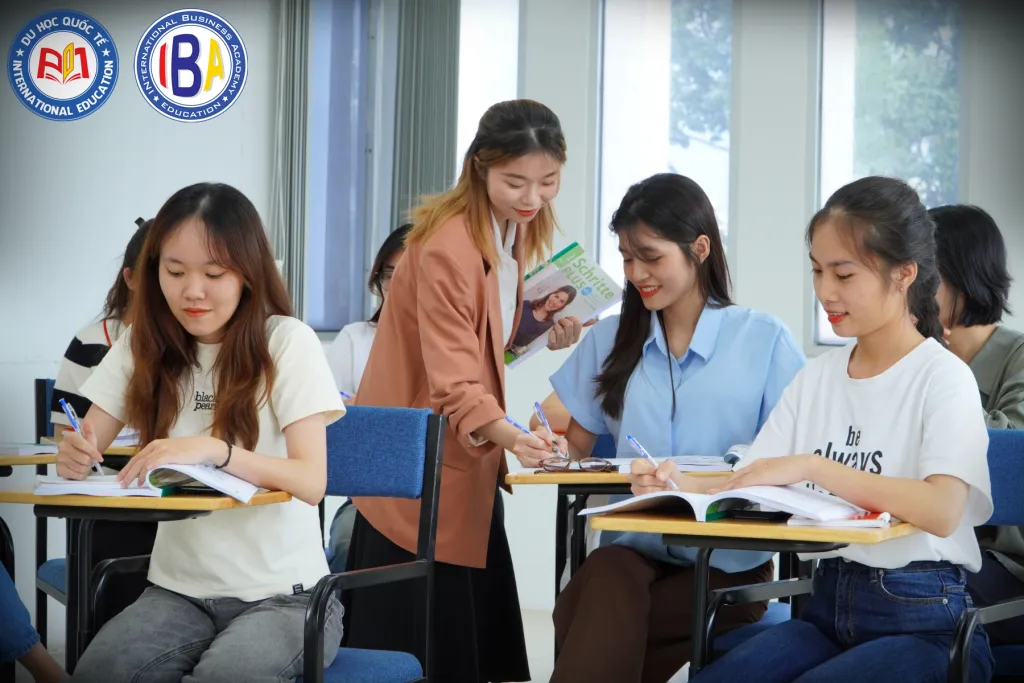
To achieve a B1 German certificate, learners need a clear roadmap, going from foundation to advanced, avoiding scattered learning or missing important knowledge. This roadmap is particularly suitable for those with the goal of studying in Germany in the future.
The first stage always starts with the German alphabet. Learning the correct pronunciation from the beginning helps learners hear accurately, speak correctly, and limit long-lasting mistakes. The German alphabet has unique features such as umlauts and special characters; if not mastered, these will cause great difficulty when advancing to the B1 level.
After mastering pronunciation, learners need to approach the CMMB German system. This is the core part including important grammatical structures such as verb conjugation, basic tenses, word order, subordinate clauses, prepositions, and standard sentence construction. This knowledge appears throughout the B1 German certificate exam.
Parallel to grammar, the balanced development of the four skills—listening, speaking, reading, and writing—is a mandatory factor. Many people only focus on reading and writing while neglecting speaking practice, leading to great difficulty when participating in the B1 speaking exam or when communicating in reality in Germany.
A reasonable learning roadmap to achieve a B1 German certificate usually lasts from 8 to 12 months, depending on the initial foundation and daily study time. The important thing is to maintain discipline and focus on the core requirements.
B1 German Certificate as the Foundation for a Long-Term Study Abroad Journey
A B1 German certificate is not the final destination, but the foundation for a long-term journey of study and development in Germany. Once B1 is achieved, learners have enough ability to live independently, continue advanced studies, and adapt to a new living environment.
In reality, many students, after achieving a B1 German certificate, have gone to Germany and continued studying for B2 and C1 certificates at a much faster pace than studying domestically. The native environment helps language reflexes improve significantly and increases the ability to use German in practice.
Additionally, a B1 German certificate helps learners feel more confident when working part-time, communicating with locals, and handling administrative procedures. These are indispensable life skills if you want to study and live long-term in Germany.
For recruiters and educational institutions, a B1 German certificate clearly demonstrates the serious orientation of the learner. From this foundation, conquering higher levels such as B2 and C1 German certificates will become much more feasible and effective.
The German alphabet is the foundation determining the ability to advance to a B1 German certificate
The German alphabet is the decisive starting step for the entire German learning journey, especially for those aiming to achieve a B1 German certificate for studying abroad. Although German uses the Latin alphabet like English, the pronunciation is completely different and includes additional special characters such as ä, ö, ü, and ß. If learners do not master these from the start, incorrect pronunciation will lead to serious consequences in listening, speaking, and even writing skills.
During the B1 German exam preparation process, the listening and speaking sections require learners to accurately identify sounds and react quickly. Learning the standard German alphabet helps learners form the ability to link letters and sounds, thereby understanding daily conversations and exam tasks better. This is also a factor that helps learners avoid the “knowing the word but not hearing it” situation—a very common error among beginners.
Furthermore, the German alphabet is directly related to reading comprehension skills. When pronouncing correctly, learners will read faster, spend less time spelling, and memorize vocabulary more easily. This creates a great advantage when entering the grammar and CMMB German learning stage at the A2 – B1 level.
It can be said that if the B1 German certificate is the goal, then the German alphabet is the foundation. A solid foundation will help the entire subsequent learning process happen smoothly, effectively, and save much more time.
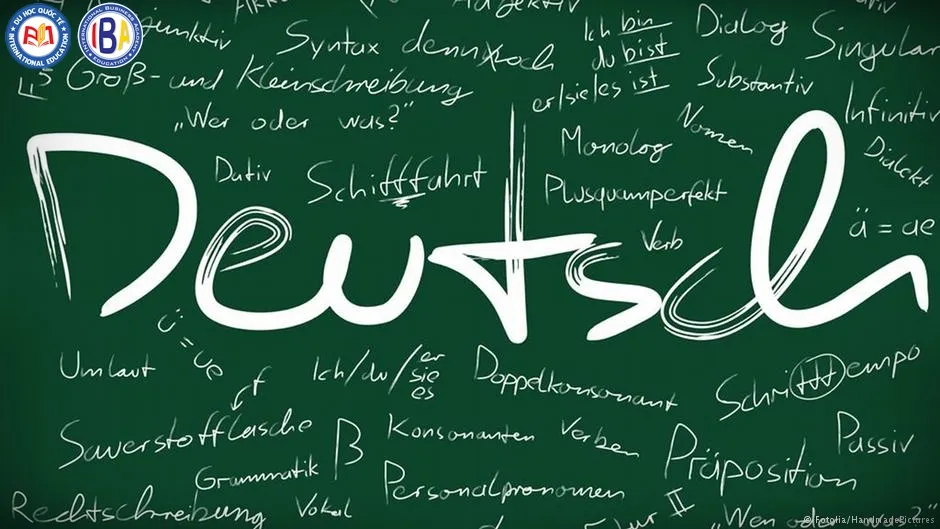
CMMB German is the core grammar system to pass the B1 exam
CMMB German plays a central role in forming language use capabilities at the B1 German certificate level. This is a collection of grammatical structures from basic to intermediate that learners must master if they want to achieve a safe score in the exam. Unlike many other languages, German has a strict and flexible word order depending on the type of sentence, making grammar a key factor.
In the B1 German certificate exam, CMMB German appears throughout both writing and speaking skills. Learners need to correctly apply verb tenses, conjugate verbs according to the subject, place verbs correctly in main and subordinate clauses, and use prepositions appropriate to each context. Just a wrong word order can lead to the entire sentence being evaluated as not meeting the requirement.
Beyond exam purposes, CMMB German also helps learners communicate clearly and understandably in reality. When living in Germany, you will frequently have to present opinions, explain issues, or handle administrative situations. Without a solid grasp of grammar, expression will be fragmented and cause misunderstandings.
The most effective way to learn CMMB German is not rote memorization, but practicing sentence construction, writing short paragraphs, and speaking regularly. When grammar is attached to practical contexts, learners will progress faster and feel more confident when entering the B1 German certificate exam.
Strategy for learning from B1 to B2, C1 German certificates for long-term study abroad goals
A B1 German certificate is not an end point, but the starting step for a long-term learning strategy if the learner identifies a long-term commitment to Germany. After achieving B1, learners have enough linguistic competence to live independently and continue improving their level in a native environment, where studying for B2 and C1 German certificates becomes much more effective.
At the B1 level, learners have formed a foundation in vocabulary, grammar, and communication reflexes. This is an ideal condition to expand to B2, which requires deeper expression, understanding academic content, and communicating in professional learning and working environments. If the B1 foundation is solid, the B2 learning process will be fast and less pressurized.
For those with goals of university study or long-term work in Germany, a C1 German certificate brings a great advantage. However, C1 is only truly feasible when the learner does not skip or study the B1 stage superficially. “Burning stages” often leads to losing the roots and discouragement.
The strategy chosen by many international students is to complete the B1 German certificate in Vietnam, then continue B2 and C1 studies in Germany. This method helps take advantage of the natural language environment, increases the speed of progress, and significantly saves study time.
Conclusion
A B1 German certificate is not just a mere language certificate but also an important foundation opening up opportunities for study, work, and long-term settlement in the FRG. Building a methodical German learning roadmap, starting from the foundation of pronunciation, the German alphabet, the CMMB German system, through to conquering the B1 German certificate, will help learners save time, costs, and avoid unnecessary barriers in the study abroad journey. Once B1 is solid, continuing to B2 and C1 German certificates will become easier and more effective, especially in a native environment.
To realize this goal, choosing a reputable training and consulting unit plays a key role. PDT International Education was founded in 2015, operating in the field of education, training, and supplying high-quality human resources for developed markets worldwide. In more than 8 years of construction and growth, PDT International Education has gradually affirmed its position in both quality and scale through successful consulting and enrollment for many diverse programs.
PDT International Education focuses on foreign language training, especially English and German, and is also the exclusive unit in Vietnam allowed to organize exams and issue certificates recognized worldwide. Besides, PDT also provides highly skilled human resources for domestic and international markets, while consulting on study abroad for many countries, with a focus on consulting for study, work, and settlement in the FRG with many attractive policies and incentives. This is a reliable support point for those who are seriously pursuing the path of studying in Germany in the future.