

German Alphabet and Career Orientation Secrets – German Vocational Training Journey with PDT
Starting from the German alphabet sounds like a simple thing, but behind each character is a gateway to understanding the vocational culture and labor market in Germany. As a reputable vocational study abroad consultancy in Vietnam, we realize that mastering the language and choosing the right career orientation will bring real results, not just paperwork and advertising. PDT International Education will accompany you at every step of preparation, from language learning to internships and job applications after graduation. However, that path has both opportunities and challenges, and this article will recount real evidence from students along with specific advice for you to start confidently.
German alphabet and steps to conquering careers in Germany
The German alphabet is not just a collection of letters. It is the reference system for how you pronounce, understand vocational terminology, and quickly grasp job requirements in Germany. Distinct pronunciations like ä, ö, ü, and ß can be small initial barriers, but they are also the keys to listening comprehension in a real working environment. When you master the alphabet and correct pronunciation, your ability to keep pace with job descriptions, technical documents, and communication in the company will increase significantly.

Some useful practice principles
- Master the alphabet and special sounds: ä, ö, ü, ß. This helps you read job descriptions, safety instructions, and skill requirement lists accurately.
- Practice pronunciation through standard sources and repeat with a steady rhythm, especially when reading vocational vocabulary related to electricity, mechanics, healthcare, or IT.
- Use flashcards and listening-speaking apps to form language habits in daily life, from describing processes to communicating with colleagues.
- Connect language with profession: read job descriptions in German, take notes on specialized vocabulary, and practice interview questions in professional language.
Benefits and Challenges
- Benefits: Mastering the alphabet and standard sounds helps you quickly understand vocational education documents, enhancing your ability to participate in internships and communicate with German work teams.
- Challenges: The volume of specialized vocabulary and technical phrases requires practice time. To overcome this, you need a methodical learning path and support from a career orientation program.
Stories of students learning the German alphabet
A typical story is from a young person named Ha, from the Central region, starting with a 6-month German language program. Ha had difficulty with 'o' sounds and umlauts when reading job descriptions in the mechanical industry. To overcome this, she joined a vocational language discussion group, practiced pronunciation daily, and applied vocabulary to job description writing.
As a result, after 6 months, Ha reached A2-B1 level in basic communication and could participate in interviews with prepared questions in German. This memory shows that patience with the German alphabet can shorten the path to internship and employment opportunities.

Secrets to career orientation based on skills and German market needs
Career orientation when studying vocationally in Germany depends on both your skills and the actual needs of the labor market. Germany is short of labor in many industries such as mechanics, industrial electronics, healthcare, and information technology. This creates opportunities for students with a good language foundation and certified vocational skills.
Based on consulting experience and 2024 data from vocational programs in Germany, more than 70% of students in vocational programs have positive progress after the internship phase and are recommended to continue working in various industrial areas. However, success does not come naturally; it requires clear goals and a specific action plan.
Career orientation – specific steps
- Assess personal capacity and strengths: do you like working with machinery, assembly, and maintenance or user care and IT applications? Linking strengths with industries lacking human resources in Germany is the key.
- Survey market demand in the region you will go to: each state in Germany has its own strengths in industries, jobs, and A/B1 internships have different levels of competition.
- Build short-term and long-term roadmaps: combine specialized German language learning with vocational training courses and practical internships at recognized units.
- Prepare documents and vocational certificates: certificates such as Meister, or vocational certificates recognized in Germany will increase job opportunities after completing the course.
- Utilize connections with recruitment partners and schools in Germany: most job opportunities come from highly-rated internships and recommendations from schools or businesses.
Practical advice
- Read job descriptions in German carefully and note down specialized terms to practice every day. This helps you understand the meaning of tasks and skill requirements even while still in Vietnam.
- Participate in career orientation sessions early, even when you do not have full documents to apply for a visa. This helps you form career goals and a support network from the start.
- Prepare a technical portfolio and small projects you did during your studies. This is real evidence of capacity when you apply for internships or interviews.
- Partners and consulting units can help you connect with internship opportunities in Germany, but you still need to be autonomous in learning and accumulating practical experience.

German language learning path starting with the German alphabet
In reality, a concise data table about the German language learning path from the German alphabet and internships can help you visualize the progress. Below is a reference table for a young person wanting to pursue a career in mechanics and industrial electricity in Germany.
| Stage | Main content | Time period | Expected results |
|---|---|---|---|
| Phase 1 | Learn German (A1-A2) with a focus on vocational vocabulary and basic communication, German alphabet | 3-4 months | Understand and speak basic job description sentences and work processes |
| Phase 2 | Career orientation program + short-term vocational practice | 4-6 months | Prepare internship application documents and small project presentations |
| Phase 3 | Internship at an enterprise and participate in vocational certification courses | 6-12 months | Collect vocational certification and job position proposals after internship |
| Phase 4 | Complete work visa documents and apply for jobs in suitable areas | 3-6 months | Internship position retained or job offer received from German partners |
Student stories
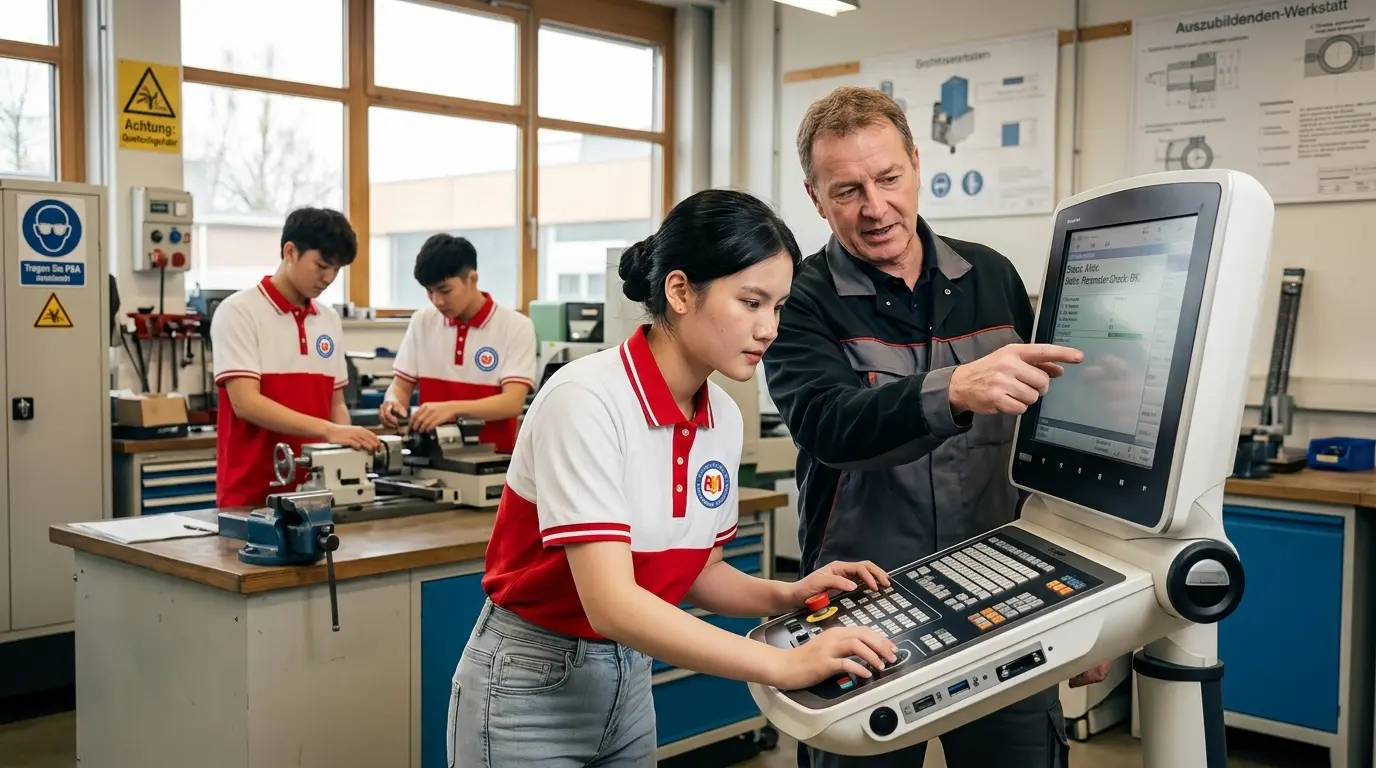
A student named An from Hanoi with a passion for mechanics. He joined a partner's program in Vietnam, learning the German alphabet and German while participating in small mechanical projects organized by the center. After 9 months of diligent listening and speaking practice and getting used to technical terms, An received a 6-month internship at a mechanical workshop in the state of Bavaria.
During this time, An not only improved machine operation skills but also learned how to communicate with colleagues and supervisors in German daily. After finishing the internship, An received a formal job offer and decided to stay and work in Germany for a long time. An's case shows that the connection between language and profession can bring real opportunities right from when you start learning.
Real connection – action and inspiration to move forward
To turn the German alphabet and career orientations into reality, a specific action plan and the right support sources are needed. Challenges such as cultural differences, living costs, and internship application processes may make you flinch, but with the right information and proper preparation, you can overcome them.
Practical advice on acting right now
- Current assessment: Where are you in terms of German language, the German alphabet, and vocational skills? Take a self-assessment test to determine the gap with your goals.
- Create a 90-day short-term plan: Choose 1-2 specialized German subjects and 1 vocational program to participate in, and start building a personal project portfolio.
- Participate in career orientation sessions and recruitment seminars of partners in Vietnam or Germany to get used to recruitment processes and document requirements.
- Note Visa and internship application process: Find out about suitable visas for short-term internships and work, prepare documents and recommendation letters from schools or training units.

Choose a reputable companion
When you accompany a reputable organization, your story can start from small steps but will lead to real opportunities in Germany. In this process, you will receive support from recognized vocational programs and a network of recruitment partners present in Germany – resources that help you overcome language and cultural barriers.
For example, from reality, some students have combined specialized German learning and internships at local enterprises. After completing the learning and internship phase, many students received job offers or were introduced to supplementary programs to improve their vocational level. These results show that the support ecosystem of educational partners and German businesses can create significant progress for you if you know how to use it correctly and prepare proactively.
Conclusion
In conclusion, remember that the journey of vocational study in Germany is not just about learning vocabulary or grammar but also an opportunity for you to discover yourself and shape your professional future. With the companionship of a reputable consulting unit and a clear plan, you can turn the German alphabet into a door opening to a solid career in Europe.
If you are looking for a carefully designed and realistic roadmap, consider participating in the career orientation and language learning program at a trusted partner unit. You will receive support from a team of consultants and recruitment partners in Germany, helping you build a vocational study abroad journey systematically and safely. As a reliable support, PDT International Education always listens and shares grounded information to help you make the right decision for your professional future.
Start from a small step today: take a basic German test, participate in a career orientation meeting, and submit applications for suitable programs. That is a meaningful start for a promising German vocational study abroad journey.