

In 2026, the cost of labor export to Germany continues to be a top concern for many workers aiming for job opportunities in Europe. However, not everyone clearly understands how much they need to prepare and what specific items are included.
So, what will you actually have to pay before setting foot in Germany? The article below will help you break down each fee in detail, allowing you to proactively plan your finances safely and effectively.
Overview of Labor Export Costs to Germany in 2026
Labor export fees do not have a fixed figure for everyone. It depends on many different variables. Understanding these variables helps you estimate your budget more accurately so you won't be surprised by unexpected charges.
Core factors determining the initial financial level
German language proficiency is the biggest determining factor for the total cost. If you already have a B1 certificate, you will save a large amount of money. The shorter the study time, the lower the living expenses in Vietnam.
Professional skills also directly affect the amount of money you have to spend. People who already have a vocational college degree will be exempted from retraining fees. You can go to Germany to work immediately with an official salary.
Conversely, unskilled workers will incur additional initial vocational training fees.
How do Euro exchange rate fluctuations and inflation affect things?
According to a 2026 European labor market report, inflation is changing. This causes the cost of living in Germany to increase slightly compared to before. Fluctuations in the Euro exchange rate also change the converted amount in VND. Therefore, you need to closely monitor the exchange rate to choose the best time to pay fees.
Inflation also pushes up airfares and public services. Visa application fees and document notarization are all adjusted upwards. However, the basic salary in Germany has also increased accordingly. Therefore, the income-expenditure calculation remains extremely beneficial for workers.
Cost differences between key industry groups
Medical sectors such as nursing always enjoy the most incentives. Most hospitals in Germany sponsor the entire cost of study. The restaurant and hotel industry group, however, requires students to self-fund a portion of the fees. You need to carefully consider your financial capacity before choosing a major.
At PDT EDUCATION, we always carefully analyze each student's budget. According to PDT EDUCATION research, the mechanical engineering industry requires a relatively large initial investment. However, the starting salary for mechanics is very attractive. You will quickly recover your capital after just a few months of work.
| Industry | Average Fee (VND) | Level of Support in Germany | Payback Period |
|---|---|---|---|
| Medical Nursing | 30,000,000 – 50,000,000 | Sponsorship of 100% tuition fees | 2 – 3 months |
| Restaurant and Hotel | 80,000,000 – 120,000,000 | 50% accommodation support | 4 – 6 months |
| Mechanical Manufacturing | 100,000,000 – 150,000,000 | High internship salary | 5 – 7 months |
| Basic Construction | 90,000,000 – 130,000,000 | Transportation support | 4 – 6 months |
- Clearly determine your current foreign language level.
- Re-evaluate qualifications and practical work experience.
- Monitor the Euro exchange rate weekly to choose the time of payment.
- Compare support policies of at least 3 different industries.
- Create a monthly cash flow forecast table before flying.
- Seek advice from a reputable career orientation expert.
Example 1: Nam chose to go into nursing. Thanks to the support policy, Nam only spent 40 million VND for the entire process. This money was mainly used for language study and paperwork.
Example 2: Ms. Lan went into the hotel chef industry. Because she had to pay brokerage and vocational training fees, the total cost reached 110 million. However, her first month's salary reached 2,500 Euro.
Practical tips: Always choose industries that are facing severe labor shortages. These industries often have very attractive travel fee sponsorship packages.
“Breaking Down” Detailed Labor Export Costs to Germany Before Departure
Budget for language learning and certificate exams
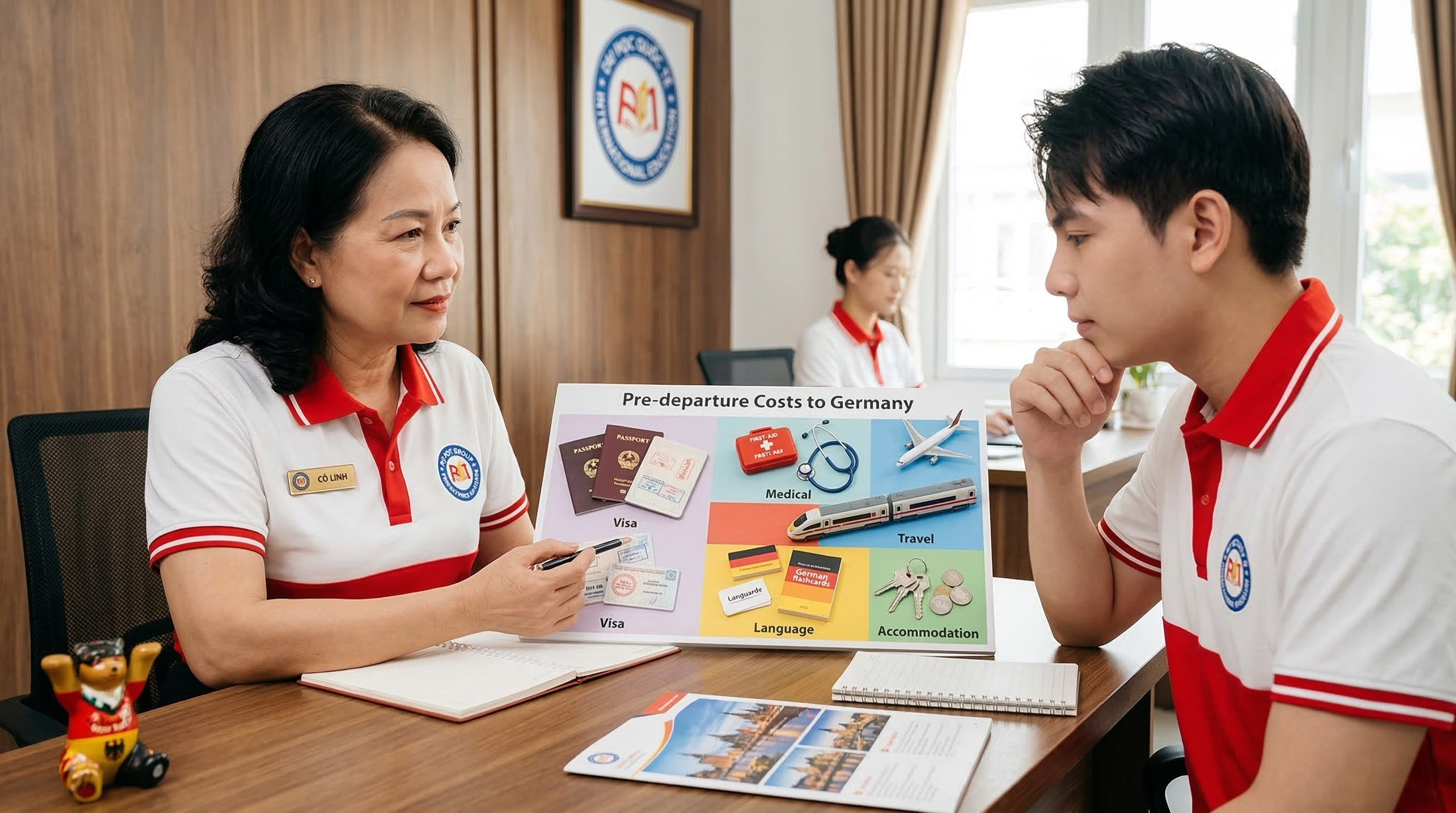
Learning a foreign language is your biggest profitable investment. Typically, a course from A1 to B1 lasts about 8 to 10 months. Average tuition fees range from 35 to 45 million VND depending on the center.
You can refer to the German language training program at reputable establishments.
In addition to tuition, you need to prepare money to register for international certificate exams. The current B1 certificate exam fee at the Goethe Institute is about 4 to 5 million VND. If you fail one skill, you will have to pay to retake that skill.
Therefore, serious study from the beginning is the best way to save.
Fees for document processing, translation, and notarization
Applications to Germany require absolute legal accuracy. This process includes translation, notarization, and consular legalization of degrees. The total budget for document processing usually falls between 10 to 15 million.
This price may change depending on the number of your diplomas.
Many of you want to do the paperwork yourself to save on service fees. However, if an error occurs, your visa application may be rejected. You will have to start over from scratch, which is much more time-consuming.
Budget for health check-ups, visas, and airfare
You are required to have a health check-up at hospitals designated by the Embassy. The cost of a general medical examination is usually 2 to 3 million VND. If a condition requiring treatment is detected, you will have to spend more money on medical care.
The current German national visa fee is 75 Euro. A one-way air ticket from Vietnam to Frankfurt ranges from 15 to 25 million. If you book 2 months in advance, the price will be significantly cheaper. Consulting companies usually support students in hunting for good airfares.
| Pre-departure Fee Items | Estimated Fee (VND) | Important Notes |
|---|---|---|
| German language study A1 – B1 | 35,000,000 – 45,000,000 | Continuous study for 8-10 months |
| B1 certificate exam fee | 4,500,000 – 5,500,000 | Pay directly to the Goethe Institute |
| Document processing and notarization | 10,000,000 – 15,000,000 | Including consular legalization |
| General health check-up | 2,000,000 – 3,000,000 | Exam at designated hospitals |
| Visa fee and Airfare | 17,000,000 – 27,000,000 | Should book tickets 2 months in advance |
- Set up an emergency contingency fund equal to 10% of the total expected budget.
- Request the training center to provide a transparent contract.
- Study in groups to save on the cost of buying exam preparation materials.
- Always keep all payment receipts as legal evidence.
- Conduct a preliminary health check-up at the district level before going to the central level.
- Ask experts for help reviewing documents before submitting them to the Embassy.
Example 1: Mr. Hung did the document translation himself to save 2 million VND. As a result, the translation had wrong medical terminology, causing his application to be returned. He had to pay to redo it from scratch, costing an extra 4 million.
Example 2: Ms. Mai asked the center to buy air tickets for a group of 5 people. Thanks to the group ticket policy, she saved 5 million VND compared to buying individually. She used this money to buy more cold-weather clothes to take to Germany.
Practical tips: Register for multiple B1 mock exams at the center. This helps you reduce the failure rate and avoid spending money on retakes.
>>> See more: How to Prepare Financial Proof for Vocational Study in Germany?
Estimating Initial Living Expenses in Europe

Rent and first month's security deposit
Workers need to understand the regulations on residency laws in Germany, especially the requirements related to accommodation when first arriving. Usually, you will have to pay a deposit equivalent to 2–3 months' rent as required by the landlord.
The rental price for a shared room usually ranges from 300–450 Euro/month, depending on the area and living conditions. Therefore, the total amount to prepare initially for renting could be up to about 1,500 Euro to ensure stable accommodation upon arrival.
In large cities like Munich or Berlin, rental costs are often significantly higher than the general average. Not only that, finding a room here is also quite difficult due to high demand and competition. Therefore, you should consider choosing jobs in small states or suburban areas to settle down more easily.
The standard of living in these areas is “more breathable”, helping you save a significant amount of costs each month and reducing financial pressure during your initial time living in Germany.
Budget for mandatory health insurance
Health insurance is mandatory for every citizen residing in Germany. Public insurance premiums usually account for about 14% to 15% of total monthly income. Popular insurance companies like TK or AOK provide very good services.
Although the cost is quite high, you will receive medical care completely free of charge.
In the first month in Germany, you must pay this insurance fee yourself. The average payment falls around 100 to 120 Euro per month. Businesses usually support paying half of this amount with you. Having insurance gives you peace of mind working in a new environment.
Personal living expenses, food, and transport tickets
The cost of home-cooked food in Germany is quite reasonable. A month of supermarket shopping for self-cooking costs only about 150 to 200 Euro. However, if you eat at restaurants frequently, your budget will quickly run out. Self-cooking is the most effective way to save money for newcomers.
Regarding travel, you should buy a monthly public transport pass for convenient movement. The current national monthly transport ticket price is very favorable. It helps you go to work and go out for a fee of only about 50 Euro.
| Living Expense Item | Fee in Large Cities | Fee in Suburban Areas |
|---|---|---|
| Rent (Shared) | 450 – 600 Euro/month | 250 – 350 Euro/month |
| Security deposit (One-time) | 1,000 – 1,500 Euro | 600 – 800 Euro |
| Supermarket food costs | 200 – 250 Euro/month | 150 – 180 Euro/month |
| General monthly pass | 49 – 60 Euro/month | 49 – 60 Euro/month |
| Personal health insurance | 110 – 130 Euro/month | 110 – 130 Euro/month |
Tips to save on living costs in Germany:
- Hunt for weekend promotions at Aldi or Lidl supermarkets.
- Invite roommates to cook together to share food costs.
- Register for supermarket membership cards to receive discount points.
- Buy warm clothes in Vietnam instead of buying completely new ones in Germany.
- Use bicycles for short distances under 5km.
- Avoid using expensive ride-hailing services like traditional taxis.
Warning: 5 Hidden Fees That Increase Labor Export Costs to Germany
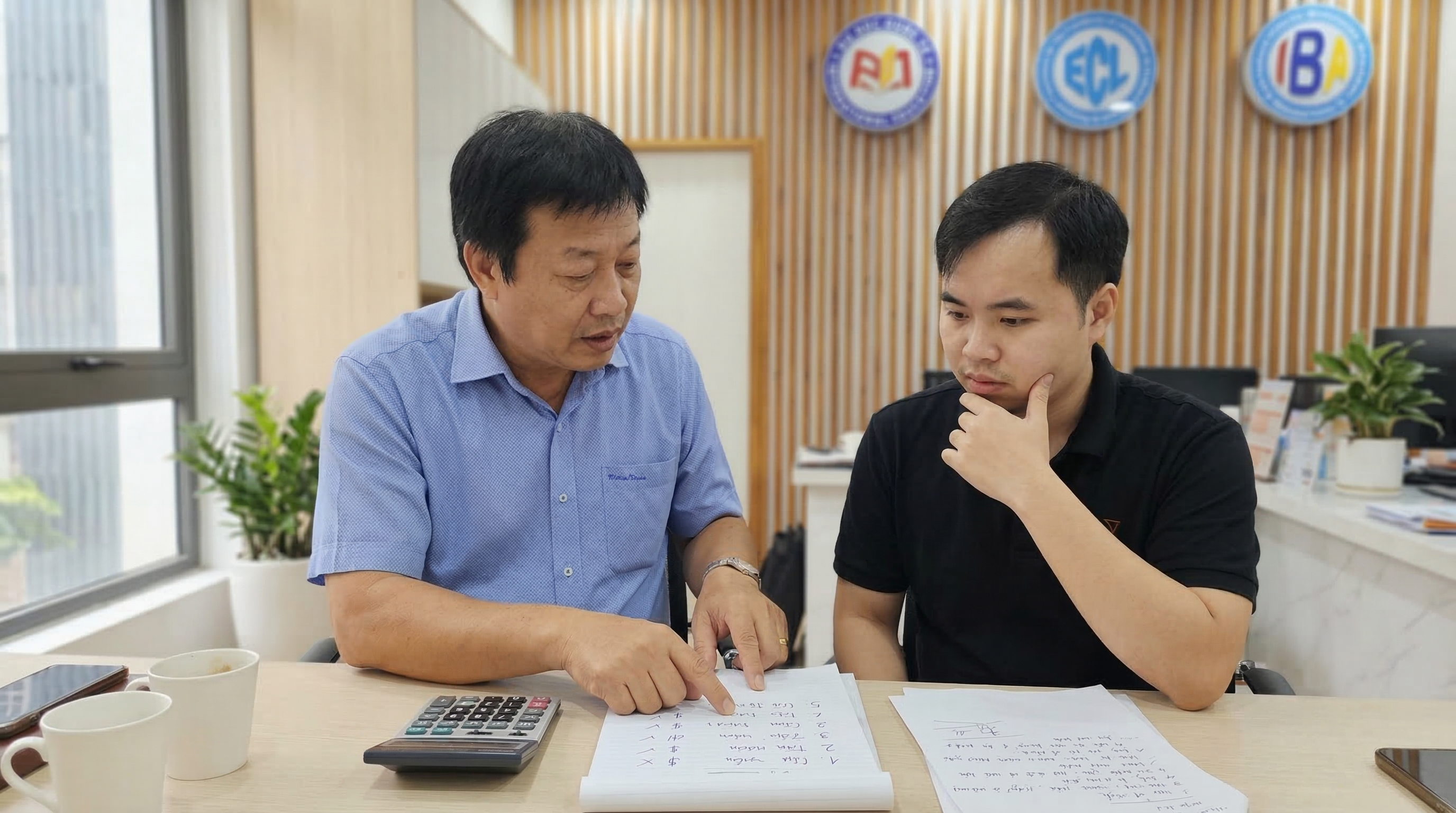
These are amounts that are often not clearly disclosed, making it easy for the total cost of labor export to Germany to be significantly inflated if you do not research carefully.
- Brokerage fees through unofficial intermediaries: Some individuals or organizations without clear legal status charge “job placement” fees at high rates, but do not guarantee benefits or results.
- Unnecessary skills retraining fees: Many units require additional sub-courses not directly related to the work in Germany, causing a waste of time and money.
- Illegal anti-escape deposits: This is an illegal fee, often disguised under various forms to bind workers.
- Fees for “fast service” processing of documents and visas: Some places charge extra money to “speed up the process”, while the actual review process cannot be interfered with.
- Costs arising from document errors: Preparing documents that do not meet requirements can force you to redo them many times, entailing translation fees, notarization, and waiting time.
Optimal Solutions for German Labor Export Costs with PDT EDUCATION
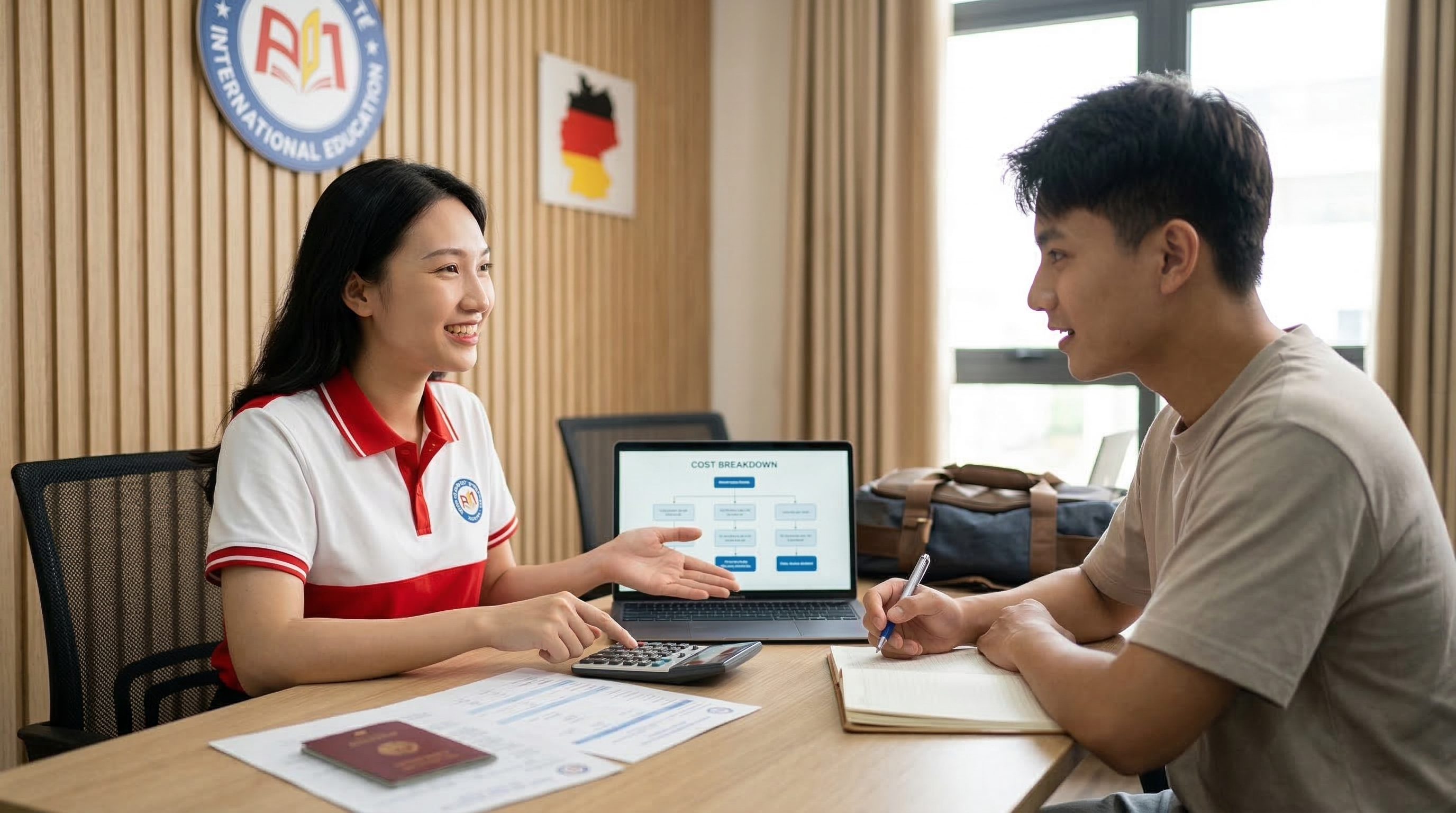
Bank loan program with preferential interest rates
We have linked with many major banks to support study abroad loans. Students at PDT EDUCATION enjoy extremely preferential interest rates in the first year. Financial proof procedures are handled quickly by the legal team. You don't need to worry about mortgaging too many assets.
This policy helps families with average incomes still access opportunities. The loan cash flow is disbursed directly into tuition payments. After going to Germany to work, students will send money back to pay the bank in installments.
Staggered payment schedule divided into stages
Instead of collecting a large lump sum upfront, we apply staggered payments. The financial roadmap designed by PDT EDUCATION is divided into 3 to 4 small installments. You only pay fees when moving to a new stage of document completion. This method protects the cash flow and rights of workers.
If during the study process health problems occur and you have to stop midway, you will not lose the entire initial amount paid. We always have a fair refund policy for unused services. This transparency has built the reputable brand of the center.
How to hunt for full language support scholarships
Medical and restaurant/hotel industries frequently have attractive scholarships. PDT EDUCATION continuously updates 100% German tuition fee sponsorship programs. Students with good academic results will be prioritized for these applications.
Our team of advisors will guide you on how to write an impressive motivation letter. A beautiful profile will score absolute points in the eyes of European employers. Hundreds of our students have successfully hunted for full scholarships.
You can completely be the next person to achieve that accomplishment.
- Attend free career orientation workshops organized by the center.
- Take an entrance competency test to receive tuition discount vouchers.
- Register to study in groups of friends to enjoy discount policies.
- Apply for a loan 3 months in advance to ensure the disbursement progress.
- Strive to achieve excellent scores in monthly mock exams.
- Regularly update recruitment information on the official fanpage.
Conclusion
A clear financial plan is the “safety ticket” that helps you realize your dream of working in Germany. When you understand correctly and sufficiently about the cost of labor export to Germany as well as the cost of going to work in Germany, you will be more proactive in every decision, avoid arising risks, and optimize your journey from the very first step.
If you are still wondering where to start, PDT International Education will be a reliable companion. With a transparent roadmap, personalized advice, and many practical financial support policies, PDT helps you save maximum costs while still ensuring a high application success rate.
Contact PDT International Education immediately for free consultation and to build the most suitable roadmap to Germany for you!