

In the journey of vocational study in Germany, German language proficiency is not only an entry requirement but also a decisive factor in the ability to study, work, and integrate long-term. Among the accepted German certificates, the TELC B1 exam is increasingly chosen by many students due to its practicality and suitability for the vocational training environment. Understanding the German B1 exam, the exam structure, and effective review methods will help learners be more proactive in the preparation process and avoid unnecessary mistakes.
The following article provides an overview and easy-to-understand look at the TELC B1 exam, focusing on the goal of vocational study and sustainable learning orientation, instead of chasing tips or short-term results.

Overview of the TELC German B1 exam and vocational training in Germany
Vocational study in Germany (Ausbildung) is a popular choice for many Vietnamese youths thanks to the model combining theoretical learning and practical work. However, to participate in this program, learners need to prove their ability to use German at an independent level, sufficient to communicate in daily life and basic professional environments.
In that context, the TELC B1 exam is rated as suitable because the exam content closely follows life, work, and social communication situations. The TELC German B1 exam does not emphasize academic knowledge but focuses on the ability to use language flexibly and in the right context – true to the spirit of the vocational training program in Germany.
Many students choose TELC over other certificates because of its clear exam structure, transparent assessment method, and high practical orientation. This is also the reason why the TELC B1 Certificate is often seen as an important stepping stone before entering the stage of applying for a visa and signing a vocational training contract.
The importance of the TELC B1 Certificate in the Ausbildung pathway

The B1 certificate is not just a “passport” in terms of procedures, but also reflects the learner's readiness when living and working in Germany. At this level, candidates are expected to understand familiar conversations, handle common communication situations, and express personal opinions coherently.
Compared to some other exam systems, TELC is highly appreciated for its applicability. The exam content often revolves around letters, announcements, workplace conversations, or basic administrative situations. This helps learners not only “study to pass” but also “study to use”.
In addition, preparing for the German B1 Exam according to the TELC format also helps learners form a habit of using German in practice, reducing surprises when entering a vocational training environment that requires regular communication with teachers, colleagues, and customers.
>>> See more here.
TELC German B1 exam structure and effective approaches
To review effectively, learners need to clearly understand the overall structure of the german b1 exam, thereby allocating time and appropriate learning methods for each skill.
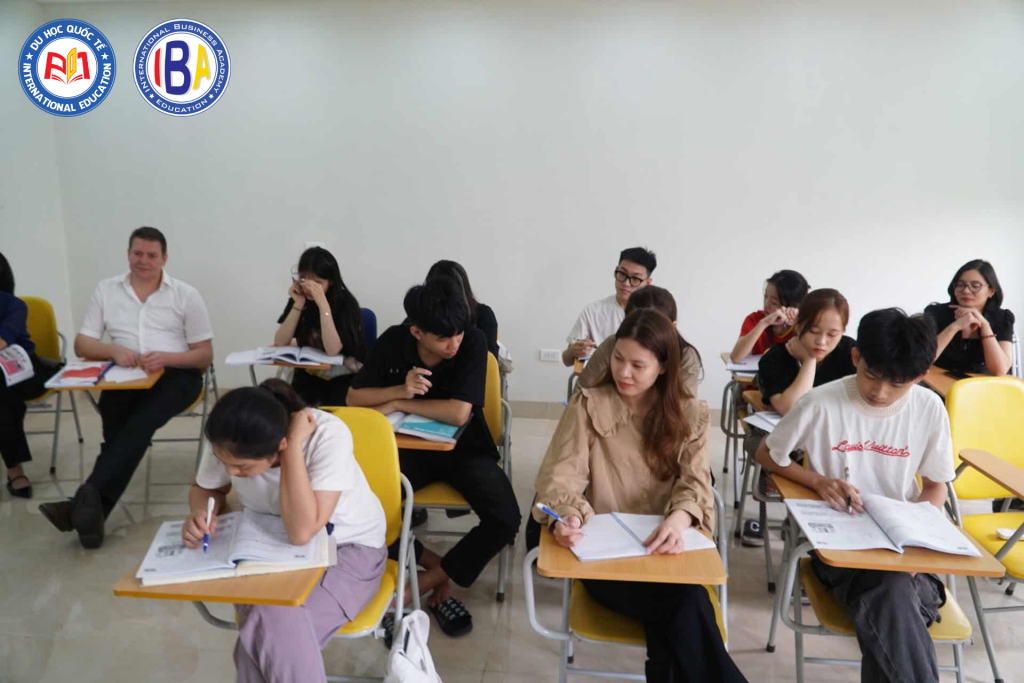
Skills in the TELC B1 exam
The exam is built around four core language skills: listening, reading, writing, and speaking. Each skill reflects a different aspect of the ability to use German in real life.
- Listening focuses on understanding conversations, announcements, or familiar exchange content.
- Reading tests the ability to grasp information from letters, short articles, or instructional texts.
- Writing requires learners to present opinions, write letters or emails with a clear structure.
- Speaking assesses the ability to communicate directly, exchange opinions, and interact with the opposite person.
The important point of the telc german b1 exam lies in the balance between skills. Learners cannot just be strong in one skill and ignore the remaining parts.
Notes when taking the exam
When approaching the exam, candidates need to pay attention to time management, read requirements carefully, and answer correctly. TELC does not encourage overly complex answering; on the contrary, clarity, coherence, and contextual appropriateness are always highly valued.
Especially in the speaking part, the ability to interact and respond naturally is more important than using elaborate grammatical structures. This accurately reflects the practical spirit that the exam aims for.
Comparing TELC B1 with other German certificates

The choice of an appropriate certificate depends a lot on each person's learning goals and future orientation. Below is an overview comparison table, helping learners easily visualize the differences between popular options.
| Certificate | Content orientation | Suitable for goals |
|---|---|---|
| TELC B1 | Practical communication, life – career | Vocational study, working |
| Goethe B1 | More academic standard language | Higher education, language foundation |
| ÖSD B1 | Flexible format, leaning towards communication | Learners needing flexibility |
| TestDaF | In-depth academic | University, research |
From the table above, it can be seen that TELC B1 is the right choice for those who are determined to follow the Ausbildung path. Meanwhile, other certificates may be more suitable for academic goals or studying at higher levels.
Sustainable and effective TELC B1 exam preparation strategy
Instead of cramming or chasing tips, learners should build a long-term review roadmap, focusing on improving German language proficiency comprehensively.

Building a solid language foundation
The initial stage should prioritize consolidating core grammar and vocabulary according to familiar topics in life and career. Vocabulary learning should be associated with context, avoiding learning isolated individual words.
At the same time, learners can be exposed to German through listening-visual channels suitable for their level to form natural language reflexes.
Practicing skills according to the exact exam format
When having a certain foundation, practicing with sample German B1 Exams helps learners get used to the structure and the way questions are set. However, the goal is not just to do it right, but also to understand why you were wrong and what points need improvement.
In speaking and writing skills, self-assessment or receiving feedback from experienced people will help progress more clearly than studying alone.
Conclusion
Taking the TELC German B1 exam is an important step that brings you closer to the goal of vocational study in Germany, not only to meet document requirements but also to confidently study and work in a real environment. Mastering the German B1 exam structure and having a suitable review roadmap will help you save time and increase the ability to achieve desired results.
If you are looking for a reputable companion in the process of learning German and preparing for vocational study, PDT Education is a choice worth considering. With training orientation linked to Ausbildung goals, PDT supports students in building a methodical German learning roadmap, practicing for the TELC B1 Certificate, and consulting on vocational study documents clearly and practically.
>>> See other topics: Conditions for Nursing Study in Germany: Luggage for Success?