Vocational training in Germany not only helps you work and settle, but also serves as a stepping stone to study for a master's degree in Germany in English at prestigious universities. English scholarships in the Philippines are also an effective choice to improve language skills and prepare well for German study abroad applications. The article provides realistic perspectives from students, helping you understand the path from vocational training to a master's degree, while planning appropriately for yourself. According to PDT International Education, connecting these two programs helps shorten preparation time and increase the chance of success.
From vocational training in Germany to a master's degree in English
Vocational training in Germany – a solid stepping stone
Vocational training in Germany (Ausbildung) not only helps you learn a trade but also opens up opportunities to transfer to a master's degree in Germany in English at prestigious universities. You learn theory and practice in parallel, accumulating experience while being paid during the learning process.
The role of English in the path to higher education
When aiming for a master's program in Germany in English, language ability is a prerequisite. English courses in the Philippines help you prepare language, academic skills, and certificates IELTS/TOEFL necessary for German study abroad applications.
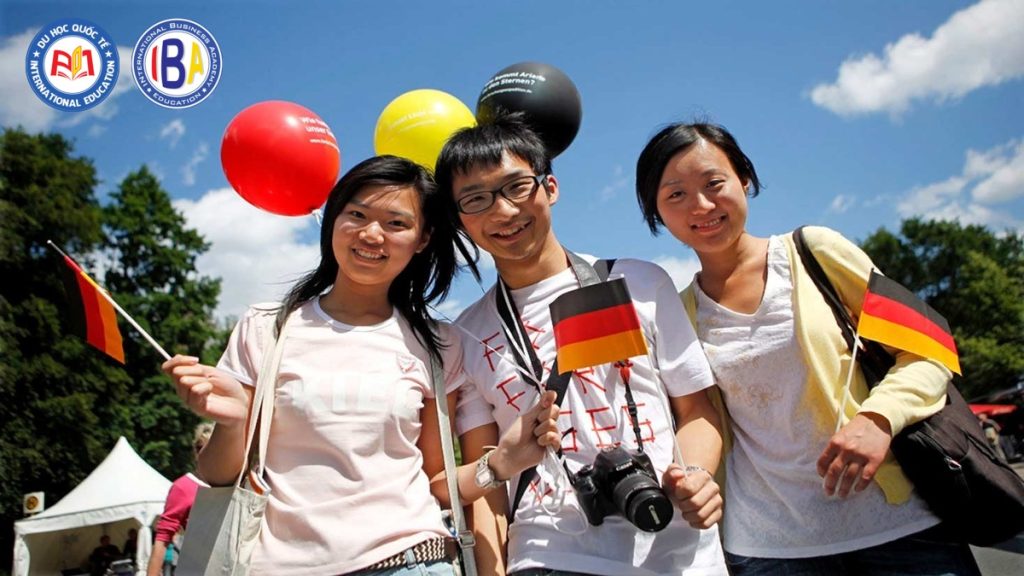
Students experience master's programs in Germany at prestigious universities, where training quality is globally recognized.
Two paths to a master's degree in English in Germany
Path 1 – From Ausbildung to a master's degree
- Vocational training in Germany under the dual system (study and work).
- After completion, one can apply for English master's programs at public or private universities.
- Advantages: accumulate practical experience, high opportunity for settlement.
- Note: need to meet entry requirements such as degrees, English certificates, transcripts, and related fields of study.
Path 2 – Direct application to English-taught master's programs
- For students who already have a bachelor's degree.
- Standard IELTS/TOEFL and a good academic record are required.
- Currently, Germany has more than 1,500 master's degree programs in Germany in English in fields such as: engineering, technology, management, social sciences...
- According to DAAD 2024, the trend of English-taught programs is increasing rapidly, creating great opportunities for international students.

Benefits and Challenges
- Benefits: learning opportunities with relatively low costs or free tuition at public universities, internship and work periods in Germany, strong business networks, and the ability to apply for a post-graduation work visa. In particular, international programs help you overcome initial language barriers and launch your career in the European market.
- Challenges: high competition for English programs, entry requirements (degrees, scores, English certificates) can be strict, and living costs in large cities are quite expensive in some areas. Additionally, you may need to prove your ability to adapt to German culture and education system, which has its own characteristics regarding study time, exams, and practical requirements.
Practical suggestion: identify the field you want to pursue, carefully research master's programs in Germany in English and the entry requirements of each school, plan your finances, and consult with reputable study abroad consultants to have a specific path for each case.
Student stories
One typical story is that of Lan Phuong, 23 years old, who graduated in electrical engineering from a university in Hanoi. Lan Phuong participated in an Ausbildung program at an electromechanical workshop in Berlin for the first year. After completing the vocational training phase, she transferred to a master's degree program in Germany in English in Mechanical Engineering in Munich and now works at a high-tech company. Lan Phuong's story shows that, with careful preparation, the two paths of vocational training and master's studies can complement each other effectively.
English scholarships in the Philippines as a stepping stone for German applications
An additional factor helping prepare for goals in Germany is improving English proficiency and strengthening the profile with English courses in the Philippines. Many Vietnamese students have taken advantage of English scholarships in the Philippines to improve skills and prepare for German study abroad applications. These courses have reasonable costs, high efficiency, and help you achieve international IELTS/TOEFL certificates.
Connecting the two education systems (Philippines and Germany) can bring many practical benefits. Firstly, you have more time to practice English with moderate living and tuition costs. Secondly, you have the opportunity to build an application profile with English certificates. According to data from English scholarship programs in the Philippines in 2023-2024, many programs for international students have scholarships ranging from 15%-50% of tuition, helping save significant costs before moving to Germany.

Practical advice
- Choose English courses with international certification (IELTS, TOEFL, Cambridge) to facilitate the application for a master's degree in Germany in English.
- Pay attention to the course duration and the time you can be ready to apply for a master's in Germany, avoiding overlap with German visa deadlines or German intake periods.
- Follow DAAD, Erasmus+ scholarships, or English scholarships in the Philippines to increase financial opportunities and connect with consultants experienced in the path from the Philippines to Germany.
According to 2024 data from DAAD and related reports, Germany remains an attractive destination with opportunities for post-graduation work visas and a research ecosystem. Schools in Germany highly value the careful preparation and proactiveness of candidates, even if you have participated in English courses abroad to enhance language proficiency before applying.
Student stories: from the Philippines to Germany
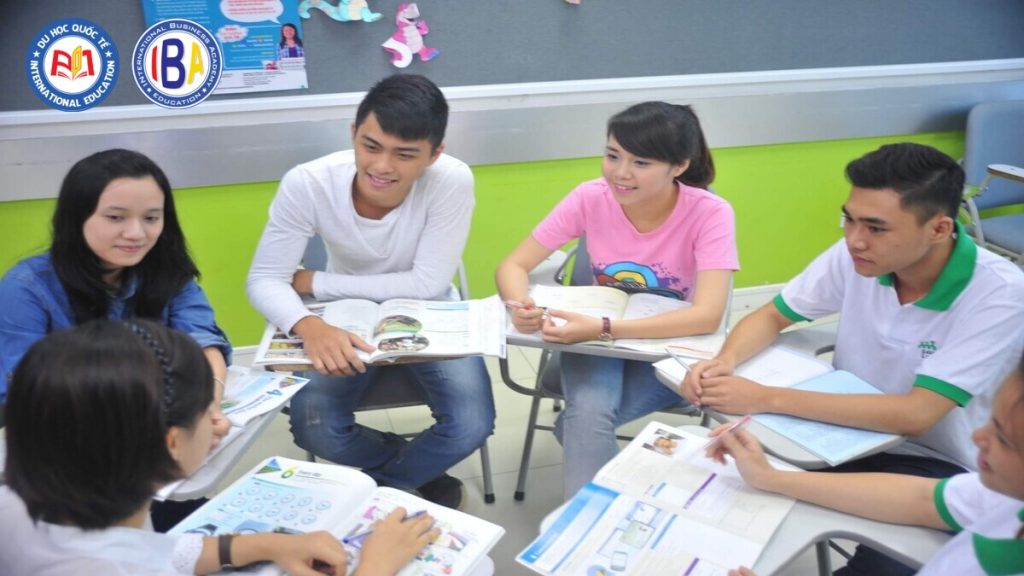
Dr. Huyen, a student who studied English in the Philippines, shared that 'the English course in the Philippines helped me improve my specialized vocabulary and essay writing skills. I had more time to prepare my admission essay and prove my English competence met the standard.' Thanks to that, she was accepted into a master's degree program in Germany in English at a prestigious university, opening a journey of research and work in Europe.

Step-by-step guide and checklist to optimize opportunities for an English master's in Germany
Below is a reference path and basic checklist for you to track progress. Note that each school will have its own requirements.
| Stage | Specific activity | Notes and reminders |
|---|---|---|
| Phase 1 | Identify major and list of international programs in Germany | Check entry requirements, note differences between public and private schools |
| Phase 2 | Complete English certificates and additional certifications | TOEFL/IELTS if needed, participate in essay writing and interview practice courses if available |
| Phase 3 | Prepare documents: CV, transcript, English certificate, and recommendation letter | Personalize profile for each school |
| Phase 4 | Submit application and track progress | Prepare for interviews if any, understand visa procedures and key dates of the program. |
| Stage 5 | Prepare finances and student visa | Identify living costs and financial plan |
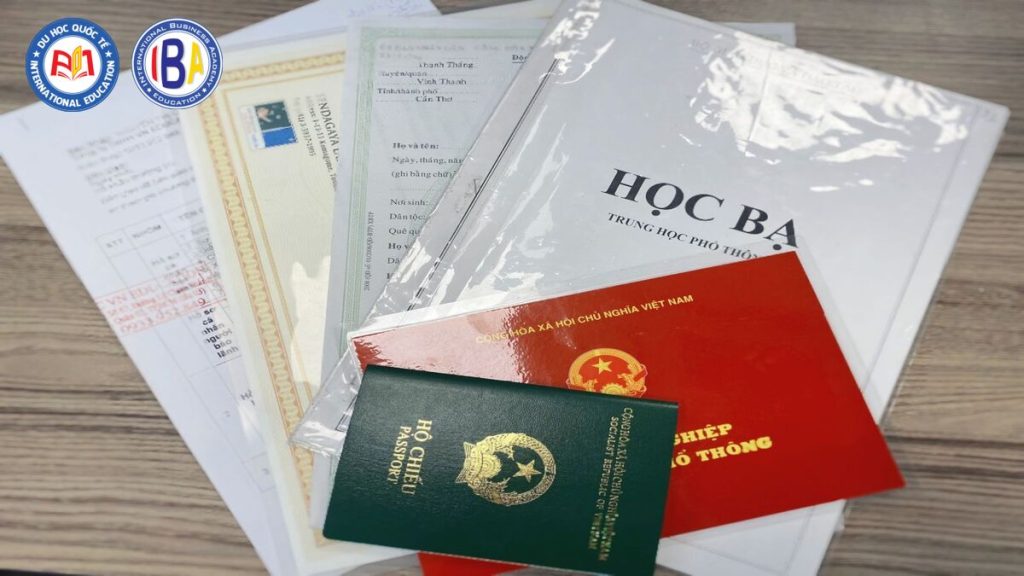
In this process, consulting with an organization or center with expertise and connections with partner schools will help you save time and avoid document errors. They can support you from document review to advising on English courses in the Philippines to suit your German goals.
Practical advice from predecessors
- Invest time to identify an English master's program that fits your academic background and realistic career goals. Do not ignore the location and cost of living in Germany when choosing a school.
- Prepare English certificates at a “sufficient” level (e.g., TOEFL iBT 90+ or IELTS 6.5+ depending on program requirements) and be ready for English essays and interviews.
- Follow scholarship sources like DAAD, Erasmus+, as well as programs provided by schools to optimize funding opportunities. Also, consider English scholarship opportunities in the Philippines as a reasonable stepping stone.
Conclusion
Germany is a reliable destination for young people who want to build a career in Europe, thanks to its high-quality education system, reasonable costs, and sustainable career opportunities. Combining vocational training in Germany and a master's degree in English helps you develop professional skills, expand international networks, and increase settlement opportunities.
Besides, English scholarships in the Philippines are a “stepping stone” to help you consolidate language and complete your profile before applying for study in Germany. Careful preparation – from language and financial planning to choosing the right school – is the key to success.
To be guided on a personalized path, find a suitable English course, and build a professional German study abroad profile, you can join the training program at PDT International Education – a reputable international study abroad training center, accompanying hundreds of Vietnamese students on the journey to Europe