


German B1 Exam Preparation: Secrets to Conquering 4 Skills and Getting Your Certificate Quickly
The B1 exam (Goethe-Zertifikat, TELC, or ÖSD) is considered the most difficult yet most important “gateway” for German vocational students. To pass this exam, hard work alone is not enough; you need a smart review strategy and a solid grasp of test-taking skills. This article will share a detailed German B1 exam preparation roadmap that is effective, helping you confidently achieve the highest results right on your first attempt.
Unlike the A1 or A2 levels, the B1 exam assesses your ability to use the language independently. You must prove that you can understand the main points of complex conversations and express personal opinions coherently on social topics.
B1 Exam Structure and General Notes
Most B1 exams today are divided into 4 independent modules: Reading, Listening, Writing, and Speaking. A special feature is that you can retake each module if you unfortunately do not pass, but our goal is to “pass comprehensively” to save time and costs.
Strategies for the Reading Module (Lesen) Exam
The B1 Reading section usually consists of 5 parts with increasing difficulty, from reading personal letters to reading journalistic texts and administrative regulations.
- Skimming & Scanning Skills: Do not try to translate every single word. Skim to grasp the main idea (Skimming) and search for important keywords (Scanning) that match the questions.
- Time Management: You have 65 minutes for 30 questions. Prioritize doing the easy parts first (usually part 1 and part 3) to save time for part 2 (reading newspapers) which contains a lot of new vocabulary.
- Synonymous Vocabulary: Answers in the reading passage are usually not identical to the vocabulary in the question but will use synonyms (Paraphrasing). When studying, focus on learning vocabulary in clusters and equivalent expressions.
Secrets to Passing the Listening Module (Hören)
Listening is always a “terror” for Vietnamese students due to the fast speaking speed and many information traps.
- Take Advantage of Question Reading Time: Before each listening part, you have a short amount of time to read the questions. Underline keywords (proper names, numbers, negatives “nicht/kein”) to locate the information you need to hear.
- Listen for Keywords and Context: Do not panic when encountering new words. Focus on listening to the speaker's attitude (agreeing or disagreeing) and conjunctions like “aber”, “the actual situation is...” to avoid falling into traps.
- Daily Listening Practice: Listen to the Podcast “Deutsch – warum nicht?” or sample exam papers on Youtube every day to get your ears used to the rhythm of native speakers.
Conquering the Writing (Schreiben) and Speaking (Sprechen) Modules
These are two “productive” skills, requiring you to express your personality and linguistic thinking.
Letter Writing Techniques and Expressing Opinions
The B1 Writing exam usually requires you to write 3 tasks: a personal letter, an opinion piece on a forum, and a formal letter (apology/appointment).
- Use Redemittel (Ready-made Structures): Memorize professional opening and closing phrases for letters. This helps you gain points for format and saves time thinking.
- Sentence Linking: Use conjunctions like “deshalb”, “obwohl”, “wegen” so that the writing is not fragmented. A B1 piece of writing needs logic and coherence between ideas.
- Check Grammar Errors: Spend the last 5 minutes checking verb conjugations and the gender of nouns. These small mistakes can cause you to lose points very regrettably.
Presentation and Discussion Skills in the Speaking Test
The Speaking exam consists of 2 parts: Joint Discussion (planning an event) and a Presentation on a social topic.
- Discussion Section: Do not just agree or disagree. Give reasons, propose alternatives, and proactively ask for your partner's (Partner) opinion.
- Presentation Section: The structure of the speech must be extremely clear. Start by introducing the structure, state personal experience, the situation in Vietnam, advantages/disadvantages, and a conclusion.
- Confidence and Pronunciation: Examiners value confidence and reflex ability more than speaking too fast but with wrong grammar. Speak slowly, clearly, and use body language.
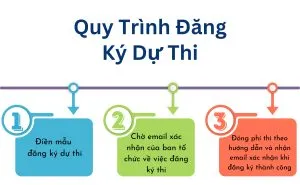
Đăng ký tham gia kỳ thi B1 ECL tại PDT Education
Lộ trình ôn thi B1 cấp tốc trong 4 tuần
Once you have a B1 knowledge foundation, the exam preparation phase (practicing papers) should be highly focused:
- Week 1-2: Làm quen với các bộ đề mẫu của ECL. Tập trung giải quyết từng module một để hiểu rõ điểm yếu của bản thân.
- Week 3: Memorize the Redemittel sets for the Writing and Speaking parts. Practice writing at least 2 tasks a day and record your speech to self-correct errors.
- Week 4: Solve comprehensive exams under time pressure like a real test. Participate in trial exams (Simulation) at centers to get used to the exam room atmosphere.
TUYỂN SINH LỚP ÔN THI ECL B1, ĐẢM BẢO CÓ SUẤT THI

Conclusion
German B1 exam preparation is a relay race that requires perseverance and the right method. Do not pressure yourself too much about knowing every single word; focus on situational handling skills and mastering core grammatical structures. A B1 certificate not only helps you complete your vocational study abroad profile but is also a testament to your effort and readiness before entering a new life in Germany.
Do you need a set of B1 exam preparation materials closest to the actual exam? Or do you want to join an intensive exam preparation class with guaranteed outcomes? Contact us now to receive a personalized roadmap and start your journey to conquer Germany today!