


The Truth About Vocational Training in Germany 2023: A Journey to Conquer a Sustainable Career with PDT
Vocational training in Germany in 2023 is becoming a choice considered by many Vietnamese young people due to the balance between study – practice and long-term career opportunities. The article below shares the actual truth about vocational training in Germany from the perspective of a vocational study consulting unit in Vietnam, aiming to help you have a clear view of the roadmap, challenges, and factors needed to prepare for this journey. PDT International Education is mentioned here as a reliable reference point for the preparation process and connecting with partners in Germany, but the article content focuses on reality and practical advice for readers.
Roadmap and career opportunities after Ausbildung in Germany
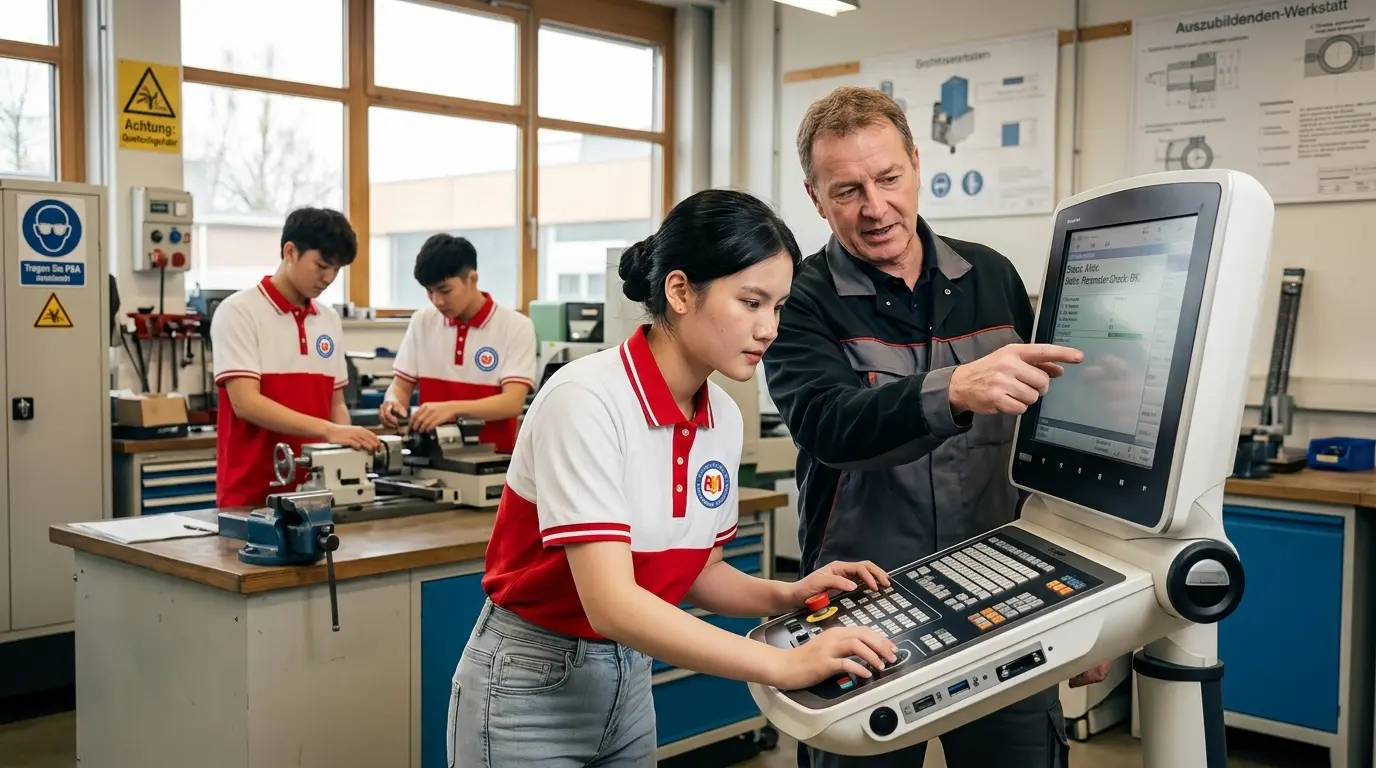
Ausbildung is a dual training system in Germany, combining theoretical learning at a vocational school and internship at a company. This is the path chosen by many Vietnamese students to both have a degree and gain practical work experience. This process usually lasts from 2 to 3 years, depending on the specific industry and program requirements.
The truth about vocational training in Germany – How long does the roadmap take?
To visualize the truth of how long vocational training in Germany takes, here is a specific example with a roadmap reference table for some popular occupations in Germany:
| Occupation | Training Duration | Entry requirements (minimum) |
|---|---|---|
| Electrical and control engineering | 3 years | High school; German A2-B1 |
| Nursing | 3 years | High school; German B1 |
| Mechanical engineering and automation | 2-3 years | High school; German A2-B1 |
The highlight of this roadmap is the connection between learning and practice at the enterprise right from the first months. This helps students not only master knowledge but also practice working skills according to German standards, thereby increasing the chances of being recruited after graduation. According to internal data from Ausbildung programs implemented in cooperation between Vietnam and Germany in 2024, about 65-70% of students participating in the internship process have the opportunity to receive a job contract after completing the course in Germany or before the end of the course.
How are the career opportunities?
Below are the basic contents and practical examples to better visualize:
- Popular occupations and market demand: Electrical and automation engineering, Nursing and healthcare, Mechanical and manufacturing engineering, Information technology and automation, Construction and green energy. These are industries with a combination of technique – person care and system operation, suitable for many young people passionate about practice and working in an industrial or medical environment.
- Training Duration: Usually 3 years for technical and healthcare industries (can be shorter with some specific programs), or 2-3 years depending on the school and industry. Throughout the Ausbildung period, students participate in both theory classes and the internship process at partner enterprises.
- Practical experience and job opportunities: After completing the course, many students receive job contracts at partner companies or are introduced to businesses looking for engineers, nurses, or technical workers with vocational certificates. This model helps students have an income right during the study process and after graduation have the opportunity for stable work in Germany.
- Entry requirements and basic preparation: Graduated High School or equivalent; minimum German level at A2-B1 depending on the industry; some programs require some subjects related to math, physics, or chemistry at a basic level. The dossier usually includes academic certificates, transcripts, letters of recommendation, and German certificates or vocational language certificates evaluated before admission.
- Program selection process and application: You will identify the industry you are interested in, find the addresses of vocational schools and partner enterprises in Germany, submit your application through a consulting unit or directly through a link program. A point to note is that the registration time in each region and each school may be different, so early planning is essential.
The majority of specifics have fluctuations between industries and each year, but the real story shows that vocational training in Germany has the ability to connect knowledge and career clearly.
The truth about challenges and practical solutions when studying vocational training in Germany
Benefits and Challenges
The truth of vocational training in Germany brings many benefits such as job opportunities after graduation, a modern working environment, and an internationally recognized training system. However, this process also poses many challenges that you need to be ready to face and have specific preparation measures.
- Language and communication in the work environment: German is not only a requirement in the application but also a daily communication tool when working and interacting with colleagues. A practical solution is to start learning specialized German from Vietnam with the goal of reaching at least B1 before leaving. After arriving in Germany, there will be a language supplement phase to improve communication skills in work and daily life.
- The truth about vocational training in Germany regarding work culture and internship requirements: The German environment emphasizes punctuality, teamwork, and compliance with safety procedures. The solution is to participate in orientation courses before departure and research carefully before accepting an internship to adapt early, reducing pressure when starting practice at the workshop or hospital.
- Living costs and settlement: The cost of living in some large cities can be high. The solution is to find reasonably priced dormitories, near the workplace, and consider neighboring areas with lower living costs. At the same time, many Teilzeitarbeit (part-time work) programs allow students to have an income to cover monthly costs, while still complying with the limits of visa and school regulations.
- Correspondence, documents, and visa: Visa procedures, residence registration, and personal papers can be complex. The solution is to work with a reputable unit or an experienced consultant to prepare the application and schedule ready for processing steps. Besides, knowing the application deadline and requirements of each state or vocational school is very important.
- Timeline and financial plan: Preparing early helps you avoid time and cost pressure. The solution is to plan 6-9 months before the expected departure, including language practice, participating in vocational courses in Vietnam and preparing documents, while providing financial reserves for the first months in Germany.

The truth about vocational training in Germany and student stories
To visualize specifically, let's hear the story of a young person named An in Vietnam. An used to struggle between choosing a school and an industry because of the fear of language difficulties and physical differences in a foreign working environment. Before deciding to go to Germany, An participated in a specialized German course and a short-term program in Vietnam to get acquainted with the technical aspects of the profession she chose. When leaving, An was arranged a study roadmap starting with a gentle German class and then an internship at a mechanical workshop in a small city in Eastern Germany.
After only 9 months, An was able to talk about work stories, confidently participated in group meetings, and clearly understood safety procedures at the workplace. By the 12th month, An signed an official labor contract at the workshop, with a relatively stable income and the opportunity to attend advanced technical courses after work hours. An's story shows that proper preparation and connection can make a real difference in the vocational study journey.
Practical advice for the German vocational study journey 2023
The truth about vocational training in Germany is not difficult. But to help you have a solid start and minimize risks, here are practical tips based on experience from successful students and partners in Germany:
- Start German as soon as possible: Set a goal to learn at level B1 before departure. Even if you have the opportunity to challenge at level A2 in Vietnam, upgrading to B1 will help you communicate at work and clearly understand the training process in Germany.
- Choose an occupation based on market demand and your own strengths: If you have a technical background, the electrical – automation or mechanical industry may be suitable. If you have care and sensitivity to people, nursing and healthcare will be a high-demand choice.
- Prepare documents and finances early: Applications for study and internship in Germany require care and detail. Plan finances for at least the first 6-12 months and find out about forms of financial support or cheap living costs in the area you plan to go to.
- Connect with partners and link programs in Vietnam: Learn about and participate in seminars, meetings, and vocational introduction programs in Vietnam. Information sources from partners will help you understand program quality, internship opportunities, and local support.
- Plan for movement and cultural adaptation: Grasp the residence registration process, health insurance, and prepare mentally for cultural differences. Understanding and respecting work regulations in Germany will help you integrate more easily and take advantage of learning opportunities.

| Journey prediction (summary) | Aspects to prepare | Important reason |
|---|---|---|
| 6-9 months before departure | Start German; choose industry; find program partner | Keep time for documents and visa application, limit end-of-term pressure |
| 3-6 months before departure | Learn vocational level language; prepare documents; participate in consulting sessions | Understand requirements and prepare finances |
| When arriving in Germany | Register residence; find accommodation; participate in vocational orientation course | Shape the working environment and start internship |
| After completing the course | Register to work with partner company; participate in advanced technical courses | Expand career opportunities and stabilize income |
A significant factor in the truth about vocational training in Germany is the careful consideration between program choice and your financial capability. You don't have to face every challenge alone. There are experienced partners, vocational schools, and consulting centers to help you set a suitable schedule and connect with German businesses ready to accept students from Vietnam. Note, researching resources and referring to opinions from predecessors will help you be more confident when making decisions.

Conclusion and positive call to action
Vocational study in Germany 2023 is not just a study journey but also a strategic step to build a sustainable career in a high-quality production and service economy. The truth about vocational training in Germany is not difficult. The important thing is that you have a clear plan, patience, and readiness to adapt to a new environment. View this not as an exam to pass by way, but as a process of learning and cultivating vocational skills that can open up long-term opportunities in the future.
If you are considering, start with small but systematic steps:
- Gather information from reputable partners and centers about Ausbildung programs that suit you.
- Participate in vocational German courses in Vietnam to build a solid foundation.
- Prepare documents, participate in consulting, and schedule meetings to exchange with German vocational schools or companies with cooperative programs.
- Set specific goals for each stage, from language learning to internship and finding a job after graduation.
This journey requires patience and methodical preparation, but the results can bring a stable career and many opportunities for long-term development. With support from German vocational education partners in Vietnam and appropriate resources, you can turn your dream into reality in a realistic and oriented way.