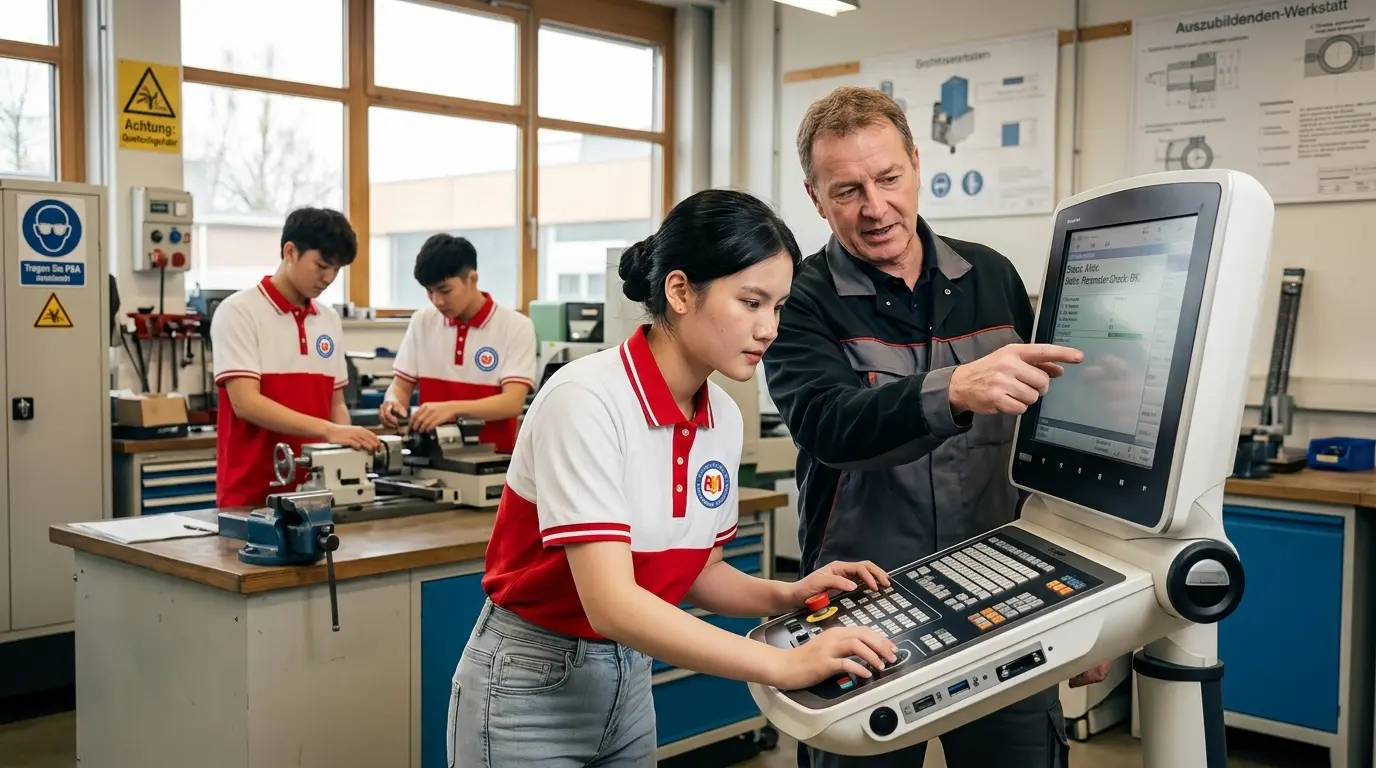


Whether or not to study abroad in Germany is a common concern for many young people facing a turning point in their education and career. Germany is known for its methodical education system, emphasis on practice, and long-term development opportunities after graduation. However, studying in Germany is not an “easy” path, but requires serious preparation in terms of mindset, language, and personal orientation. This article will help you take a comprehensive look at both opportunities and challenges, thereby making the right decision for yourself.
Should you study abroad in Germany in the current context?
To answer the question of whether to study abroad in Germany, it is first necessary to understand that this is a long-term choice, not simply studying abroad. Studying in Germany is associated with the process of cultural adaptation, training independence, and the ability to withstand pressure in a highly disciplined environment.
The German education system emphasizes the proactiveness of learners. Students need to manage their own time, take responsibility for their own learning results, and do not depend much on close reminders or support. This helps learners mature quickly, but can also cause difficulties if they are not well-prepared psychologically.
In addition, studying and living mainly in German makes language a key factor. If you only see foreign language as a profile condition, learners are very likely to encounter obstacles in the process of learning and integrating. Therefore, whether to study abroad in Germany depends heavily on the readiness of each individual.
Outstanding benefits when studying abroad in Germany
Studying in Germany attracts learners not only because of its educational reputation but also thanks to the practical value it brings in the long term.

Training programs linked to practice
One of the strengths of German education is the balance between theory and practice. Learners are trained in work thinking, problem-solving skills, and professional style, instead of just absorbing academic knowledge.
Disciplined and clear learning environment
High discipline in study and life helps learners form a habit of working seriously and on schedule. This is an important foundation for future career development.
Long-term development opportunities
Many people consider whether to study abroad in Germany because of the desire to build a stable career. Being trained in a standard environment helps learners easily adapt to the labor market and expand development opportunities in the future.
>>> See more here.
Challenges to consider before studying abroad in Germany

Besides the benefits, studying abroad in Germany also has many challenges that learners need to look at realistically.
Language and cultural barriers
German is a mandatory factor in study and daily life. Using this language in academic and work environments requires serious, long-term investment. In addition, cultural differences and lifestyles can cause many of you to feel pressured in the beginning.
High pressure for independence
Studying in Germany is not suitable for those accustomed to passive learning. Learners must solve most problems related to study, life, and personal orientation themselves. If self-management skills are lacking, the study abroad process can become stressful.
Not the choice for every goal
If you are looking for a gentle or maximally flexible learning environment, Germany may not be the ideal destination. Therefore, clearly defining personal goals is the deciding factor when considering whether to study abroad in Germany.
Is vocational nursing study in Germany right for you?
Among the popular options, studying nursing in Germany receives a lot of attention thanks to its practicality and clear career orientation.

Characteristics of the nursing industry in Germany
Nursing study abroad in Germany is a field associated with human care, requiring patience, responsibility, and good communication skills. The training program emphasizes practice, requiring learners to be serious in both study and professional attitude training.
Conditions and necessary preparation
When researching vocational study conditions in Germany, learners need to prepare not only in terms of documents but also in language and psychology. Specifically for the nursing industry, the conditions for vocational nursing study in Germany require long-term commitment to the profession and the ability to adapt to a highly disciplined working environment. Careful preparation from the start will help reduce risks and increase the ability to pursue the program to the end.
Comparing university study and vocational study in Germany

To have a clearer view before deciding whether to study abroad in Germany, you can refer to the basic differences between the following two popular forms:
| Criteria | University study | Vocational Training |
| Training orientation | Academic, research | Practice, career |
| Applicability | Depends on the major | Associated with work |
| Discipline requirements | High | Very high |
| Suitable for | Deep-study oriented people | People who want to work early |
There is no absolutely better choice, only a choice that is more suitable for the goals and capacity of each person.
Conclusion: Should you study abroad in Germany and where to start?
In general, whether to study abroad in Germany depends on whether you are ready to invest seriously in study, language, and long-term adaptability. For those interested in vocational study, especially in the field of nursing, carefully researching the roadmap and preparing correctly from the start is the key factor.
If you are in need of a reliable companion in the process of researching and preparing for study in Germany, PDT Education is an option worth considering. The center supports orientation consulting, German language training, and building a roadmap suitable for each student. Contact PDT Education for detailed advice and to prepare your study abroad journey in Germany in a methodical, effective, and sustainable way.
>>> See other topics: Conditions for Master's Study in Germany: Secrets From PDT?