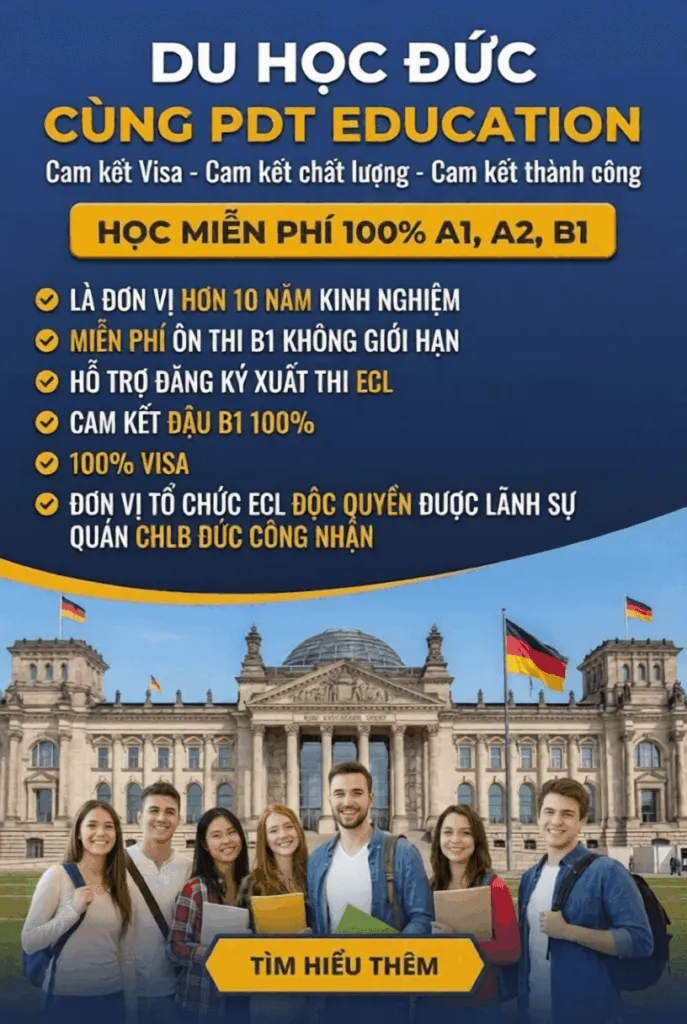


Deciding to study at a secondary school in Germany from Grade 9 is a perfect stepping stone to help Vietnamese students integrate early. This pathway opens up the fastest and safest opportunity to study and settle in Germany today. Statistics for 2026 show that the visa approval rate for secondary education remains very high, opening doors to a bright future. This journey not only helps students access world-leading education but also trains them in independence. Let's explore each step in detail to fully realize the European dream.
Golden Advantages of Attending Secondary School in Germany from Grade 9
Choosing the path of studying at a secondary school in Germany from Grade 9 offers superior benefits compared to going abroad for university. This is the foundational stage that helps students naturally absorb the culture, language, and knowledge. These advantages create a powerful momentum for the future journey of studying and settling in Germany.
The golden stage for developing native language thinking
Ages 14-15 are when the brain absorbs new languages most effectively. When students start living and studying in Germany from Grade 9, they have the opportunity to communicate constantly with native speakers. This helps with accurate pronunciation, quick reflexes, and thinking directly in German without needing to translate through their mother tongue.
Excellent language skills are the key to opening all future study and work opportunities.
>>>See more: Prestigious German Language Center for Beginners
Cultivating independence in a standard European educational environment
The boarding education environment in Germany is famous for its discipline and scientific approach. Students are trained in time management, self-care, and independent problem-solving. Instead of being completely sheltered by their families, they learn to make decisions for their daily lives.
This early maturity is a crucial factor in helping them stand firm against the challenges of living away from home.
The European education system places special emphasis on developing critical thinking and teamwork skills. Through extracurricular projects and social activities, students learn to respect differences and build international networks. These soft skills will be invaluable assets for their careers and lives in a developed country like Germany.

Bypassing strict university admission or vocational training barriers
One of the greatest privileges of graduating from secondary school in Germany is obtaining the Abitur or Realschulabschluss. With these diplomas, students can apply directly to universities or the dual vocational training system without undergoing complex TestAS exams or APS assessments required for students coming from Vietnam. This saves families a great deal of time, effort, and money.
This pathway also eliminates the risk of not qualifying for desired majors. Students have ample time for career orientation based on their actual abilities and interests through vocational counseling programs right at the secondary school. The continuity in the education system makes the transition between levels smooth and efficient.
| Evaluation criteria | Study from Grade 9 | Study after High School (University/Vocational) |
|---|---|---|
| Cultural adaptation time | 3-4 years (Full integration) | 6 months – 1 year (Many hurdles) |
| German language ability | Native-like, natural reflexes | Requires long time for additional practice |
| Next admission conditions | Direct transition, exempt from TestAS/APS | Requires TestAS, APS, strict interviews |
| Permanent residency (Blue Card) rate | Very high (Achieve residency years early) | Average (Depends on post-graduation job contract) |
- Natural language acquisition without pressure.
- Early adaptation to local culture.
- Exemption from complex international competency assessment exams.
- Practical career orientation right from school.
- Building independent thinking and strong life skills.
- Expanding a diverse international network of friends.
Building a German Study-to-Settle Pathway Starting from Secondary School
A successful pathway to studying and settling in Germany requires methodical and detailed planning from the very first days. Starting secondary school in Germany from Grade 9 provides an ideal amount of time for students to step-by-step achieve important milestones, from studying to officially holding a powerful Blue Card.
Step 1: Preparing documents and proficiency from Grade 8
Preparation must begin at least one year before the expected enrollment date. Students need to focus on improving academic results at their school in Vietnam, especially in Mathematics, Science, and Foreign Languages. Simultaneously, starting to learn German from Grade 8 is extremely necessary.
Parents should enroll their children in intensive German courses to ensure they reach A2 or B1 level before flying.
In addition to academics, families need to start preparing financial documents and searching for suitable boarding schools. Experts at PDT EDUCATION always recommend that parents carry out financial proof procedures early to avoid timing risks when applying for a visa. visa. Interviews with schools in Germany also need to be carefully practiced to demonstrate the student's confidence and determination.
Step 2: Enrolling in the Gymnasium or Realschule system in Germany
Upon arriving in Germany, students will begin Grade 9 at a Gymnasium (university-oriented) or Realschule (vocational-oriented). This phase focuses heavily on supplemental specialized German and getting used to teaching methods that emphasize initiative. Boarding schools often have separate support teachers for international students, helping them quickly catch up with the curriculum.
During the 3 to 4 years of secondary school, students will participate in short-term internships organized by the school. This is a golden opportunity for practical exposure and to learn about the work environment in German enterprises. These experiences help clearly shape future directions, deciding whether the student will continue to university or pivot to the dual vocational training system.
Step 3: Choosing paid dual vocational training programs
After completing secondary school (obtaining a Realschulabschluss or Fachabitur), most students aiming for quick residency will choose the dual vocational training system (Ausbildung). This program lasts 3 years, combining theoretical learning at a vocational school and paid practical work at an enterprise. The practical salary ranges from 800 to 1,.
300 Euro/month depending on the profession, enough to cover living expenses.
The advantage for students who have graduated from secondary school in Germany is the ability to sign contracts with large corporations in highly professional work environments. Because they already understand the culture and are proficient in German, they face no difficulty during job interviews. Based on the new residency law regulations issued in 2026, the pathway from vocational training to residency is being maximumly facilitated by the German government .
Step 4: Applying for a Blue Card and citizenship
The final stage of the pathway is converting the visa to a skilled worker status and proceeding to apply for a Blue Card (Niederlassungserlaubnis). After graduating from vocational school and working in the specialized field for at least 2 years, young people meet the conditions to apply for a Blue Card. The total time lived and worked, calculated from secondary school, significantly shortens this process.
Particularly, with positive changes in German nationality law recently, the time required for naturalization has been reduced to 5 years (even 3 years with outstanding integration achievements). Thus, a student going to Germany from Grade 9 can completely possess a German passport before age 25, officially becoming a global citizen with countless privileges in the European Union.

| Stage | Age | Main Activities | Goals to Achieve |
|---|---|---|---|
| Preparation (VN) | 13-14 years old (Grade 8) | Learn German, prepare financial documents | A2/B1 certificate, pass school interview |
| Secondary Schooling | 14-18 years old (Grades 9-12) | Academic study, German language, orientation internship | German secondary school diploma (Abitur/Realschule) |
| Dual Vocational Training | 18-21 years old | Sign vocational contract, study and work with salary | IHK vocational degree, official labor contract |
| Full Settlement | 21-23 years old | Work in specialty, pay full taxes | Permanent Blue Card, citizenship test |
- Master German grammar and vocabulary early.
- Pass the direct interview with secondary school representatives.
- Successfully complete academic certificates in Germany.
- Choose the right training field with high labor demand.
- Maintain a clean background record and comply with local laws.
- Pay all insurance and taxes as regulated.
Mandatory Conditions for Attending Secondary School in Germany from Grade 9
To begin the journey of studying at secondary school in Germany from Grade 9, students and families need to meet extremely strict requirements from educational institutions and the Embassy. These conditions are an important filter, ensuring the feasibility of the study-to-settle pathway and the absolute safety of minor students when living away from home.
Age limits and secondary school transcript standards
The first prerequisite is the appropriate age. Most boarding secondary schools in Germany accept students into Grade 9 at ages 14 to 15. Enrolling at the correct age helps students easily keep up with the curriculum and integrate with their peers.
In some cases, being overaged may lead to rejection or a request to repeat a grade to ensure the quality of knowledge absorption.
The transcript is the second decisive factor. German secondary schools usually require a minimum Grade Point Average (GPA) of 7.5 or higher in the most recent 2-3 school years.
Specifically, Mathematics, Foreign Languages, and Natural Sciences must have good results. A strong transcript not only proves academic ability but also reflects a serious learning attitude, a factor highly valued by the German education system.
Minimum German language certificate requirement at B1 level
Although the boarding environment provides intensive German classes, possessing a language certificate before departure is mandatory for a visa. The ideal level to start Grade 9 in Germany is B1 according to the Common European Framework of Reference. At this level, students can communicate basically, understand teacher instructions, and initially integrate into boarding life.
In some cases, students with an excellent A2 certificate may still be accepted for admission, but with the condition of attending an intensive German course in the summer before the official school year begins. The interview process with the school board will also be conducted entirely in German or English to assess the student's actual language reflexes.

Regulations on financial proof and legal guardianship
Since the subjects are students under 18, the German government has extremely strict regulations regarding social welfare. Families must prove sufficient financial capacity to cover all tuition and boarding costs (usually ranging from 25,000 – 40,.
000 Euro/year depending on the school). This amount needs to be transferred to a blocked account (Sperrkonto) or paid directly to the school by the academic year.
Besides finances, minor students must have a legal guardian in Germany. Usually, the principal or a representative of the boarding school will take on this role. The guardian is responsible for managing the student, providing legal representation in medical procedures, banking, and visa extensions.
This is the core factor that helps parents in Vietnam have total peace of mind when sending their children.
| Condition Category | Specific Requirements | Important Notes |
|---|---|---|
| Academics | GPA > 7.5 (encouraged > 8.0) | Strengths in Math and English/German |
| Admission Age | 14 – 15 years old for Grade 9 system | Should not be more than 1 year late compared to standard age |
| Foreign Language | German Certificate B1 (Goethe/TELC) | Some schools accept A2 with an interview |
| Finances | Ability to pay ~30,000 EUR/year | Need to prove stable income source of parents |
- Original transcript and valid notarized translation.
- Health certificate meeting international standards.
- German language certificate according to current regulations.
- Letter of admission and guardianship confirmation from the German school.
- Transparent and clear financial capacity documents.
- Pass psychological tests or interviews (if required by the school).
Estimated Actual Costs for Studying and Settling in Germany
Transparent financial planning is an indispensable step to maintain a safe pathway to study and settle in Germany. Unlike university studies where tuition is free, the path of secondary school in Germany from Grade 9 requires significant investment in the early years but brings enormous return on investment in the long run when the student starts working professionally.
Boarding fees, tuition, and fixed monthly living expenses
The secondary school system in Germany is divided into public and private boarding schools. Due to guardianship requirements for international students under 18, 100% of Vietnamese students in this category will enroll in boarding schools (Internat). The annual all-inclusive cost including tuition, room, three meals a day, and laundry services usually ranges from 25,.
000 to 45,000 Euro/year.
Boarding schools in Eastern Germany often have softer fees, falling around 25,000 – 30,000 Euro/year, while prestigious schools in Western or Southern Germany (such as Bavaria, Baden-Württemberg) can go up to 40,.
000 – 45,000 Euro/year. Families need to carefully consider their economic capacity to maintain this payment level throughout 3-4 years of secondary school without interruption.

Medical reserve fund and extracurricular surcharges
In addition to the all-inclusive fee paid to the school, parents need to prepare an additional reserve fund to cover incidental activities. Most important is the mandatory health insurance for international students, approximately 100 – 150 Euro/month. This insurance covers all medical examination and treatment costs, ensuring the best health for the students in a new environment.
Furthermore, the German education system emphasizes extracurricular activities. Costs for field trips, museum visits, special learning tools, books, or participating in after-school sports clubs will cost an additional 2,000 – 3,.
000 Euro per academic year. Parents should also provide their child with a small allowance (about 100 Euro/month) so they learn to manage personal spending themselves.
Strategy to offset costs with vocational training wages
Although secondary phase costs are high, this is an investment that “pays off immediately” when the student enters phase 2: Dual vocational training. As soon as a vocational contract is signed (around age 18), students receive a practical salary from the enterprise, averaging from 900 to 1,300 Euro/month.
This income level is completely sufficient to self-pay for rent and daily living expenses; parents do not need to provide further support.
The team of experts from PDT EDUCATION observes that, if calculating the total cost throughout the journey until obtaining a Blue Card, the pathway starting from secondary school is costly initially but more economical than going to university and then being unemployed or wasting time retaking exams multiple times. After 3 years of vocational training, students graduate with a starting salary of at least 2,800 – 3,.
500 Euro/month, quickly recouping the family's initial investment.
| Cost Category | Estimated Fee (Euro) | Payment Frequency |
|---|---|---|
| All-inclusive Tuition & Boarding | 25,000 – 45,000 EUR | By academic year |
| International Health Insurance | 100 – 150 EUR | Monthly |
| Extracurricular/Field Trip Fees | 2,000 – 3,000 EUR | By academic year |
| Personal Allowance | 100 – 200 EUR | Monthly |
| Visa/Residence Card Extension Fee | 100 – 110 EUR | Every 1-2 years |
- Choosing a boarding school suitable for the family's financial budget.
- Paying boarding fees on time to maintain residency status.
- Purchasing full health insurance packages as regulated by Germany.
- Creating a clear spending plan for the child's allowance.
- Guiding the child to take advantage of free utilities at the boarding school.
- Closely monitoring surcharges notified by the school.
Companion Services for Studying and Settling in Germany with PDT EDUCATION
To overcome legal barriers and design a perfect study-to-settle pathway in Germany, the companionship of a reputable unit is a key factor. PDT Education is proud to be a leading expert, specializing in providing solutions for secondary school in Germany from Grade 9, ensuring the maximum success rate for each student.
Competency assessment system and personalized pathway consulting
Every student has a different starting point, ability, and financial condition. At PDT EDUCATION, we begin by comprehensively evaluating the student's academic profile, language ability, and psychology. Based on this actual data, experts will draft a personalized pathway, from choosing the time to start learning German to listing the most suitable secondary schools.
Our team of advisors does not paint unrealistic rosy pictures. We clearly analyze the difficulties students will encounter when living in boarding schools and provide solutions to overcome them. Transparency in consulting helps parents make informed decisions and prepare the best mental state before sending their children abroad.
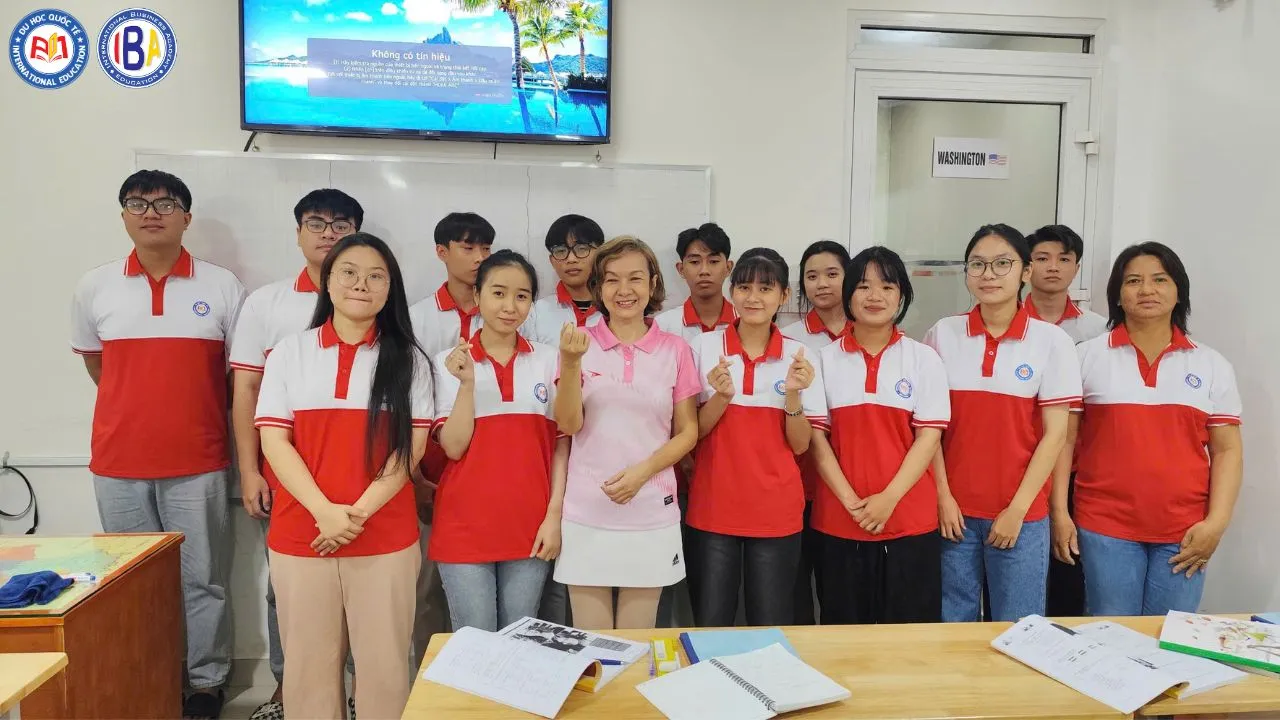
Network of leading partner boarding secondary schools
The superior strength of PDT EDUCATION lies in an extensive partner network with over 50 reputable boarding secondary schools spanning across Germany. We work directly with school boards, bypassing intermediaries, which helps the application review process happen quickly and transparently. PDT students are always prioritized in enrollment sessions with limited quotas.
Partner schools are carefully selected by us based on criteria: excellent teaching quality, high graduation rates, modern facilities, and especially thoughtful care for international students. We provide detailed information about each school, from local culture to food menus, so families can confidently entrust their children.
Continuous student care process until residency is achieved
The responsibility of PDT EDUCATION does not stop when the student receives their visa. We commit to accompanying them throughout their journey of living and studying in Germany. Our representative in Germany will support students in resolving arising issues such as: extending residence permits, opening bank accounts, emergency medical support, and connecting with the Vietnamese student network.
Particularly, when students enter the transition phase to university or search for enterprises for dual vocational training, PDT's vocational department will directly support interview practice, CV editing, and connecting with leading recruitment partners. Our ultimate goal is to help students not only study successfully but also firmly hold a permanent residence Blue Card in their hands.
| Service Process | Tasks of PDT EDUCATION | Benefits for Students |
|---|---|---|
| Consulting Phase | Profile assessment, school selection | Accurate pathway, cost saving |
| Document Processing | Translation, notarization, admission letter application | 100% fast admission letter approval rate |
| Visa Application | Financial guidance, Embassy interview practice | Confidence, maximum visa approval rate |
| Post-arrival Support | Airport pickup, visa extension, vocational transition | Total peace of mind, having a companion |
- Support for rapid German training to reach B1 standard.
- Processing accurate and legal financial proof documents.
- 1-on-1 interview practice with native teachers.
- Assisting with guardianship procedures for students under 18.
- Consulting and supporting vocational contract signing after graduation.
- Legal representation to resolve incidents arising in Germany.