

In recent years, vocational training in Germany has no longer been a strange concept to young Vietnamese people. Instead of the expensive and job-risky university path, more and more people are choosing vocational training in Germany – learning while working, earning an income, and opening up opportunities for long-term residency.
This article will help you get a comprehensive look at the most popular vocational training fields in Germany today, while analyzing the pros and cons, career prospects, and factors to consider before making a decision.
Overview of vocational training in Germany
Before diving deep into each specific field, you need to understand why the vocational training model in Germany is so attractive.
Germany's Dual System of vocational training combines:
- Learn theory at a vocational school
- Practice and paid work at the enterprise
Throughout the course (usually from 2.5 – 3 years), students sign a training contract with an enterprise and receive a monthly allowance. After graduation, the majority of students are retained for official work.
It is this model that creates the truth about vocational training in Germany: this is not a path of “going to school just to get a degree”, but a clear, practical, and sustainable career roadmap.

Opportunities after graduating from vocational training in Germany
After completing the program, you can:
- Stay in Germany for long-term work
- Transition to visa labor
- Apply for long-term residency according to immigration laws
- Accumulate experience and work in other European countries
This is why vocational training fields in Germany are increasingly seen as the “practical path” for young people who want to build a future in Europe.
The most selected vocational training fields in Germany today
Nursing – Healthcare
The nursing industry is always at the top of the list of vocational training fields in Germany with the largest enrollment demand.
Why is this field “thirsty” for human resources?
- Germany is facing a serious aging population situation
- The demand for care for the elderly and long-term patients is increasing
- The domestic young labor source is not enough to meet demand
Outstanding advantages:
- Easy to get a vocational training contract
- Stable vocational training allowance, increasing year by year
- Job opportunities are almost 100% after graduation
- Easy to transition to a long-term labor visa
Note: The job requires physical strength, patience, and good German communication skills, especially in hospital or nursing home environments.

Restaurant – Hotel industry
Tourism and services are important economic pillars of Germany, especially in big cities and tourist areas.
The restaurant – hotel industry includes many positions:
- Restaurant server
- Chef
- Hotel management
- Receptionist
Strengths of the industry:
- Suitable for dynamic people who like a multi-cultural working environment
- Can increase income thanks to tips
- Opportunities to work in many European countries later on
This field is often chosen by those who are researching vocational training in Germany but do not have a very deep career orientation yet.
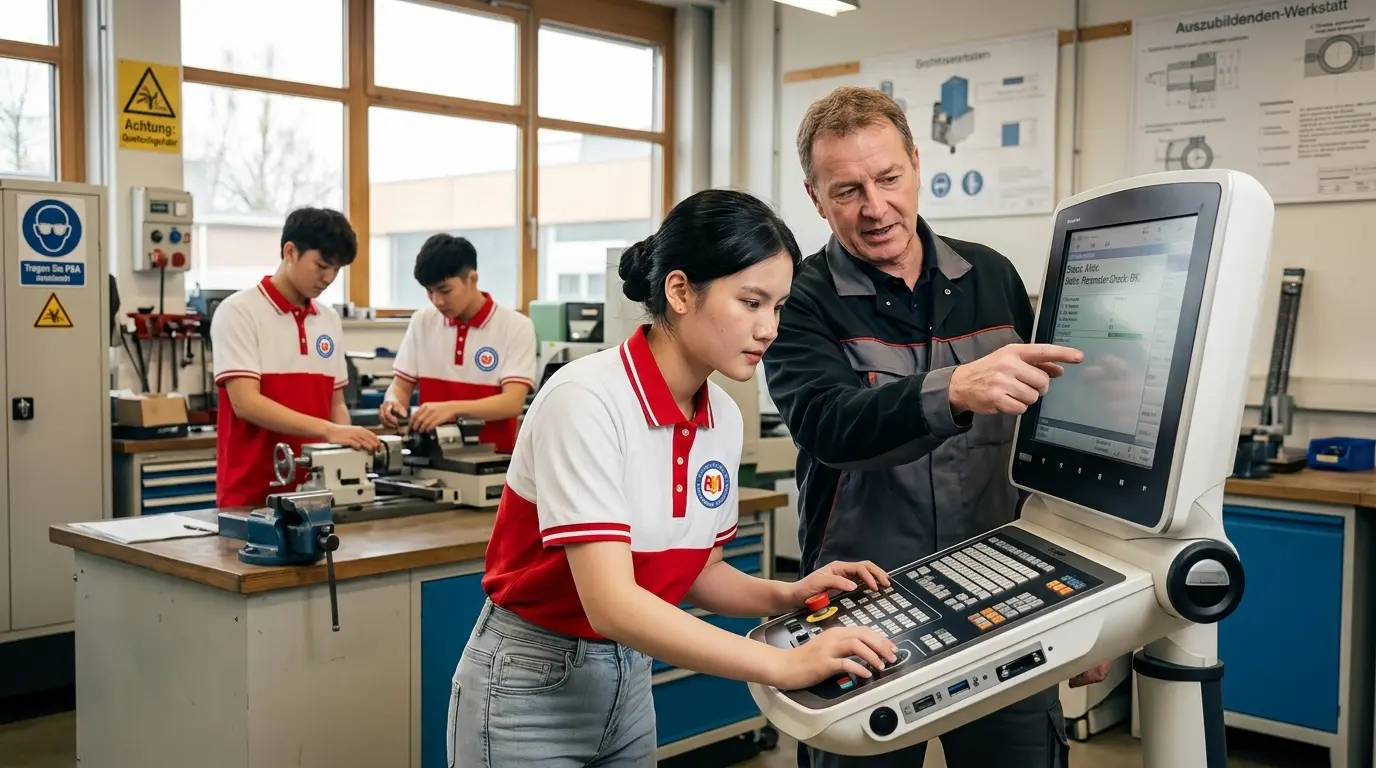
Mechanical - electrical - electronics industry
Germany is the “cradle” of European industry, globally famous for technical and manufacturing brands.
Popular technical vocational training fields include:
- Mechanical manufacturing
- Mechatronics
- Electrical engineering
- Industrial machinery maintenance
Why choose technical fields?
- Long-term, stable human resource demand
- Post-graduation income is higher than average
- Easy to advance if you have skills and good German
However, this field requires:
- Technical thinking ability
- Good health
- Discipline and high precision

Construction – interior finishing
In the context of a severe labor shortage, the construction industry in Germany is opening its doors to foreign workers.
Some popular professions:
- Carpenter
- Mason
- Painter
- Interior installer
Advantages:
- No high academic requirements
- Lots of practice, easy to absorb
- Post-graduation salary is quite good
This field is suitable for those who want to quickly stabilize their lives and have a clear income.
Retail – logistics
Logistics and retail are the bloodline of the German economy, especially in the era of booming e-commerce.
Popular training professions:
- Logistics staff
- Supply chain manager
- Sales in supermarkets, convenience stores
This field has the advantage of:
- Stable working environment
- Less academic pressure
- Easy to integrate into life in Germany

How to choose the right vocational training field in Germany?
Accurately assess your own abilities
When choosing a vocational training field in Germany, the first thing you need to do is correctly recognize your personal capacity. Each profession will require different skills such as technical thinking, communication ability, meticulousness, or physical endurance.
If you choose a field beyond your current ability, you are very likely to face pressure when having to both learn theory and do practical work. Conversely, a field suitable for your capacity will help you learn faster, easily adapt to the vocational training environment, and maintain long-term motivation throughout the learning process in Germany.
Choose according to long-term interests
Interests play an important role in sticking with the profession after graduation. Vocational training in Germany is not just about learning in a short time but is a long-term career orientation.
If you only choose a field based on a “trend” or according to the crowd without actually liking it, you may quickly feel discouraged. When the field of study fits your interests and future goals, you will proactively learn, improve your skills, and have more opportunities for sustainable development later on.
Consider physical strength and German language
Many vocational training fields in Germany have high work intensity, requiring good physical strength and the ability to withstand pressure, especially in fields like nursing, construction, or services. Besides, German is a key factor in daily learning and working.

Vocational training visa for Germany – Basic conditions to know
To participate in the program, you must have a vocational training visa for Germany. This is an important step that determines whether you can go to Germany legally or not.
Basic conditions usually include:
- Graduated from high school
- Have a German language certificate (usually from B1)
- Have a vocational training contract with a German enterprise
- Financial proof as required
The process of applying for a vocational training visa for Germany needs careful preparation of documents, following the right process and on time to avoid delays in enrollment progress.
The truth about vocational study in Germany
Despite many benefits, vocational training in Germany also has challenges:
- Pressure of studying and working simultaneously
- Initial language barriers
- Cultural differences and high labor discipline
However, with good preparation and a willingness to learn, most international students adapt after the first 6–12 months.
Conclusion
Choosing the right field among the vocational training fields in Germany will help you save time, costs, and build a sustainable career path in Europe.
If you are still wondering about a suitable field of study, document conditions, or the process of preparing a vocational training visa for Germany, PDT Education will be a reliable companion. With methodical experience in consulting for vocational training in Germany, PDT supports from field orientation, German language training to completing documents and visas. Find out details and receive free consultation at website to soon realize your plan for vocational training in Germany.