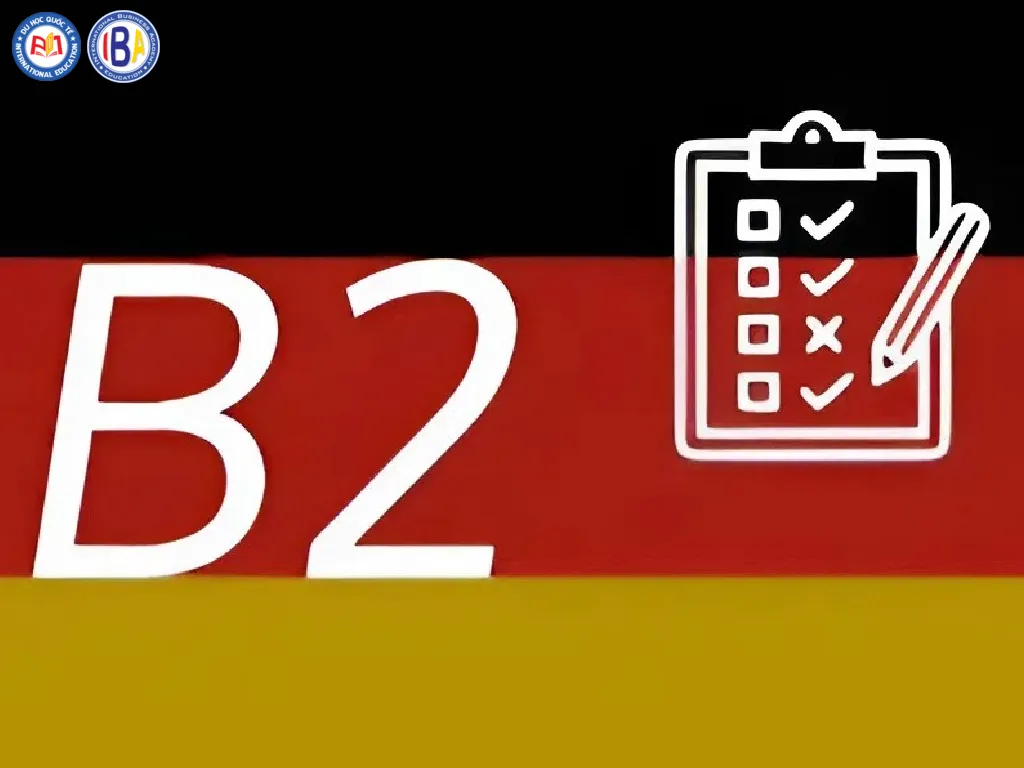
When starting the journey of learning German, many people often hear about levels A1, A2, B1, B2, or C1. Each level represents a different language proficiency level according to the Common European Framework of Reference for Languages (CEFR). Among them, the German B2 certificate is considered an important milestone, marking the ability to use German at an upper-intermediate level – sufficient for studying, working, and communicating in many international environments.
So, what is a German B2 certificate? What skills does this level require and why is it important for those planning to study or work in Germany? The article below will help you better understand the value of this certificate as well as the roadmap to achieve it.
What is a German B2 Certificate?
A German B2 certificate is a certificate confirming that the learner has reached the B2 level according to the system CEFR – a language proficiency assessment standard widely used in Europe and many countries around the world.
At the B2 level, learners can:
- Understand the main content of complex texts on various topics.
- Communicate relatively fluently with native speakers without too much difficulty.
- Present personal views clearly and with arguments.
- Write essays or reports with a coherent structure.
In other words, when achieving a German B2 certificate, learners have the ability to use the language relatively flexibly in many practical situations.
The System of Levels in German
To better understand the position of the German B2 certificate, you need to grasp the level division system in CEFR.
Level A1 – A2 (Basic Level)
This is the first stage when learners begin to approach the language. At this level, you will get used to:
- German alphabet
- Pronunciation rules
- Basic vocabulary
- Simple communication sentence patterns
Learners can introduce themselves, ask for basic information, and communicate in familiar situations.
Level B1 – Intermediate
After completing the basic stage, learners usually take the German B1 exam. This level allows you to:
- Understand common conversations
- Write emails or short paragraphs
- Participate in conversations on familiar topics
Many vocational training programs or settlements in Germany require at least a German B1 certificate.
Level B2 – Upper Intermediate
The German B2 certificate is seen as a major step forward in the process of learning German. People reaching this level can:
- Understand newspaper articles or documents with complex content
- Participate in academic discussions
- Express thoughts and opinions clearly
The ability to use German at this level is quite flexible and natural.
Level C1 – Advanced
After reaching B2, learners can continue to improve their level to reach C1 German. This is a level of near-proficiency in the language.
Those who reach C1 can:
- Understand in-depth academic texts
- Participate in complex discussions
- Use German in academic and research environments.
Why is a German B2 Certificate Important?
Requirements for studying abroad in Germany
Many universities in Germany require international students to have a German B2 certificate or higher. This level ensures you can:
- Understand lectures
- Participate in class discussions
- Write assignments and academic reports
If B2 has not been reached, students usually have to take additional German courses before starting the main program.
Expanding career opportunities
Not only in academics, a German B2 certificate also helps you have more career opportunities. Many professions in Germany require candidates to have good communication skills in German, such as:
- Nursing
- Restaurant – Hotel
- Engineering
- Business
When reaching B2, you can communicate with colleagues, customers and understand work instructions more easily.
Integrating into life in Germany
Language is the key to helping you integrate into a new culture and living environment. A German B2 certificate shows that you have the ability to communicate naturally in daily life such as:
- Handling administrative procedures
- Exchanging with neighbors or colleagues
- Participating in social activities
Skills Required to Achieve a German B2 Certificate
To achieve a German B2 certificate, learners need to comprehensively develop 4 language skills.
Listening skills
At level B2, you need to:
- Understand the content of long conversations
- Grasp main points in presentations or news reports
- Distinguish between important information and details
Speaking skills
Speaking ability at level B2 includes:
- Present personal opinions
- Participating in discussions on social issues
- Communicating naturally with native speakers
Reading skills
Learners need to have the ability to read and understand:
- Newspaper articles
- Basic academic documents
- Simple specialized content
Writing skills
In the writing part, candidates need to:
- Write formal emails
- Present personal opinions
- Write short essays with a logical structure

Popular German B2 Exams
Currently, there are many German B2 certificate exams widely recognized in the world, including:
- Goethe-Zertifikat B2
- Telc B2
- TestDaF (equivalent to B2 – C1)
Tips for Learning German Effectively
To achieve a German B2 certificate faster, you can apply some of the following learning methods:
- Learn vocabulary by topic: Learning vocabulary in topic groups such as education, work, travel, or technology will help you remember longer and use it more flexibly.
- Practice listening every day: You can practice listening by watching German videos, listening to podcasts, following news reports, etc. Regular exposure to German helps improve listening ability and language reflexes.
- Practice communication: Try to join German clubs, practice speaking with classmates, chat with native speakers, etc., because real communication is the best way to improve speaking skills.
- Practice writing regularly: Writing a diary or short paragraphs in German will help you consolidate grammar, expand vocabulary, and improve expression.

Conclusion
Achieving a German B2 certificate is an important step forward that helps learners improve communication skills, expand opportunities for studying abroad, working, and developing a career in Germany. From getting used to the German alphabet, conquering the German B1 certificate, to higher levels like C1 German, each stage contributes to building a solid language foundation.
If you are looking for a systematic German learning path towards the goal of achieving a German B2 certificate, PDT International Education is one of the reputable units for training and consulting on studying in Germany. Here, students are provided with a suitable German learning path along with support during the preparation of study abroad documents. You can find more information and receive detailed advice on the German learning program at the website pdt.edu.vn to start your journey to conquer German and opportunities to study in Germany.