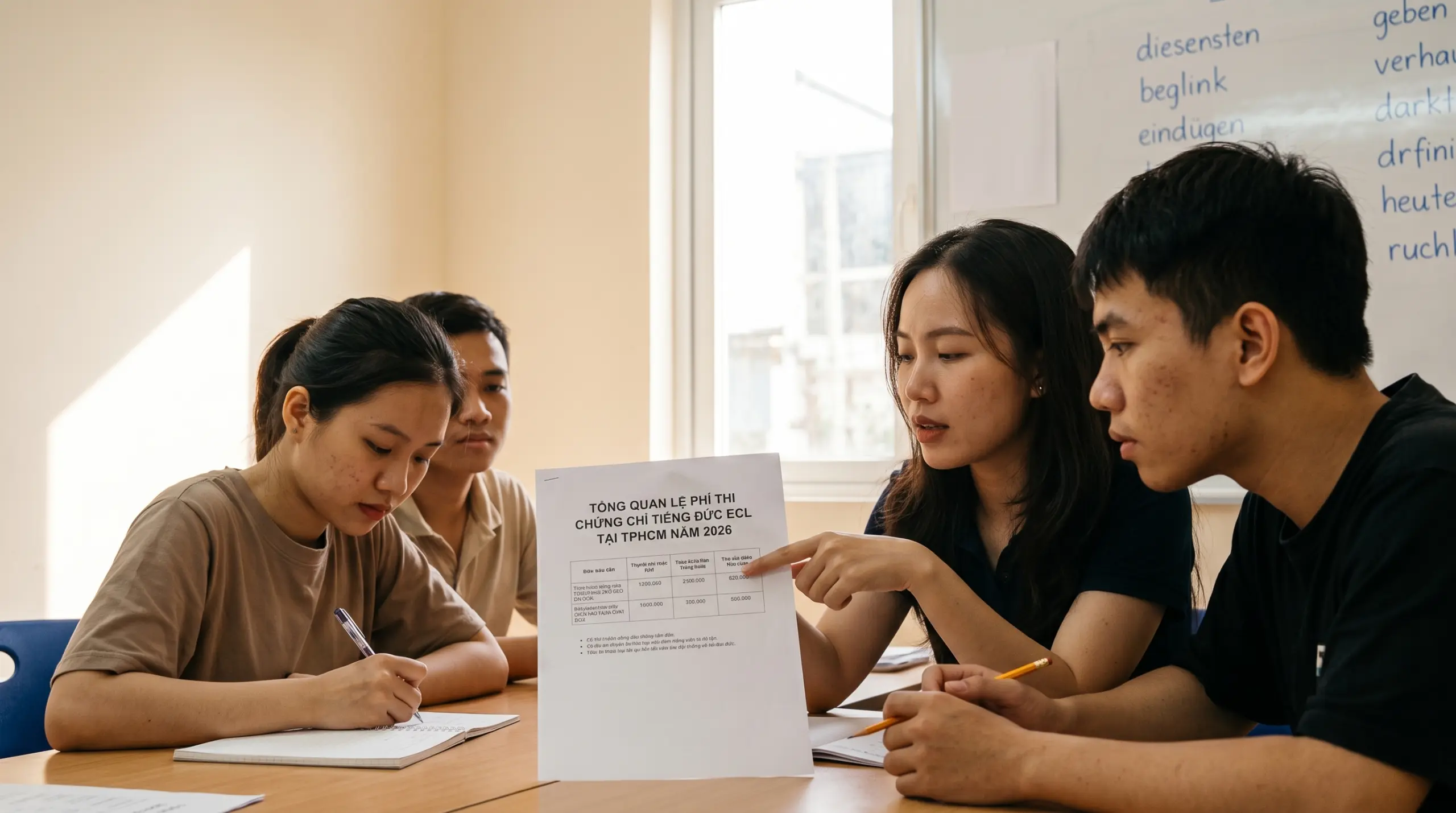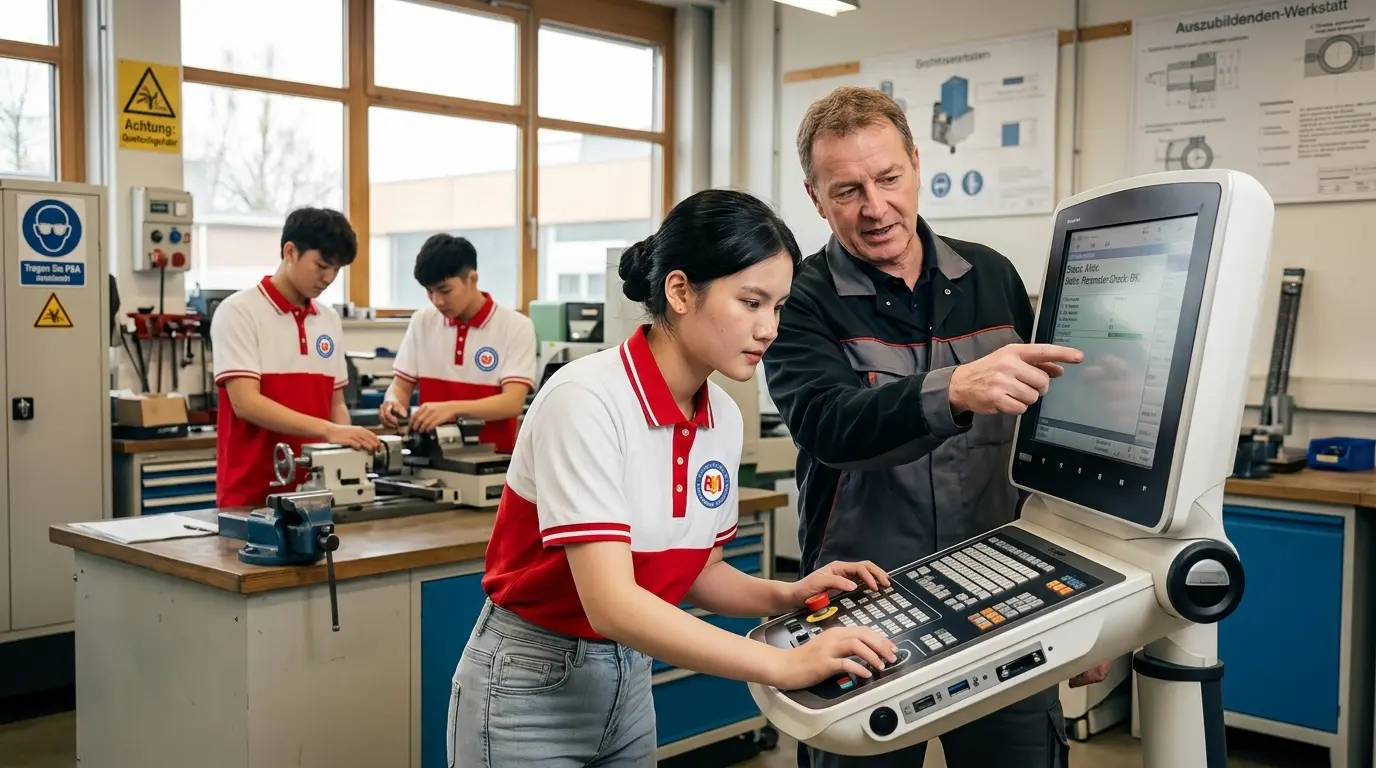


When starting the journey of learning German, many people wonder if basic German is difficult and whether they have enough ability to pursue it to the intermediate level. In fact, the biggest challenge lies not in grammar but in B1 German listening skills, as this is the stage where learners must get used to natural speaking speeds and more diverse content in daily life. To achieve the goal of possessing a B1 German certificate for studying abroad, working, or settling, you need to build a solid foundation of German vocabulary and have a systematic listening practice method. So how can you improve your listening ability effectively and confidently enter the exam? The article below will help you clearly understand the most suitable roadmap and strategy.
What is German B1 listening and why is B1 German listening skill important?
Level B1 in the European framework of reference
Level B1 is considered the intermediate level in the Common European Framework of Reference (CEFR). At this level, learners can understand familiar conversations and participate in exchanges on topics close to daily life. When practicing listening, you must get used to a more natural speaking speed and more complex sentence structures compared to A1 and A2.
In the German language certification exam, the listening section often accounts for a relatively large proportion of points. If you do not prepare well, you may lose points regrettably even if your grammar and reading comprehension skills are quite solid. Therefore, serious investment in German listening is necessary if you want to achieve high results.

Structure of the B1 German listening exam
The listening exam usually consists of many short and long dialogues, with question formats like multiple choice or true/false. Candidates only get to listen to each segment once or twice. This requires you to have high concentration and a wide enough German vocabulary to quickly identify keywords.
Compared to the question of whether basic German is difficult, it can be seen that the B1 listening part is not too hard if you practice regularly. The problem lies in reflexes and the ability to catch accurate information in a short time.
Is basic German difficult when stepping up to B1 level?
From basic foundation to intermediate requirements
Many people have wondered if basic German is difficult and decided to try. When reaching B1, they realize that basic knowledge is the foundation for listening skills. If at A1 you learn new words in isolation without context, then when listening at B1 you will face difficulties because you do not understand the overall content.
At this level, complex sentences, conjunctions, and the past tense appear frequently. Therefore, in addition to learning grammar, you need to expand your German vocabulary by specific topics.

Why is B1 German listening harder than A2?
First, the speaking speed is faster and closer to real-life communication. Second, the content is more diverse, not just revolving around family or shopping but also related to work, contracts, and education. Third, whether the German language exam is difficult often involves the use of synonyms or indirect expressions, which makes it easy for learners to get confused if they are not used to it.
However, if you build a proper practice strategy, improving B1 German listening is completely within reach.
German vocabulary – The key to improving B1 German listening
The role of German vocabulary in listening skills
One of the decisive factors for success when practicing listening is German vocabulary. When listening, the brain needs to recognize words immediately. If you have to stop to think about the meaning of a word, you will miss the next part of the content.
For example, in a German language exam, you might hear words related to Bewerbung (application), Vertrag (contract), Termin (appointment). If you are not familiar with them, it will be hard to follow the flow of the conversation.
How to learn German vocabulary to support B1 German listening
Instead of learning individual words, you should learn by phrases and context. When practicing listening, take note of common expressions that appear and practice listening repeatedly. The shadowing method – listening and repeating immediately – also helps improve sound reflexes.
If you still wonder whether basic German is difficult, try changing the way you learn German vocabulary. When your vocabulary increases, you will notice that listening becomes much easier.
Effective B1 German listening practice methods
Practice B1 German listening every day
Listening practice needs to be done regularly. Every day you should spend at least 30–45 minutes on this skill. Initially, you can listen slowly, then gradually increase the speed to get used to natural voices.
During the practice process, listen generally to grasp the main idea, then listen again to catch details. Finally, check the transcript to supplement missing German vocabulary. This way of learning helps you understand the content deeply instead of just finishing the exercise.
Practice mock tests before the German language exam
When your goal is to achieve a B1 German certificate, practicing mock tests is an indispensable step. Doing tests helps you get used to the exam structure and time pressure. After each test, analyze errors carefully to learn from the experience for the next time.
Repeating this process many times will significantly improve your listening skills.
An 8-week roadmap to conquering B1 German listening
In the first two weeks, you should consolidate your foundation and self-evaluate whether basic German is difficult for you. Review important grammar and add more German vocabulary by topic.
From the third to the sixth week, focus on practicing listening by specific topics. Each week choose a topic such as work, education, or renting a house for deep practice.
The final two weeks before the German language exam, do full tests under conditions identical to the real exam. This helps you train your psychology and listening reflexes in a high-pressure environment.

Conclusion
B1 German listening skill is an important turning point on the journey of learning German. If you were ever worried about whether basic German is difficult, remember that all difficulties can be overcome with the right method. Build a solid German vocabulary foundation, practice listening every day, and get used to the exam structure. When you persevere for a long enough time, you will notice your listening ability improve markedly. Conquering B1 not only helps you get a certificate but also opens up many educational and career opportunities in the future. Persistence and practicing the right way are the keys to your success.
If you are still confused about procedures, costs, the learning roadmap, or need detailed step-by-step guidance, PDT International Education is an experienced unit with more than a decade accompanying students on the journey of vocational study in Germany. The PDT team provides comprehensive support from orienting the right profession, estimating costs for vocational study in Germany, preparing financial proof documents, to interview training and completing papers according to German requirements.
Proactively connect with PDT International Education for specific advice and to build a vocational study plan in Germany that fits your ability and personal goals. With professional and dedicated support, you will be more confident when starting your journey of learning and career development in Germany.