


When first approaching a new language, many people often want to learn communication immediately while forgetting the most important foundation: the German alphabet. Before thinking about the goal of achieving a German A1 or A2 certificate, learners need to clearly understand how to read, write, and the pronunciation rules for each letter. Especially when starting to learn the German verb table, you will realize that correct pronunciation and accurate letter recognition make verb conjugation much easier and more logical. Therefore, investing time in this initial step is the smart and sustainable way to learn.
What is the German alphabet and the structure of the German alphabet
Overview of the German alphabet
The German alphabet consists of 26 Latin letters just like English, from A to Z. However, the special feature of this alphabet lies in four additional characters: ä, ö, ü, and ß. These characters create the distinct accents of German and play an important role in pronunciation as well as spelling.
Understanding the structure of the German alphabet helps learners avoid confusion when reading new words. For example, the difference between “a” and “ä” can completely change the meaning of a word. This is why learners need to familiarize themselves thoroughly from the very first sessions.
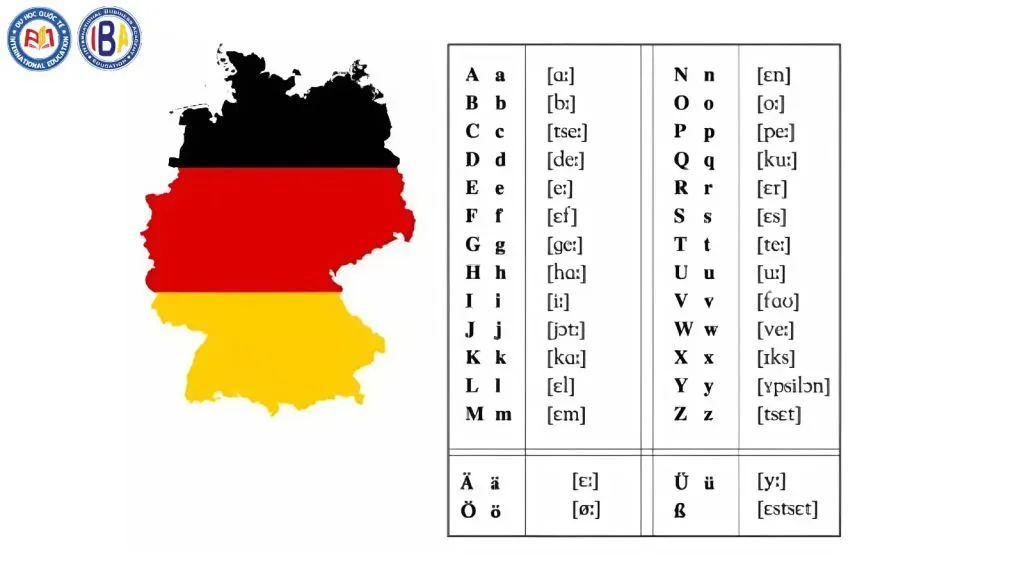
Classification of vowels and consonants in the German alphabet
In the German alphabet, vowels include a, e, i, o, u and three umlauts ä, ö, ü. Vowels can be pronounced long or short depending on their position and combination.
Consonants in the German alphabet are generally quite similar to English, but the pronunciation has many differences. For example, the letter “v” is often pronounced like “f”, while the letter “w” is pronounced like “v” in Vietnamese. Without mastering this, learners will face difficulties when practicing listening and speaking.
The role of the German alphabet when taking German A1 and A2 exams
In German A1 and A2 exams, both listening and speaking skills require clear pronunciation. Candidates often have to spell personal names, addresses, or read personal information. If you do not know and pronounce the German alphabet correctly, it is very easy to lose points in these seemingly simple parts.
Therefore, before setting a goal to achieve a German A1 or A2 certificate, you should make sure that you have completely mastered the alphabet and the pronunciation of each character.
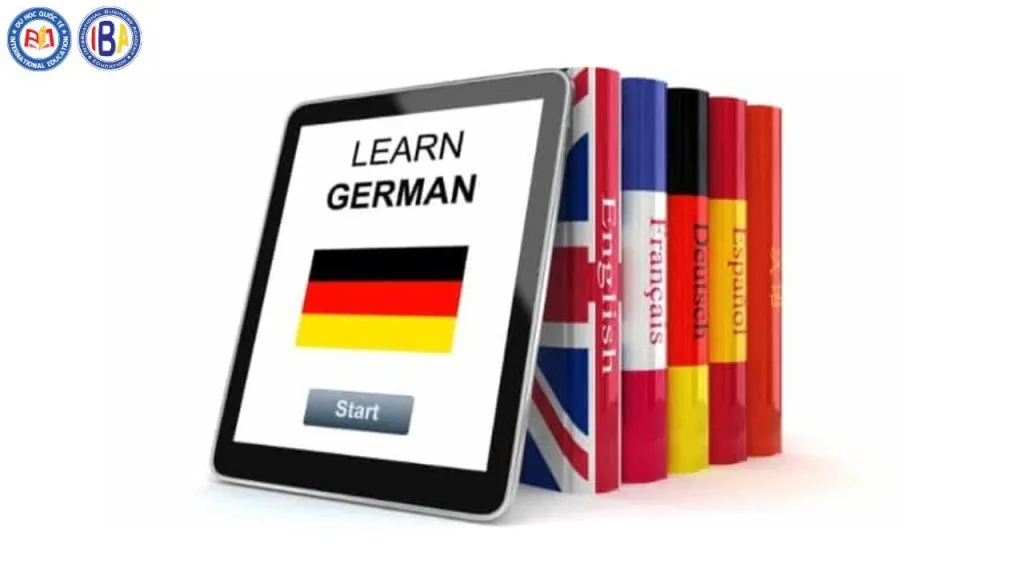
Standard pronunciation according to the German alphabet
Vowels in the German alphabet and how to pronounce them
Vowels play a core role in the German alphabet. Each vowel can be pronounced long or short. For example, the letter “a” in the word “Name” is lengthened, while in the word “Mann” it is pronounced short.
The three umlauts ä, ö, ü are challenges for many learners. The sound “ü” requires rounded lips like pronouncing “u” but the mouth creates the position of “i”. When practicing the correct pronunciation of these sounds, your listening skills will improve significantly.
Characteristic consonants in the German alphabet
Some consonants in the alphabet have special pronunciations such as “ch”, “sch”, or “ß”. The sound “ch” has two different pronunciations depending on the preceding vowel. The sound “sch” is pronounced almost like “sh” in English.
Practicing these sounds thoroughly helps you be more confident when communicating and creates a solid foundation before starting to learn the German verb table.
Common mistakes when learning the German alphabet
Many learners read German letters according to English habits. This leads to deviations in pronunciation and causes difficulty when listening. Another mistake is not distinguishing between long and short vowels, causing the meaning of words to change.
If mistakes are not corrected from the stage of learning the German alphabet, you will encounter many obstacles when learning vocabulary and especially when starting to learn the German verb table.
Why you must master the German alphabet before starting to learn the German verb table
The connection between the German alphabet and the verb table
Verbs in German have many ways of conjugation according to person and tense. When starting to learn the German verb table, you will have to read and remember many transformation forms. If you pronounce the root word incorrectly, you will easily remember the entire conjugation table incorrectly.
Understanding the German alphabet helps you read infinitive verbs correctly and accurately distinguish between transformation forms.

Starting to learn the German verb table is easier with standard pronunciation
Once you are familiar with the sounds of each letter in the alphabet, you will find that starting to learn the German verb table becomes easier. You can hear and identify verbs in conversation naturally.
Standard pronunciation also helps you be more confident when speaking, especially in the speaking part of the German A1 and A2 exams.
The roadmap from the German alphabet to German A1 and A2 certificates
The journey of learning German should start with the German alphabet, then expand to basic vocabulary. Next, you can start learning the German verb table in the present tense. Once you have mastered this knowledge, reviewing to achieve a German A1 or A2 certificate will become more feasible and effective.
Effective methods for learning the German alphabet
Practice listening and repeating the German alphabet every day
Listening to standard audio and repeating is the most effective method to memorize the German alphabet. You should spend at least 10–15 minutes each day practicing the pronunciation of each letter.
This habit not only helps you speak better but also improves listening skills when preparing for German A1 and A2 exams.
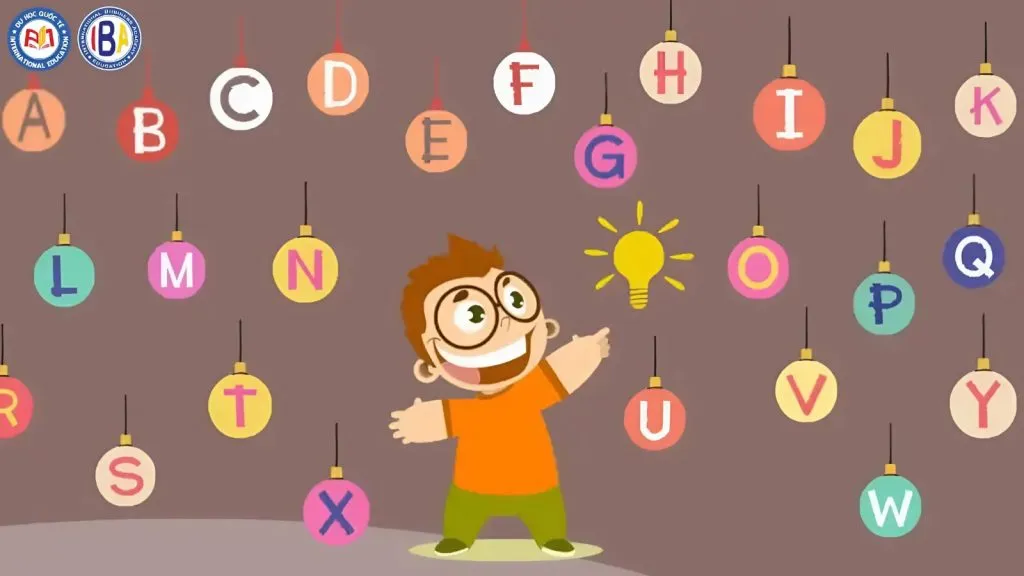
Combine writing to memorize the German alphabet
Rewriting the alphabet many times helps you remember the characters and how to use them. You can practice spelling personal names or writing simple words.
Correct spelling skills will support you a lot when starting to learn the German verb table and practicing writing complete sentences.
Applying the German alphabet to reality
Instead of learning by rote, you should apply the alphabet to real situations such as reading signs, spelling email addresses, or practicing basic communication.
Frequent application helps knowledge become vivid and supports the process of reviewing for German A1 and A2 exams more effectively.
The German alphabet and its role in German A1 and A2 exams
Impact on listening skills in German A1 and A2 certificates
In the listening part of the German A1 and A2 exams, candidates need to accurately identify information such as phone numbers, dates, and names. If you do not master the German alphabet, it is very easy to mishear and choose the wrong answer.
Impact on speaking skills when taking German A1 and A2 exams
In the speaking part, you often have to introduce yourself and spell your name. When you pronounce correctly according to the alphabet, you will create a good impression with the examiner and demonstrate serious preparation.
Impact on writing skills when starting to learn the German verb table
Writing skills are directly affected by understanding the alphabet. When starting to learn the German verb table, you need to write verb conjugations accurately. Miswriting a single letter can completely change the sentence structure.
Conclusion
It can be said that the German alphabet is the first brick in the journey of learning this language. When you have standard pronunciation and understand the letter structure, you will be more confident in learning vocabulary, grammar, and especially when starting to learn the German verb table. If your goal is to achieve a German A1 or A2 certificate, do not skip this foundational step. Spend time practicing every day, be persistent, and build a scientific study habit. When the foundation is solid, all other skills will develop faster and more sustainably.
If you are still wondering about application procedures, the cost to prepare, or are not clear about a suitable learning path, PDT International Education can accompany and support you methodically. With over 10 years of experience in the field of German vocational study abroad consultancy, this unit has supported many students from the first steps until completing procedures to study and work in Germany.
Please proactively contact PDT International Education for detailed advice and to build a German vocational study abroad plan suitable for your personal goals. Professional and dedicated support will help you be more confident when starting your journey of learning and developing your future in Germany.