Are you looking for a suitable German A1 course to start your language journey with the Goethe Institute, Telc, ECL exam board, or German educational organizations? Level A1 is the first foundation in the Common European Framework of Reference for Languages (CEFR), helping learners get used to basic listening – speaking – reading – writing skills.
This article will help you understand what German A1 is, how to study, who it is suitable for, and where to start. In addition, you will also find effective German A1 and A2 listening and vocabulary resources along with a structured learning path to quickly achieve your goal of conquering German certificates.
Introduction to German A1
German A1 is the starting level in the Common European Framework of Reference for Languages (CEFR). At this level, learners can understand and use simple sentences, expressing basic needs in daily communication. The goal of A1 is to help you master foundational grammar, about 500–800 basic vocabulary words, and get familiar with German pronunciation and sentence structure.
A person reaching A1 level can introduce themselves, ask simple questions, describe life, work, hobbies, or family using short sentences. This is an important stepping stone to continue to A2 and B1 – levels that require higher communication and writing skills.

What does German A1 include?
A German A1 course is usually divided into 4 main skills: listening, speaking, reading, and writing.
- Listening – speaking German A1: Get familiar with intonation, pronunciation, learn conversational reflexes in daily situations such as shopping, asking for directions, introducing yourself.
- Reading – writing German A1: Practice reading and understanding short texts such as signs, emails, messages, and learn how to write simple sentences or describe objects and people.
- Grammar: Includes nouns – verbs – adjectives, verb conjugation in the present tense, how to use prepositions, questions, and negation.
- German A1 vocabulary: About 800 words on familiar topics (family, occupation, weather, food, transportation...).
Combining listening and vocabulary for German A1, A2 helps learners increase reflex ability and natural memory, creating a solid foundation before moving to higher levels.
Who should study German A1?
Level A1 is designed for:
- Beginners: Have never studied German, want to learn from the basics.
- Participants in family reunification programs (sponsored by spouse/parents/children).
- International students or workers: Preparing documents for study abroad, settlement, or applying for a visa to Germany, needing an A1 certificate as required.
- Language enthusiasts: Wanting to expand foreign language capital, understand German culture.
- Pupils, students: Planning to study German – Vietnamese joint programs or take exams for international German (Goethe, TELC).

German Learning Path by Level
To achieve high efficiency when learning German, learners need a clear path that suits their current ability. According to the Common European Framework of Reference for Languages (CEFR), the German path is divided into 6 levels: A1 – A2 – B1 – B2 – C1 – C2, in which A1 and A2 are the most important foundations.
A1 Phase – Getting Familiar and Building Foundations
Learners start with recognizing sounds, practicing pronunciation, learning basic vocabulary, and simple sentence structures.
The goal is to understand and respond to short conversational sentences, know how to introduce oneself, and describe daily life.
A2 Phase – Confident Simple Communication
After mastering A1, you move to A2 to expand vocabulary (about 1,500 words), get familiar with longer conversations, practice listening to natural dialogue, and learn more simple past – present – future tenses.
B1 Phase – Practical Application
Learners can understand the main content in everyday conversations, know how to present opinions, and write simple letters or emails.
B2 Phase – Working and Studying in German
At this level, you can communicate confidently in a study or work environment, understand more complex topics, discuss and present viewpoints coherently.
C1 – C2 – Academic and In-depth Levels
Learners can use German almost like a native speaker, read and understand academic texts, write essays, work or research in Germany.
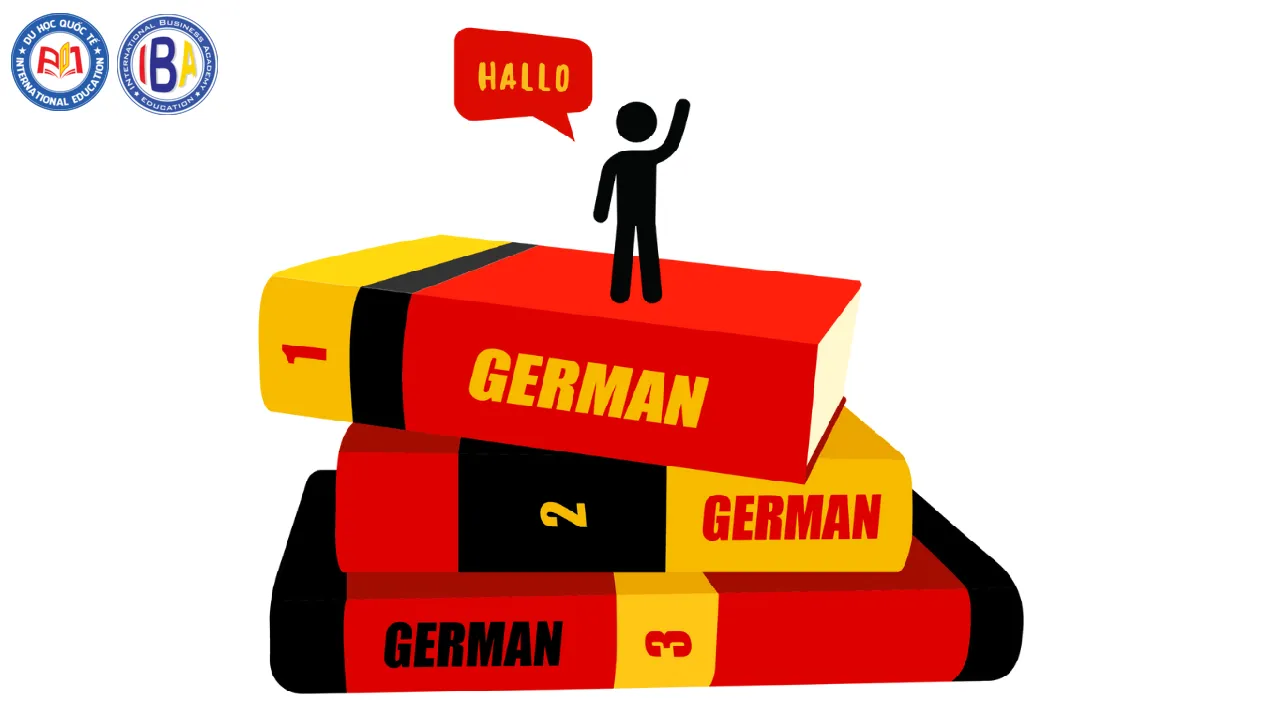
At PTD, the German learning path is designed to be interconnected from A1 to B2, with standard textbooks, clear input – output tests, and specialized listening – speaking classes, helping learners progress naturally and surely through each stage.
Effective German A1 Learning Materials and Tools
To learn German A1 quickly and effectively, learners need to combine standard materials with modern tools to practice all four skills equally.
Standard textbooks:
- Menschen A1 (Hueber Verlag): Accessible lessons, vivid images, accompanied by audio files to help develop listening – speaking skills.
- Schritte International Neu A1: Logical lesson structure, focusing on conversation and communication reflexes.
- Studio d A1: For students preparing for Goethe or TELC certificate exams.
Listening and vocabulary for German A1, A2:
- DW Deutsch Lernen – Nicos Weg: A series of videos and interactive exercises to help practice listening – comprehension in a life context.
- Duolingo, Memrise: Vocabulary learning apps through games, helping to remember for a long time and learn anytime, anywhere.
- Anki / Quizlet: Smart flashcards to review new words and common phrases.
Pronunciation and communication support tools:
- Forvo, Google Translate (voice): Helps listen to native speaker pronunciation for each word.
- YouTube channel “Learn German with Anja” or “Easy German”: Supplements natural ways of speaking, close to German life.
In addition, participating in online German learning communities is also a great way to exchange experiences, practice speaking, and find additional resources.

Conclusion
German A1 is an important starting step for anyone who wants to study, work, or settle in Germany. When you build a solid language foundation from this level, the journey to conquer A2 – B1 and beyond will become much lighter and more confident. Learning with the right method, combining regular listening – speaking – vocabulary practice is the key to helping you progress quickly and achieve certificates in a short time.
If you are looking for a methodical, reputable German learning environment with a clear orientation for your study abroad or career goals in Germany, come to PTD EDUCATION – German Study Abroad Center in HCMC.
Here, you will:
- Learn according to the CEFR standard German path (A1–B2) with international textbooks.
- Be taught by a team of teachers with international German teaching certificates.
- Receive study abroad advice and career orientation directly in Germany.
- Participate in exam preparation classes for Goethe, TELC, TestDaF certificates to ensure output results.
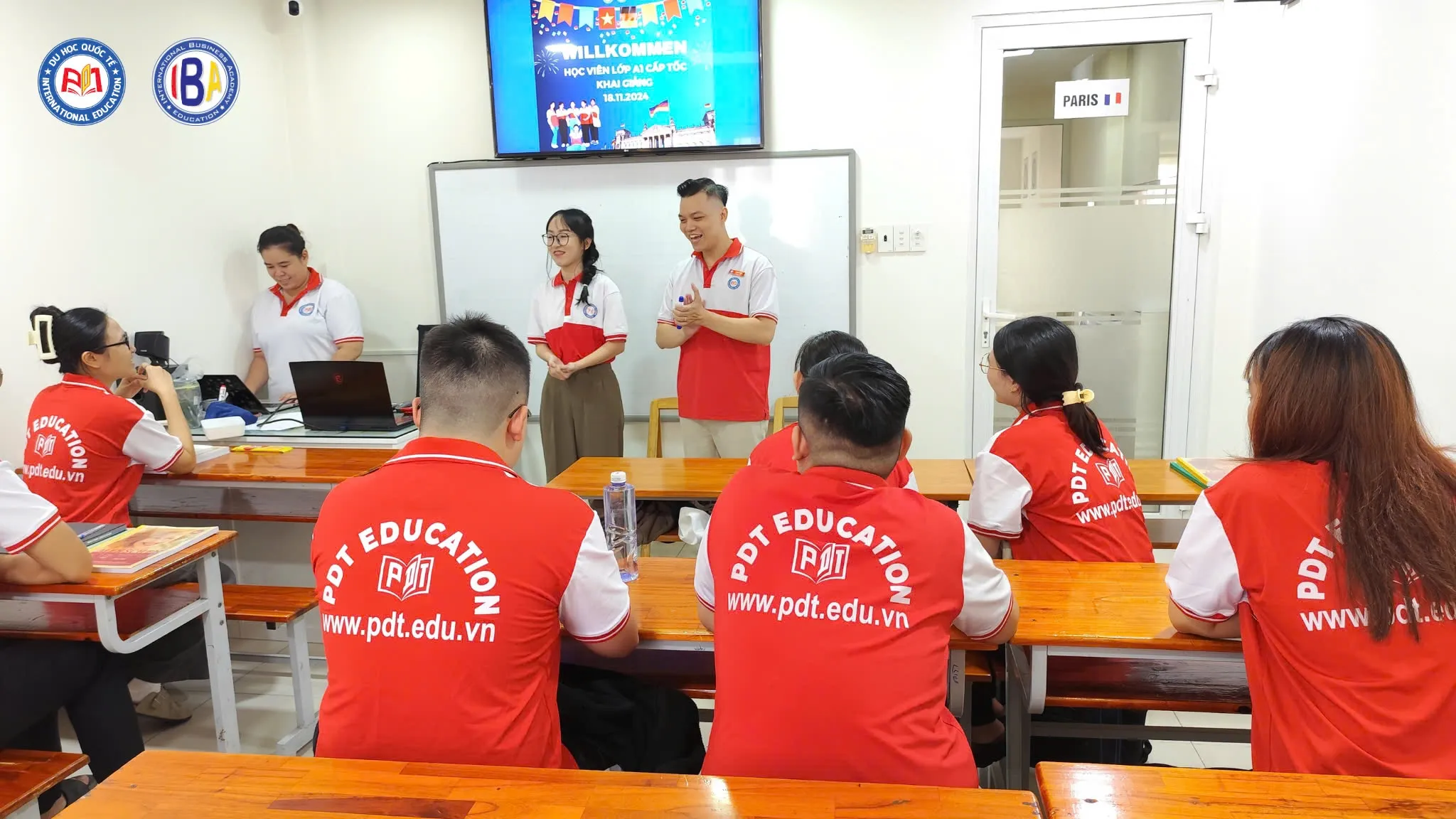
PTD EDUCATION is not just a place to teach language, but also a complete companion on your German study abroad journey — from the first step of learning German A1 to when you set foot in your dream school in Europe. Contact PTD EDUCATION today to start an effective German learning journey and turn your dream of studying in Germany into reality!