

Recruitment demand in Germany is increasing sharply due to a shortage of high-quality human resources, opening up great opportunities for Vietnamese people to choose working in Germany to develop their careers and improve their income. With attractive salaries, comprehensive welfare benefits, and a clear settlement roadmap, working in Germany is increasingly becoming a strategic direction for those who want to change their future in a sustainable way.
However, to ensure your journey to work in Germany is effective and minimizes risks, you need a clear roadmap, correct understanding, and thorough preparation from the start. The content below will help you grasp the entire process from A-Z: participation requirements, choosing the right profession, costs to prepare, visa application procedures, to long-term settlement opportunities when working in Germany, all analyzed in detail from an expert's perspective.
The Roadmap for Working in Germany: From Orientation to Reality

Journey working in Germany requires thorough preparation from the very first steps. Understanding the basic requirements will help you save time and optimize the success rate when submitting your application.
Basic conditions to start the journey
To qualify for working in Europe, candidates need to meet the golden age range of 18 to 35 years old. Health is a key factor; you must have a certificate stating you do not have any serious infectious diseases. A clean judicial record with no criminal history is a mandatory requirement from the embassy.
Additionally, the minimum qualification is usually a high school graduation. Based on European foreign language certificate standards, candidates need to reach B1 level to ensure basic work communication. Some specific industries may require primary vocational certificates in Vietnam before departure.
Outstanding benefits of developing a career in Europe
Decision working in Germany provides a world-class professional working environment. You are entitled to a working schedule of a maximum of 40 hours per week, along with a minimum of 24 days of paid leave per year. The health insurance and social security system here provides comprehensive protection for employees.
Unlike many countries, Germany values the balance between work and life. International workers are treated equally as local citizens regarding the basic salary level. When there are health incidents or temporary job loss, you still receive worthy allowances from the social security fund.
Standard document preparation steps and certificates
Legal documents are the key factor in determining whether you can depart or not. You need to prepare a valid passport, a notarized translated curriculum vitae, and a motivational letter clearly stating your career goals. According to research from PDT experts, transparency in paperwork helps shorten the processing time by 30%.
Registering a khóa học tiếng Đức cấp tốc will help you better prepare for the B1 certificate exam. Diplomas related to your major also need to be legalized by the consulate. You should arrange your documents in the exact order requested by the embassy to demonstrate professionalism.
- Ensure your passport is valid for at least 6 months from the intended date of entry.
- Translation and judicial notarization for all high school or university degrees.
- Complete the German language proficiency exam from accredited language institutes.
- Prepare at least 4 biometric-standard passport photos according to European regulations.
- Register for a medical check-up schedule at hospitals designated by the embassy.
- Apply for the judicial record certificate number 2 at the provincial or municipal Department of Justice.
| Stage | Items to Be Prepared | Estimated Time | Level of Importance |
|---|---|---|---|
| January-June | Study and take the German B1 certificate exam | 6 – 8 months | Required |
| July-August | Processing professional contracts and legalization | 1 – 2 months | High |
| September | Apply for embassy visa | 4 – 8 weeks | Decision |
| October | Buy flight tickets and prepare your luggage | 2 – 3 weeks | Medium |
Which Industry For Working Abroad In Germany Is Easiest For Settlement Currently?
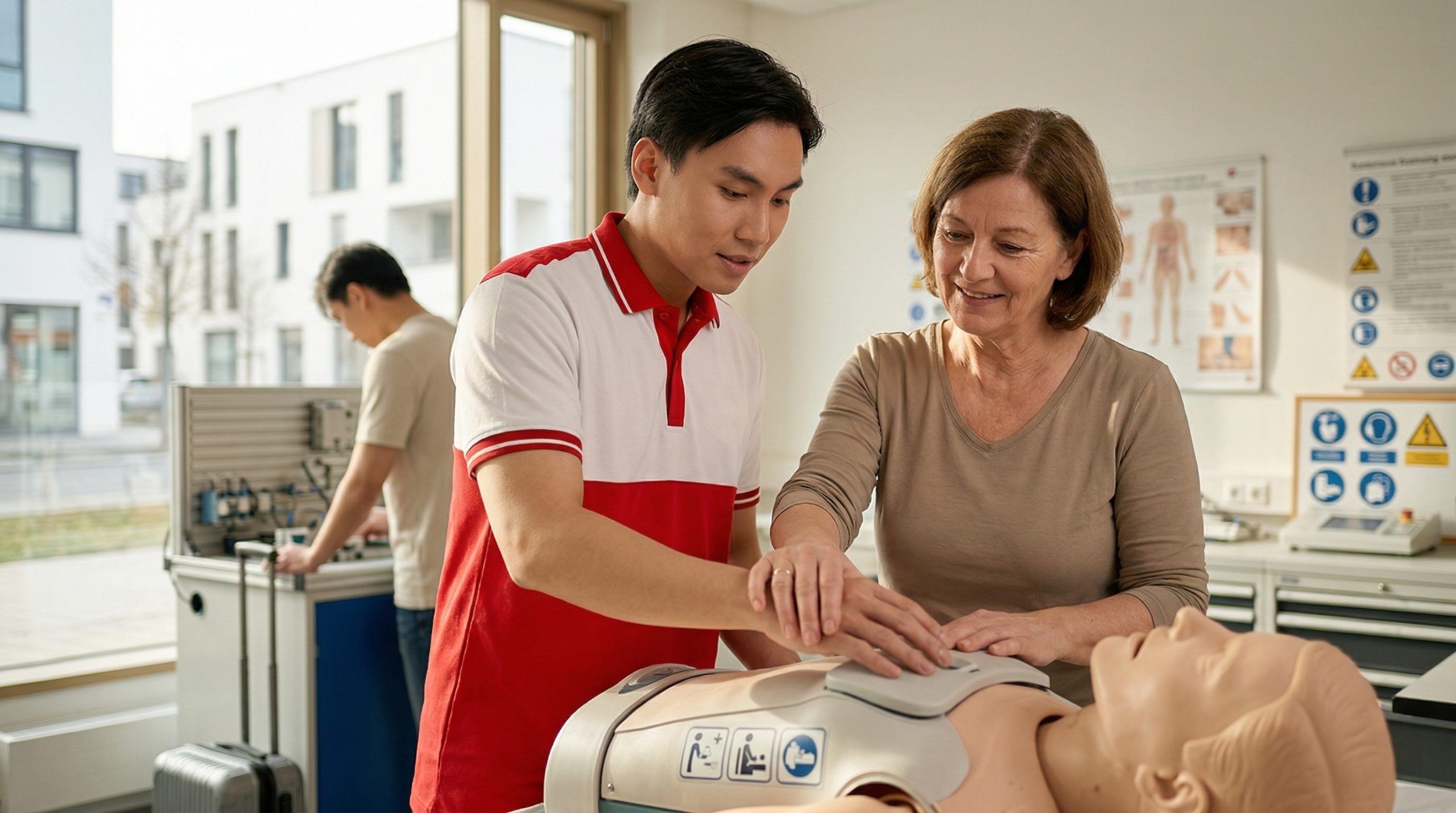
Choosing the right career is a strategic step when working in Germany. Personnel shortages in several sectors have prompted the government to ease visa processing policies and prioritize the issuance of permanent residency green cards.
Nursing Industry – Huge Demand for Medical Human Resources
An aging population keeps the European healthcare system in a constant state of labor shortage. Nursing work focuses on caring for the elderly in nursing homes or supporting nurses at hospitals. A stable workload provides a steady income and many opportunities for overtime.
Students at PDT EDUCATION are often advised to choose this major because the visa success rate is almost absolute. After graduating from the vocational training course in Germany, you will receive an official salary higher than the general average. This major is also prioritized for permanent residency card review after only 3 years of continuous work.
Hospitality Industry – Rapid Career Advancement Opportunities
The hospitality and catering industry is always vibrant in Germany's major cities. Jobs range from reception and housekeeping to kitchen assistants and restaurant management. The requirement for continuous communication helps you improve your language skills naturally and quickly.
This is an ideal environment for dynamic people who enjoy communication and can handle high pressure. Income in this industry comes not only from basic salary but also from bonuses and customer tips. Opportunities for promotion to shift management positions open up if you demonstrate organizational ability.
Engineering and Mechanical – The industry group requiring high-level technical skills
Germany has always been globally famous for its mechanical engineering and automation industries. The fact working in Germany according to this industry group, it is suitable for male candidates with a technical background. Positions such as mechanics, machinery maintenance specialists, and refrigeration technicians always have great recruitment demand.
Workers in this field are often sponsored by large corporations for advanced training costs. A safe working environment with state-of-the-art protective equipment helps minimize the risk of accidents. The starting salary for the technical sector often leads among manual labor industry groups.
- The Nursing industry requires patience and basic health care skills.
- The Hotel and Restaurant industry requires flexibility and good situational handling skills.
- Mechanical Engineering requires precision, logical thinking, and physical endurance.
- The Food Processing industry is suitable for people who enjoy closed-process work.
- The construction industry provides high income but requires the ability to work outdoors.
| Industry | Expected Starting Salary (Year 1) | Staffing Shortage Rate | Residency Ability |
|---|---|---|---|
| Medical nursing | 2.400 – 2.800 Euro/month | Very high (>30%) | Very easy (After 3 years) |
| Restaurant – Hotel | 2.100 – 2.500 Euro/month | High (20-25%) | Medium |
| Engineering – Mechanical | 2.600 – 3.200 Euro/month | Quite high (15-20%) | Easy |
| Construction – Interior | 2.200 – 2.700 Euro/month | Average (10-15%) | Medium |
PDT Experts Analyze Costs and Salaries for Working in Germany
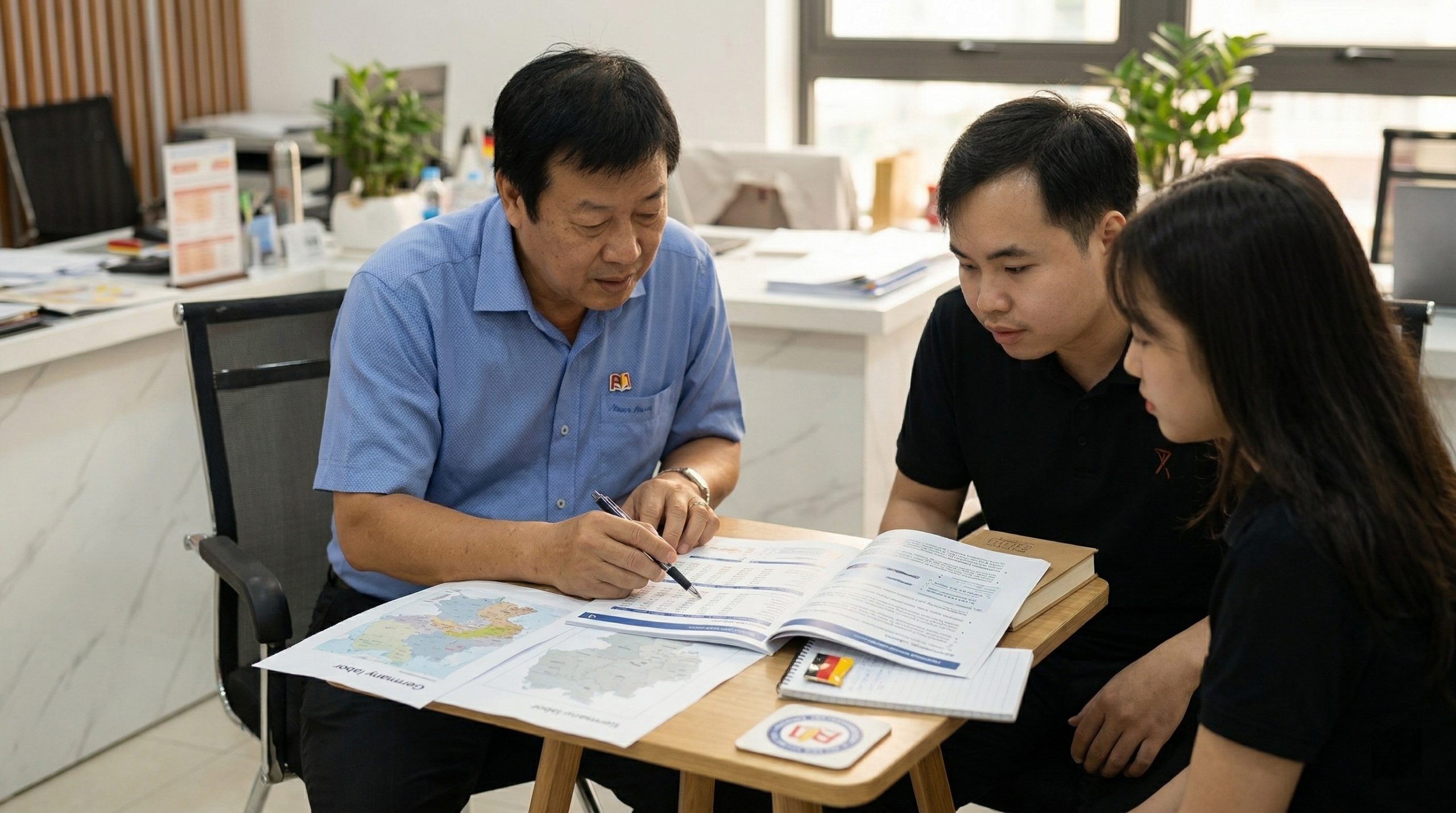
Financial issues are always a top concern for every candidate. Creating a transparent cash flow plan will help families be more proactive throughout the preparation process working in Germany.
Initial fees to prepare before flying
The largest costs often lie in the language learning and certification exam stages in Vietnam. You will need a budget for document translation, notarization, and visa application fees at the embassy. One-way airfare to Europe is also a significant expense that needs to be planned for in advance.
Besides, some programs require opening a blocked account to prove financial capacity for residency during the first few months. PDT recommends that you should prepare an additional small amount of cash for living expenses. The total initial cost fluctuates depending on whether you already have a German language certificate or not.
Starting salary level and the actual income increase roadmap
Unlike the vocational study abroad system where you receive subsidies, the working in Germany directly brings a full-time salary immediately. During the first year, income typically ranges from 2,200 to 2.
800 Euro per month before tax. This salary level will vary based on the industry and the state where you work.
Following the development roadmap, income will increase steadily from 5% to 10% per year based on accumulated experience. When you complete advanced professional training courses, opportunities to negotiate a new salary with employers will open up. Companies in Europe are very transparent in reviewing periodic salary increases.
Financial support policies from businesses and government
Legal workers in Germany enjoy many practical financial support regimes. Overtime pay is usually multiplied by a factor of 125% to 150% depending on rest days or holidays. At the end of the year, many businesses have policies for a 13th-month salary bonus or Christmas holiday bonuses.
You also have the right to apply for an annual personal income tax refund if you have work-related expenses. The German government provides housing allowances (Wohngeld) for workers with low incomes below the prescribed level. This support helps ease the burden of high living costs in Europe.
- German language training costs usually range from 20 to 30 million VND.
- Application processing and notarized translation fees range from approximately 10 to 15 million VND.
- One-way flight tickets to Frankfurt or Berlin cost from 15 to 25 million VND.
- Financial proof accounts (if required) usually need from 100 million VND.
- Weekend side income can help you earn an additional 400 Euros tax-free.
>>> See more here.
lo-trinh-xin-visa-di-lao-dong-o-duc-dat-ty-le-dau-cao
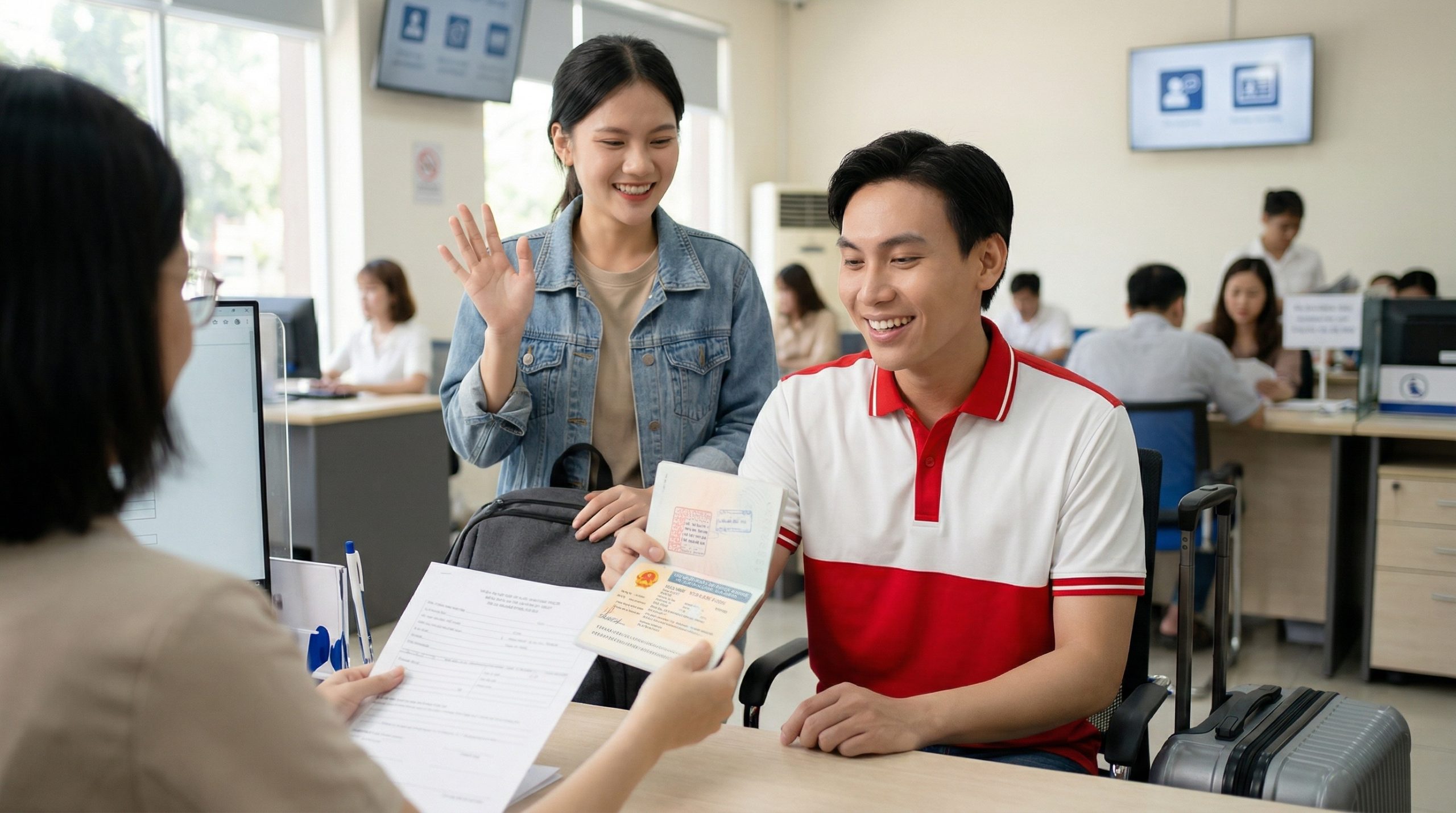
The visa application procedure is the biggest barrier separating you from your dream working in Germany. Understanding the embassy's workflow clearly will help make your application profile more perfect and persuasive.
Standard interview preparation process at the embassy
The visa interview is an opportunity for you to prove the authenticity of your documents. Consular officers will check if your actual German communication skills match the submitted certificates. Questions often revolve around the purpose of the trip, understanding of the job, and future plans.
Confidence, honesty, and a professional demeanor are the biggest scoring factors. You need to remember the details of the labor contract, the company name, and the address where you will work. Any hesitant answers or contradictions with the documented profile can lead to a visa refusal.
common-mistakes-that-lead-to-visa-application-rejection
The most common cause of visa rejection is discrepancies in the documentation. Submitting forged diplomas or concealing a criminal record will result in a permanent ban from the Schengen area. A poorly written motivation letter, copied from the internet, also demonstrates a lack of seriousness toward the job.
Many candidates are rejected because they cannot demonstrate transparent financial capacity for the first months of living. Weak foreign language proficiency, being unable to answer basic interview questions is also a serious minus point. Arbitrarily shortening the document preparation process often leads to regrettable consequences.
Optimal solutions for proving the purpose of stay documentation
To optimize the profile, all information must form a logical and persuasive professional story. Evidence of work experience in Vietnam needs to be red-stamped by the former agency. PDT experts always support students in cross-checking documents to eliminate the smallest contradictions.
The motivation letter should be written in German with a formal style, highlighting the reasons why you chose that business over other companies. You should attach letters of recommendation from vocational teachers or former bosses to increase credibility. A neat application folder with a clear table of contents will create a good impression with the reviewer.
- Check the logic between study time and work experience in the resume.
- Absolutely do not use services that forge language certificates or vocational degrees.
- Practice mock interviews multiple times with native teachers to develop natural reflexes.
- Arrange the documents into two sets: the original for comparison and a notarized copy for submission.
- Arrive 15 minutes early on the interview date in professional, neat business attire.
- Prepare explanations if there are long gaps in your resume.
| Approval Criteria | Common Mistakes Of Candidates | Effective Ways to Fix |
|---|---|---|
| Language proficiency | Poor German listening and speaking reflexes | Practice real-life communication with native speakers |
| Document validity | Degrees not legalized | Apply for a confirmation stamp at the consular office |
| Work motivation | The explanation letter was written in a generic way | Provide details of the 3-year commitment plan |
| Accommodation finance | Blocked account lacks balance | Pay the full amount according to current law |
Regulations and Settlement Opportunities After Working in Germany
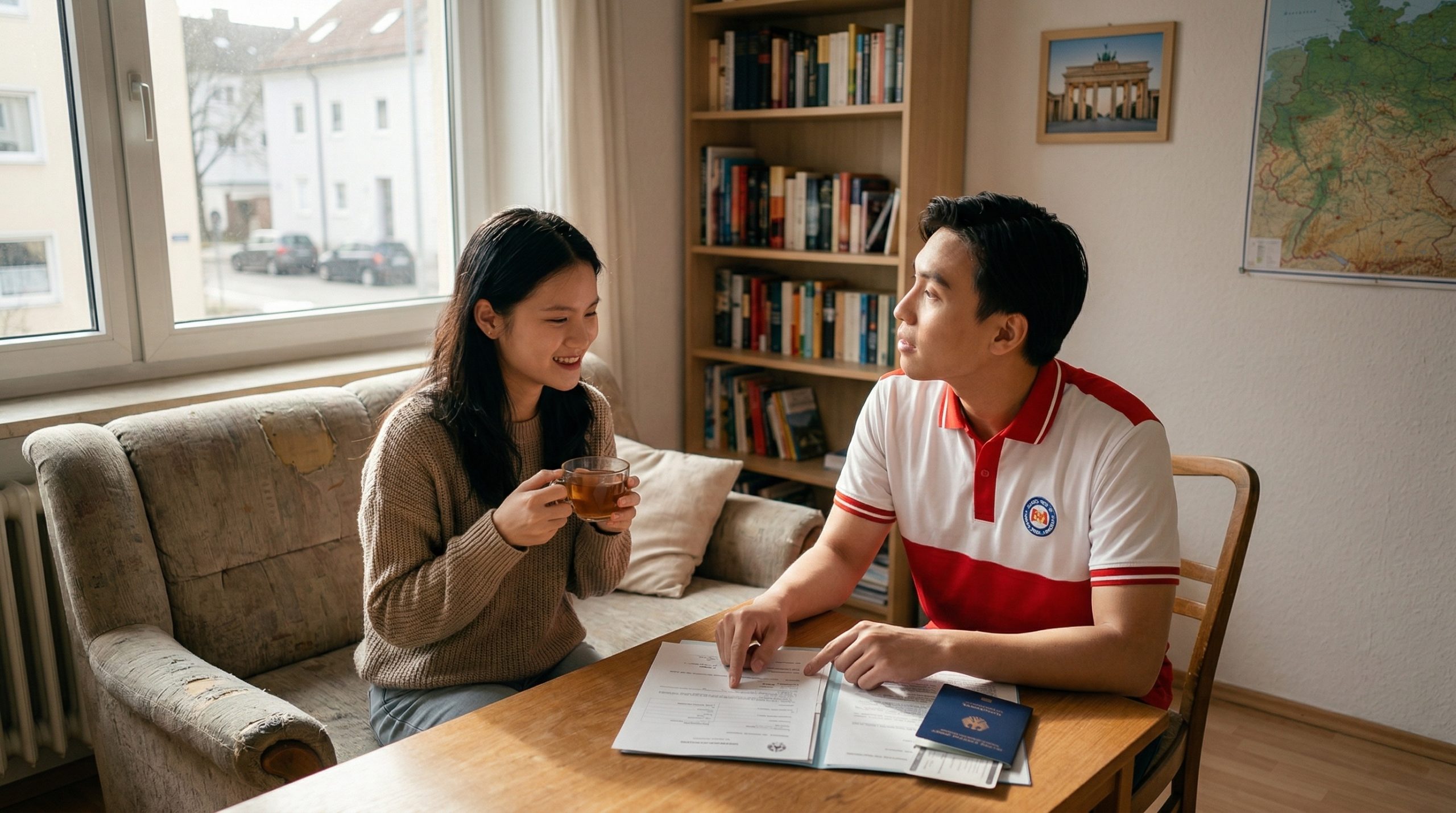
The ultimate goal of most people working in Germany is to build a stable life and settle in Europe. The legal system here has clear roadmaps to convert from a work visa to permanent resident status.
Core conditions for applying for a long-term residence permit
Permanent settlement permit (Niederlassungserlaubnis) allows you to live and work indefinitely. The basic condition is that you must work legally and pay full pension insurance for at least 60 months. However, for highly qualified professionals, this period can be shortened to 33 or 21 months.
Besides the tax payment duration factor, you must prove sufficient income to support yourself without relying on social benefits. German language proficiency with a B1 certificate or higher is also a mandatory requirement. Your criminal record must be completely clean throughout your period of residence in Europe.
Process for applying for European citizenship after 5 years of dedication
According to the latest residency laws, foreigners can apply for German citizenship after 5 years instead of 8 years as previously. If you have particularly outstanding integration achievements, this period can even be shortened to 3 years. This process requires perseverance in language learning and understanding local culture.
You will need to pass the naturalization citizenship test, which includes knowledge of German law, history, and society. Giving up your current original citizenship is no longer a mandatory requirement for Vietnamese citizens according to the new regulations. Once you hold this powerful passport, you can freely travel and work in 27 Schengen area countries.
Benefits of sponsoring relatives for family reunification
One of the humanistic values of working in Germany is an opportunity for family sponsorship to reunite. As soon as you have a long-term residence permit and a stable job, you can apply for sponsorship for your spouse and children under 16 years old. The prerequisite is that the rented apartment space must have enough standard area for all members.
You need to prove a monthly income level sufficient to cover living expenses for the entire family based on the regulatory framework of each state. The sponsored person also needs a basic German certificate at level A1 for daily communication. Your children will enjoy free education at Europe's leading prestigious public schools.
- Paying taxes and social insurance in full is the most important ticket to settlement.
- Maintain a long-term rental contract and register temporary residence on time at the management authority.
- Actively participate in community activities to accumulate social integration points.
- Prepare the family sponsorship application 6 months in advance to account for the processing time.
- Avoid changing jobs constantly during the first 3 years so that your profile is evaluated for stability.
A Journey to Open the Future
The journey to work in Germany is not just a career choice but also an opportunity for you to change your life, increase your income, and build a long-term future in Germany. When you have a clear roadmap and full preparation from foreign languages to documents, the opportunity to work and settle will become more realistic and achievable than ever.
Reality shows that those who succeed when going to work in Germany are those who have early orientation, prepare carefully, and choose the right partner organization. This is the factor that helps you shorten the processing time for documents, increase the visa approval rate, and quickly stabilize your life in Europe.
If you are nurturing a plan to work in Germany but do not know where to start, PDT Education will be a reliable companion helping you build a clear roadmap from the beginning. With a systematic German language training program from A0 – B1, support for completing documents, realistic visa interview practice, and direct connections with reputable businesses in Germany, PDT Education helps you optimize time, costs, and maximize your visa success rate.
>>> See other topics: What Are the Costs of Working in Germany? Latest Update 2026