

In the context of increasingly deep international integration, possessing an additional foreign language is no longer just an advantage but has become an essential need. Besides English, German is gradually becoming a choice of interest for many due to attractive study, work, and settlement opportunities in Europe. Not only the language of technology, science, and philosophy, German also carries within it characteristic cultural depth and logical thinking.
This article will help you have a comprehensive view of German, from reasons to learn, language characteristics, and an effective learning roadmap to important notes when starting.
Why should you learn German?
German – A popular language in Europe
German is the official language in Germany, Austria, part of Switzerland, Luxembourg and Liechtenstein. Germany is currently the largest economy in Europe and is among the top countries with strong influence in technology, engineering, medicine, and the automotive industry.
Knowing German not only helps you communicate in German-speaking countries but also expands cooperation opportunities in international environments, especially with large corporations.
Open study abroad and career opportunities
Germany is famous for its policy of free or reduced tuition for international students. Many high-quality training programs are taught in German. Therefore, proficiency in German helps you directly access top-tier education without depending entirely on English programs.
In addition, the labor market in Germany and European countries always has a high demand for human resources in nursing, engineering, restaurant-hospitality, and information technology. When you have a solid German foundation, you will have a great advantage when applying or participating in labor cooperation programs.
Train logical thinking
German is famous for its tight sentence structure and clear grammar system. When learning German, learners are forced to train their ability to analyze, memorize, and arrange information logically. This not only supports language learning but also improves overall thinking skills.
Outstanding characteristics of German
Clear pronunciation system
Compared to many other languages, German pronunciation is relatively consistent. Once you grasp the reading rules, you can accurately pronounce most new words. This is particularly favorable for beginners.
Alphabet and special characters
Before diving deep into vocabulary and grammar, learners need to get acquainted with the German alphabet. Basically, this alphabet consists of 26 characters similar to English, but with some special characters like ä, ö, ü, and ß.
These characters have their own pronunciation and play an important role in distinguishing word meanings. For example, just by changing the umlaut (two dots above the vowel), the meaning of the word can be completely different.
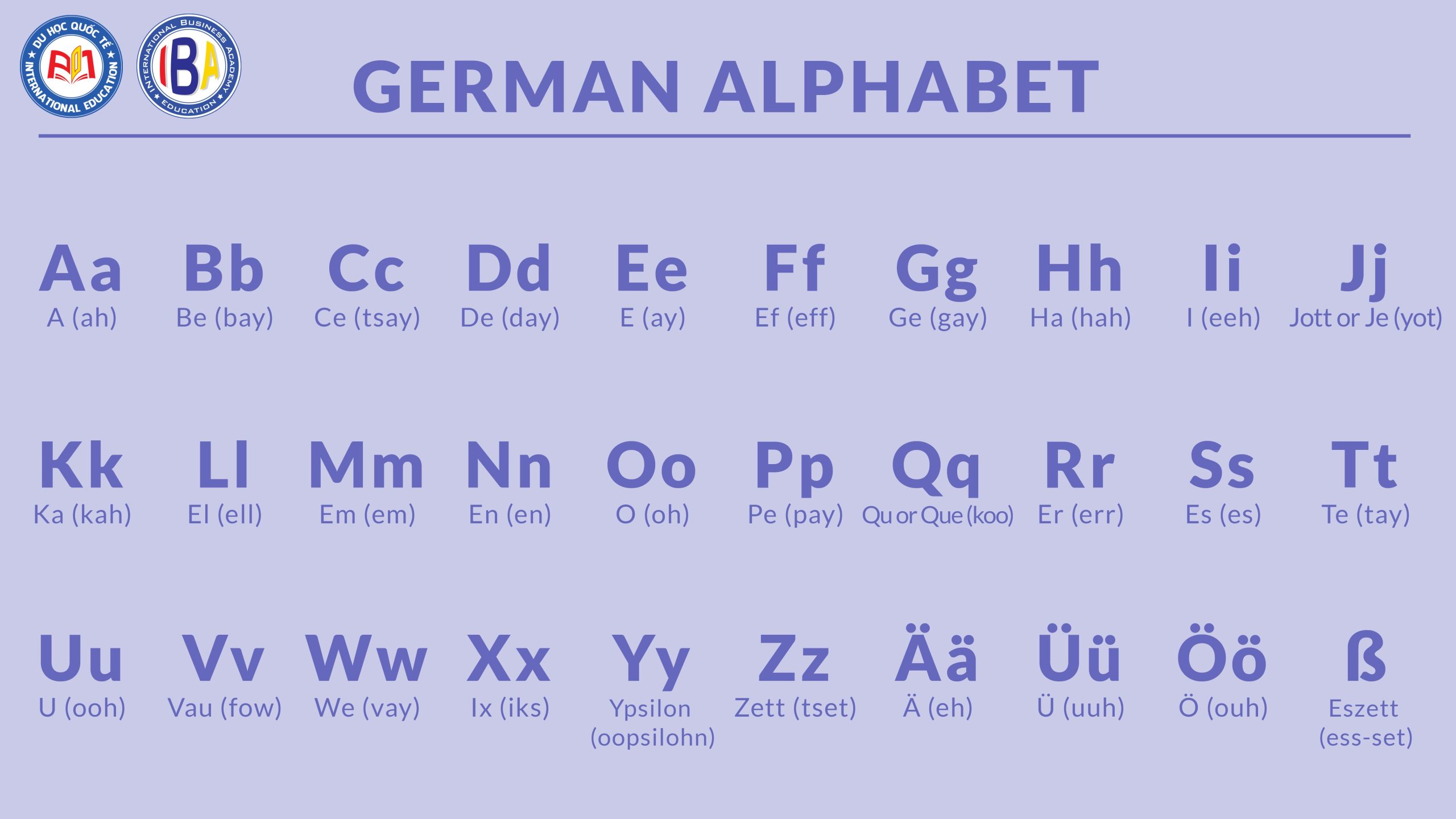
Mastering the German alphabet right from the start will help you pronounce correctly and avoid basic mistakes in communication.
Systematic grammar
Many people are apprehensive about German because of the gender system (der, die, das) and the cases (Nominativ, Akkusativ, Dativ, Genitiv). However, if approached with the right method, you will realize that German has very clear and logical rules.
When you understand the sentence structure, you can easily build complete sentences and express ideas accurately. The important thing is patience and regular practice.
Effective German learning roadmap
Define clear goals
Before starting to learn German, you need to answer the question: what are you learning for? Studying abroad, working, taking certification exams, or simply expanding knowledge? Each goal will have a different roadmap and level of investment.
For example, if you are studying for A1–B1 certificates, you need to focus on basic listening-speaking skills and foundational grammar. If learning for professional work, you need to add specialized vocabulary.
Master the foundation from the beginning
For beginners, learning pronunciation and basic vocabulary is the most important step. The German learning phase for beginners should focus on:
- Getting used to the alphabet and characteristic sounds
- Learning simple communication sentences
- Memorizing vocabulary by familiar topics such as family, time, work
- Understanding basic sentence structures
Do not rush into learning too much advanced grammar when the foundation is not yet solid.
Practice listening and speaking in parallel
German has its own rhythm and way of linking sounds. Therefore, listening frequently will help your ears get used to it and improve reflexes. You can listen to podcasts, watch short videos, or practice conversation with classmates.
Do not be afraid of making mistakes when speaking. Pronunciation that is not yet perfect can be adjusted over time, but if you do not practice speaking, it will be hard to progress.

Learning vocabulary in context
Instead of learning individual words, learn words in phrases and place them in complete sentences. This method helps you remember longer and use them flexibly in reality.
For example, instead of just learning the verb “gehen” (to go), learn the whole phrase “zur Arbeit gehen” (to go to work). Then, you will easily apply it in daily communication.
Maintain regular study habits
Language is a skill that needs constant practice. Just 30–60 minutes of learning German every day but maintaining it regularly will be much more effective than cramming in a short time.
You can break down the time:
- 10 minutes reviewing vocabulary
- 15 minutes practicing listening
- 15 minutes doing grammar exercises
- 10 minutes practicing speaking

Common difficulties when learning German
Noun gender system
Memorizing whether a noun belongs to der, die, or das is a big challenge for learners. However, instead of learning them separately, you should learn the noun with its article from the beginning.
For example:
- der Tisch (the table)
- die Blume (the flower)
- das Buch (the book)
This habit helps you avoid errors when using them in sentences.
Word order in sentences
German has quite special verb inversion rules, especially in subordinate clauses. Initially, you may feel “confused”, but after a period of practice, this structure will become natural.
Fear of difficulty mindset
Many people hear that German is difficult and get discouraged easily from the start. In fact, any language has its own challenges. The important thing is a suitable learning method and a positive attitude.
Tips to help learn German and progress quickly
- Create an environment for exposure to German every day
- Note down vocabulary using a notebook or phone application
- Practice writing short diaries in German
- Join learning communities for motivation
- Set small goals and reward yourself when completed
When you turn learning German into a part of your daily routine, progress will come naturally.
German and long-term values
Not just a foreign language, German is also a bridge helping you access the unique culture of Europe – from classical music and literature to philosophy. Learning German is also a way for you to expand your thinking and enhance competitiveness in the international environment.
In the future, as the labor market increasingly requires multi-language skills, proficiency in German will be a sustainable advantage. Whether you choose the path of studying abroad, working abroad, or developing a career domestically, German brings practical value.

Conclusion
Learning German is a journey that needs clear orientation and a methodical approach from the start. When you have a solid foundation, you will confidently conquer the goal of studying, working, or settling in Germany in the future.
If you are looking for a reputable training unit to start or accelerate your roadmap, PDT Education is a worthy choice with German training programs from basic to advanced, certificate exam preparation, and methodical study abroad orientation support.
Contact PDT Education today to receive advice on a suitable German learning roadmap and start your journey to conquer international opportunities.