When starting to learn German, many people often want to jump straight into vocabulary or grammar to communicate quickly. However, just like learning any language, getting familiar with the German alphabet is the most important first step. This is the foundation that helps you pronounce correctly, read easily, and step-by-step build solid communication skills in the long run.
In this article, we will explore in detail the German alphabet, how to read it, standard pronunciation, differences compared to Vietnamese and English, as well as secrets to effective learning for beginners.
Introduction to the German alphabet
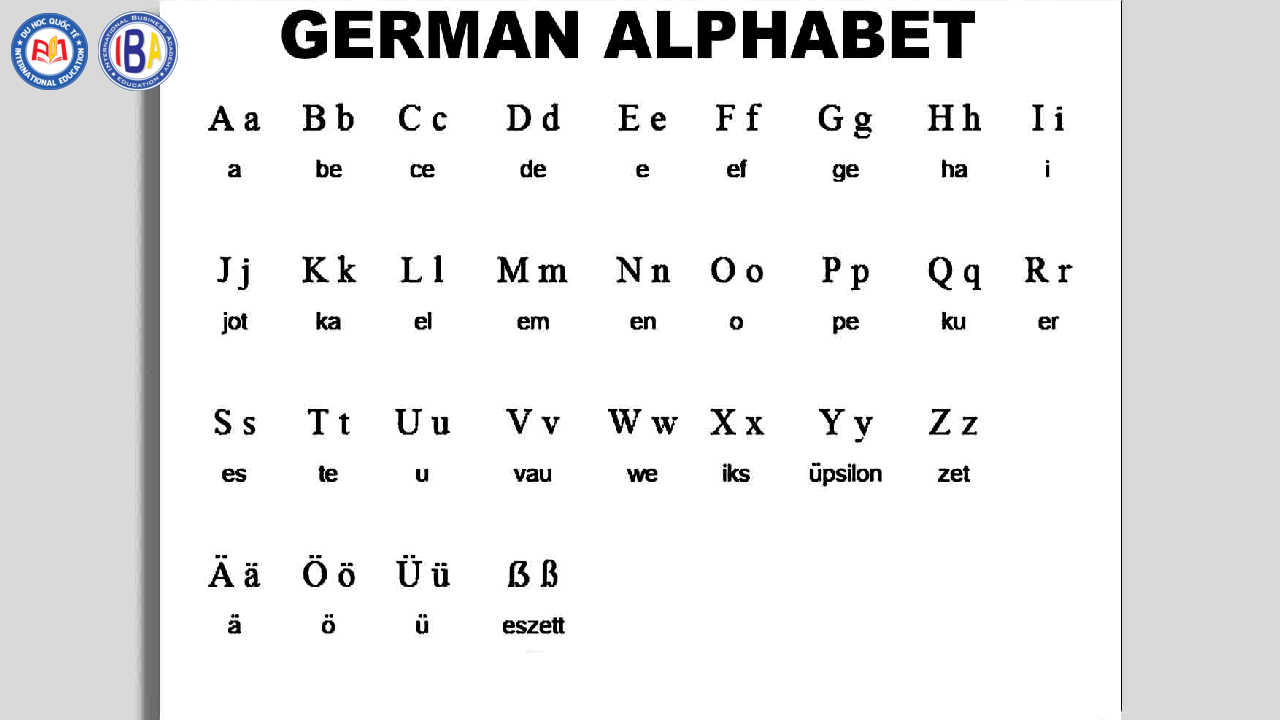
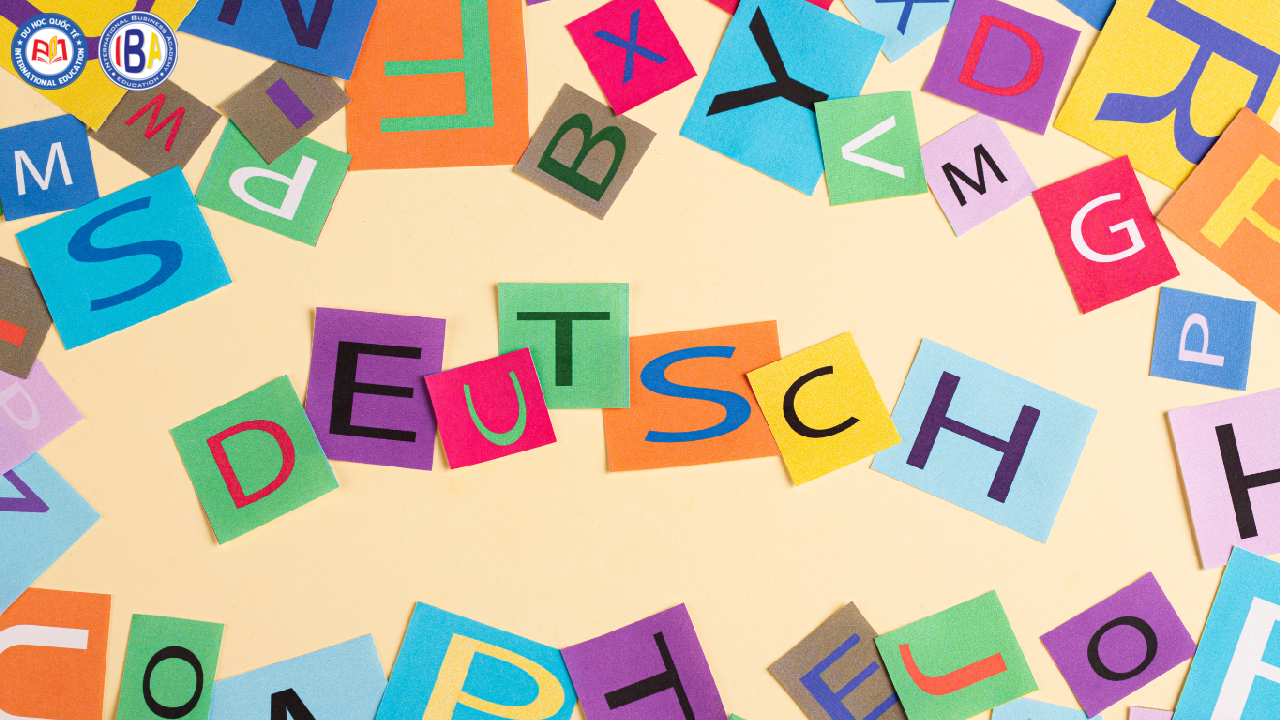
The German alphabet (das deutsche Alphabet) is basically based on the Latin alphabet similar to English, consisting of 26 letters from A to Z. However, German also has additional special characters called Umlauts and a unique letter called Eszett (ß).
Specifically, the German alphabet includes:
- 26 basic letters: A B C D E F G H I J K L M N O P Q R S T U V W X Y Z
- 3 Umlaut letters: Ä, Ö, Ü
- 1 special character: ß
The German alphabet and how to read it
Below is a summary table of the letters and approximate pronunciation according to Vietnamese:
| Letter | Name (DE) | Approximate reading (VI) | Example |
| A | a | a | Apfel (apple) |
| B | be | be | Buch (book) |
| C | ce | se | Café |
| D | de | de | Danke (thanks) |
| E | e | ê | Essen (eat) |
| F | ef | ep | Freund (friend) |
| G | ge | ghe | Guten Tag (hello) |
| H | ha | ha | Haus (house) |
| I | i | i | Insel (island) |
| J | jot | yot | Jahr (year) |
| K | ka | ka | Kind (child) |
| L | el | en | Liebe (love) |
| M | em | em | Mutter (mother) |
| N | en | en | Name (name) |
| O | o | ô | Ort (place) |
| P | pe | pe | Papa (dad) |
| Q | ku | ku | Qual |
| R | er | er (throat vibration) | Rot (red) |
| S | es | et | Sonne (sun) |
| T | te | te | Tag (day) |
| U | u | u | Uhr (clock) |
| V | vau | phao (≈ f) | Vater (father) |
| W | ve | ve (≈ v) | Wasser (water) |
| X | ix | ich | Taxi |
| Y | ypsilon | i p-xilon | Yoga |
| Z | zet | tset (≈ ts) | Zeit (time) |
| Ä | ä | open e | Mädchen (girl) |
| Ö | ö | rounded o/e | schön (beautiful) |
| Ü | ü | rounded u/i | über (above) |
| ß | eszett | long s | Straße (street) |
Note:
- Vietnamese pronunciation is only approximate for beginners to visualize easily.
- When learning, you should combine listening to native speakers' standard pronunciation to avoid deviations.
Differences between the German alphabet and English
Many people learning German after knowing English often think that because the alphabets are similar, the pronunciation is also similar. In reality, it's not quite like that.
Some notable differences:
- J in German is read like “y” in English (ja = ya).
- V is often read as “f” (Vater = fa-ter).
- W is read like “v” (Wasser = va-ser).
- Z is read as “ts” (Zeit = tsait).
- R is pronounced with a vibration in the throat, unlike the Vietnamese or English “r”.
- Umlauts (Ä, Ö, Ü) create completely new sounds that do not exist in English.
Effective ways to learn the German alphabet for beginners
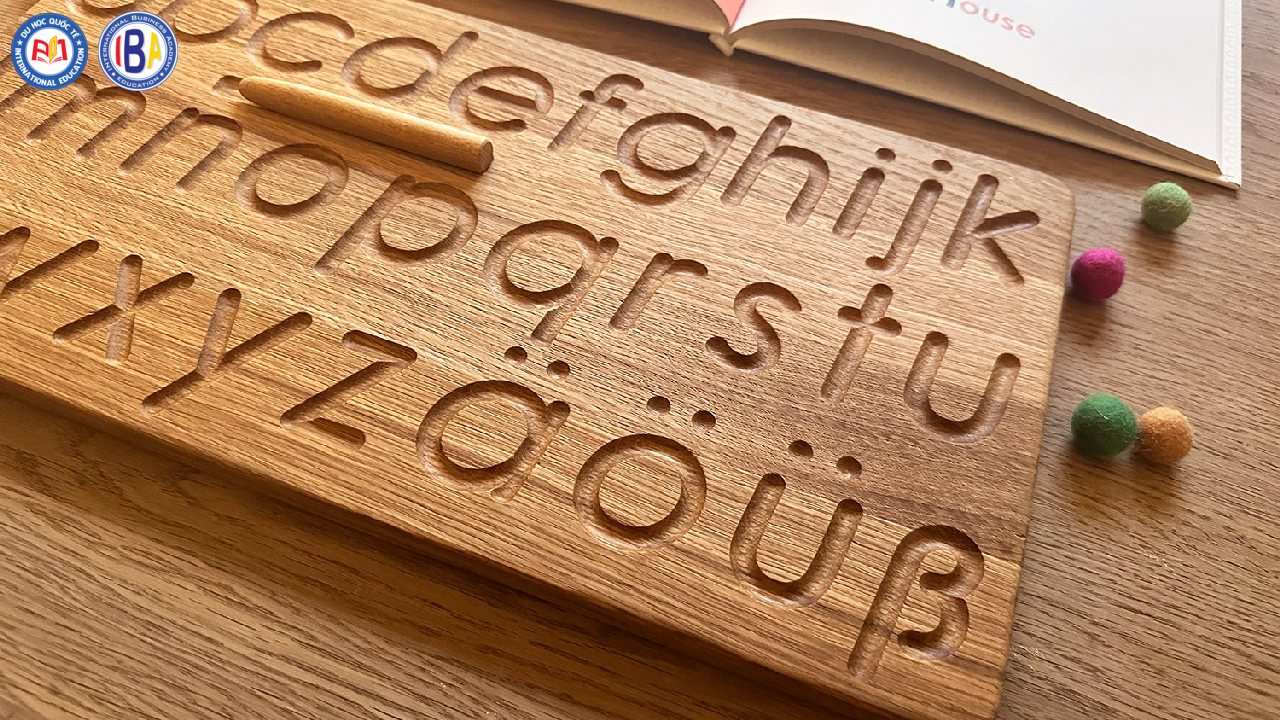
For beginners getting used to German, learning the alphabet is not just about remembering the characters but also about practicing standard pronunciation from the start. This is also an important foundation if you aim to take the German A1 certificate or higher German A2 certificate in the future, while helping you easily approach subsequent content such as the German verb table when learning grammar.
If you have the right method, you can completely master the German alphabet in a short time. Here are 5 simple but very effective ways for beginners.
Combine listening and speaking
When learning the German alphabet, don't just look and read silently in your head. Always combine listening to standard audio from native speakers and reading out loud. This helps your ears get used to real sounds, while your mouth and tongue are trained to pronounce correctly. You can open videos or alphabet audio files, listen to each letter, and repeat 2–3 times a day to create a reflex.
Break it down to learn every day
Instead of trying to learn the entire alphabet in one session, you should break down the number of letters to learn. Each day, you only need 5–7 letters, learning both the reading and practicing with simple examples. This way of learning helps the brain process more gently, increases memory capacity, and is suitable for beginners.
Record your own voice
A very useful tip is to use your phone to record your voice when practicing the German alphabet. Then, compare it with the standard pronunciation to recognize the differences. Thanks to this, you will be able to adjust errors yourself and improve pronunciation right from the beginning.
Learn through alphabet songs
If you find learning individual letters a bit dry, try learning through German Alphabet songs. Fun melodies help you remember faster and create a sense of excitement when learning. Just listen repeatedly a few times, and you will memorize the alphabet naturally.
Practice spelling names and familiar words
After knowing the characters and how to read them, practice spelling familiar words like your name, city name, country, or basic words. This helps you link knowledge to reality, while supporting speaking skills very well when preparing for future German exams.
Common mistakes when learning the German alphabet
Vietnamese people learning the German alphabet often make the following mistakes:
- Reading V as “v” instead of “f”
- Reading Z as “d” or English “z”
- Not distinguishing between U and Ü, O and Ö
- Pronouncing R like in Vietnamese
- Skipping the letter ß or confusing it with “b”
Identifying these errors early will help you correct them in time, avoiding the formation of wrong habits.
Conclusion
Learning the German alphabet well from the start will help you pronounce correctly, absorb quickly, and be more confident on your journey to conquer German. Whether your goal is basic communication or aiming for a German A1 or German A2 certificate, a correct learning path and a suitable companion will help you go faster and more steadily.
If you are looking for a methodical, easy-to-understand German learning environment for beginners, PDT Education is a reliable choice. With a clear curriculum, dedicated instructors, and close support, PDT will help you build a solid foundation from the very first steps.
Contact PDT Education to register for a free consultation and start your German learning journey today!