

In recent years, vocational training in Germany is no longer a strange concept to Vietnamese people. Not only high school graduates, but also working people who want to change career directions or find long-term settlement opportunities are interested in this path. However, the decision of whether it is suitable or not depends a lot on your clear understanding of German vocational training industries from the beginning.
This article will help you get a comprehensive view: from the picture of the German labor market, the list of popular industries, industries that are easy to get visas - easy to find jobs, to important notes before choosing the right industry for yourself.
Overview of vocational training in Germany and current labor demand
Germany is the largest economy in Europe, and also a country with a fast aging population. This leads to a serious labor shortage in many fields, especially skilled labor.
Germany's dual vocational training model (Ausbildung) allows students to:
- Learn theory at vocational school
- Practice with a salary at the enterprise
- Study time from 2–3.5 years
- After graduation, have the opportunity to work and settle long-term
Therefore, the question of whether to study vocational training in Germany is increasingly being asked by many people, especially when compared with the costs and risks of traditional university study.
Why is it necessary to research German vocational training industries carefully?
Not every industry is suitable for everyone. Choosing the right industry helps you:
- Apply for a visa more easily
- Study without too much pressure
- Have a stable job after graduation
- Increase the possibility of long-term settlement
Conversely, choosing an industry according to “trends” can cause you to give up halfway because you cannot stand the work pressure, language barriers, or the working environment.

Popular vocational training occupations in Germany today
Nursing - healthcare industry
This is the industry chosen by most Vietnamese people when studying vocational training in Germany.
Reasons why the nursing industry is always “thirsty” for human resources:
- Germany's population is aging fast
- Developed healthcare system, high standards
- The demand for elderly care is increasing continuously
Advantages:
- Easy to get a visa
- Job opportunities are almost 100% after graduation
- Clear settlement path
Challenges:
- High work pressure
- Good German language requirement due to frequent communication

Restaurant – Hotel industry
The service industry in Germany is developing strongly, especially in tourist cities.
Common jobs:
- Chef
- Restaurant server
- Hotel management
Advantages:
- Suitable for dynamic people
- No high academic requirements
- Many part-time job opportunities
Note: Working hours can be flexible, including weekends and holidays.
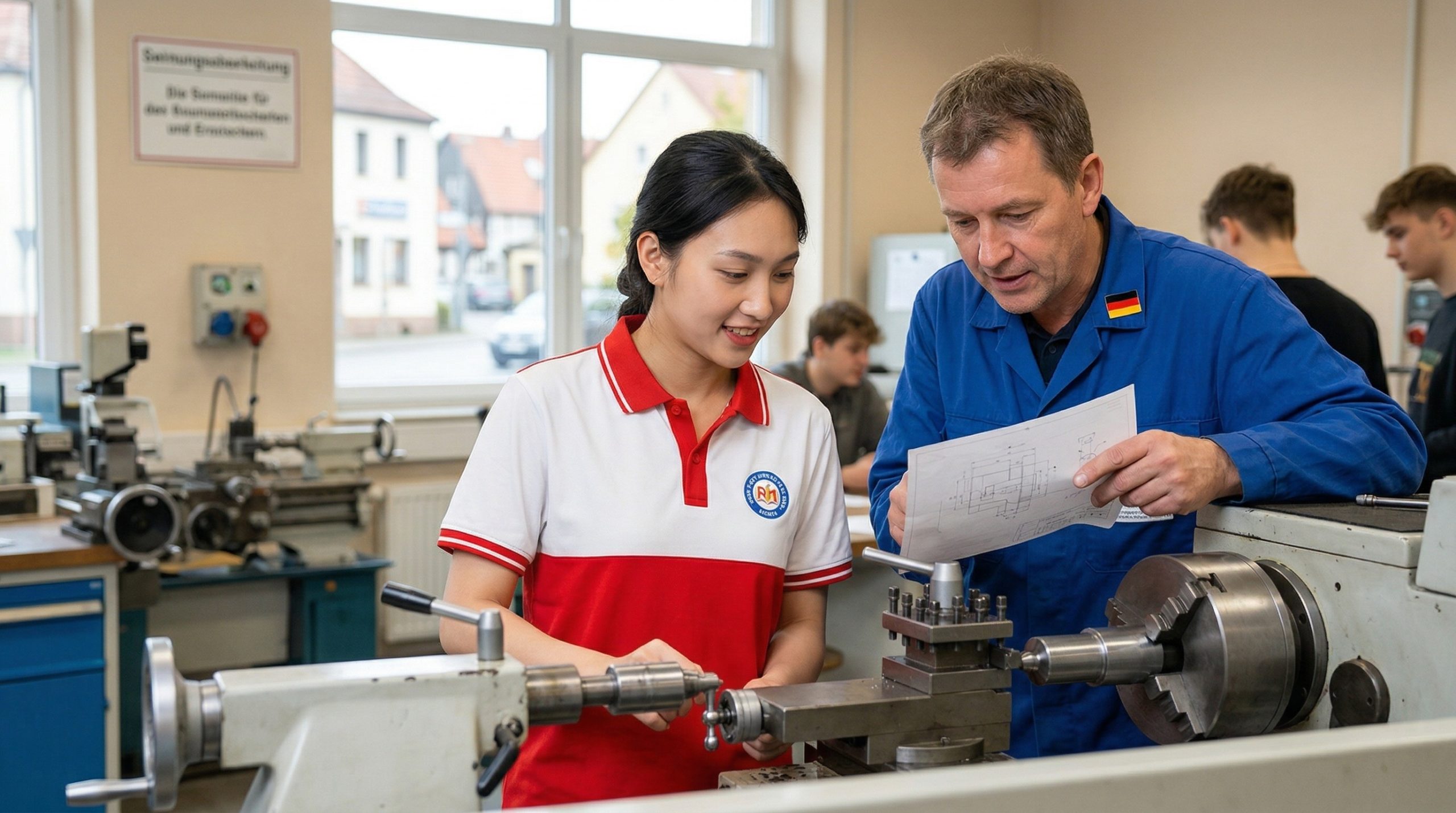
Mechanical - electrical - electronics industry
Germany is the cradle of the manufacturing industry, so the technical industry group is always in the top of the priority German vocational training industries.
Popular training positions:
- Precision mechanics
- Industrial electricity
- Electronic automation
Advantages:
- High vocational training salary and salary after graduation
- Long-term human resource needs
Challenges:
- Requirement for technical thinking
- Highly disciplined working environment
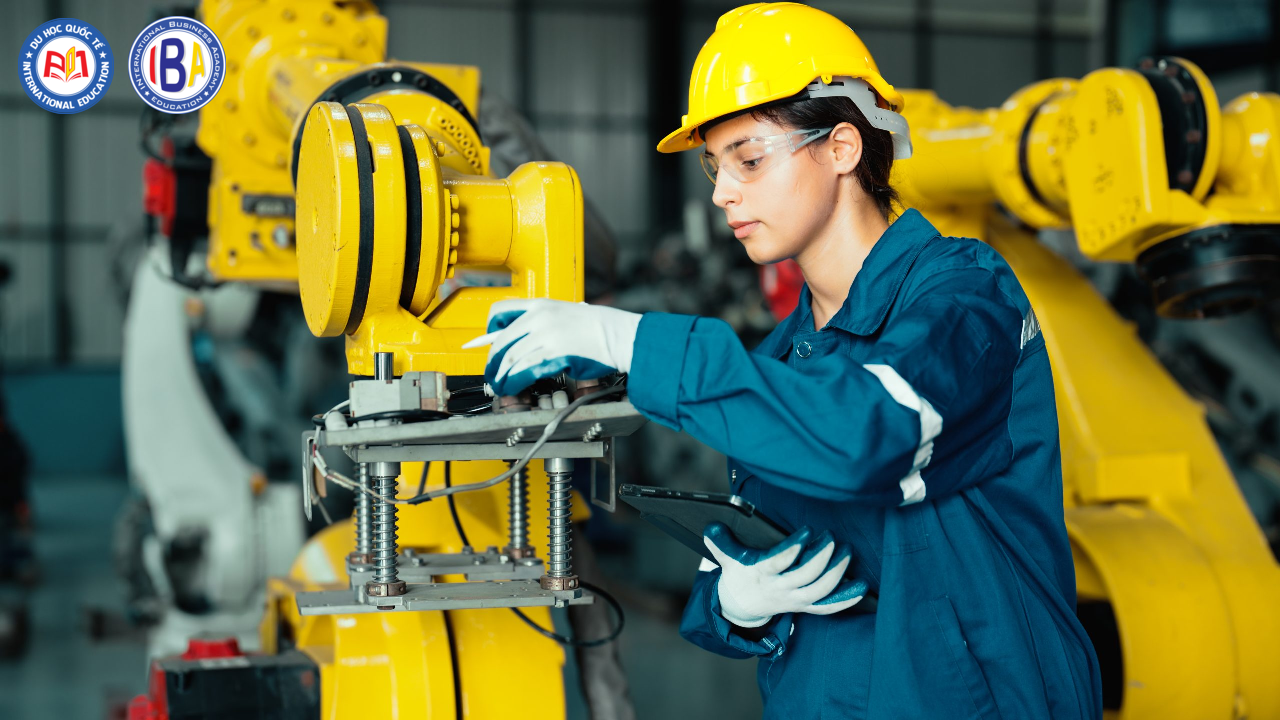
Construction and engineering industry
This industry is suitable for people with good health who like practical work.
Typical occupations:
- Construction worker
- Construction technician
- System installation worker
Although not as “hot” as nursing, this is still a group of industries with stable demand in Germany.
Information technology vocational training in Germany
In the context of digital transformation, information technology vocational training in Germany is becoming a new but potential choice.
Training positions:
- Application programmer
- System administration
- Specialist IT support
Outstanding advantages:
- Modern working environment
- High salary after graduation
- Long-term development opportunities
Requirements:
- Good logical thinking
- Relatively good German and/or English level

Should you study vocational training in Germany?
Whether to study vocational training in Germany is a question many young people and even working people ask when researching the path of studying and working in Europe. In fact, there is no right answer for everyone, because German vocational training is only truly suitable when your goals, abilities, and expectations are compatible with this training model.
Vocational training in Germany is particularly suitable for those who want to work while studying, approaching a real working environment right from the vocational school bench. Throughout the study process, students are not only well-trained in expertise but also receive a monthly internship salary, helping to significantly reduce financial pressure. Therefore, for those of you without great financial conditions, German vocational training is a more realistic and sustainable choice compared to many other forms of studying abroad.

Besides, if you have the goal of working long-term and settling in Europe, especially Germany – a country with a developed economy and open labor policies, then vocational training is the shortest and clearest path. After graduation, students have the opportunity to sign long-term labor contracts, renew visas, and step-by-step apply for settlement according to German regulations.
However, studying vocational training in Germany also requires serious preparation. You need to be ready to learn German, accept a disciplined, high-intensity work environment and the ability to adapt to a new culture. Conversely, if you only want to study for a short time, do not like practical work or find it difficult to adapt to work pressure, then you should consider carefully before choosing this path.
German vocational training is not for everyone, but for the right person, this is a stable and long-term direction for the future.
Notes when choosing a reputable German vocational training company
A factor that greatly affects the success of the application is choosing a reputable German vocational training company.
Evaluation criteria:
- Transparency in costs
- Clear training contracts
- Partners of vocational schools and enterprises in Germany
- Accompanying throughout from Vietnam until stable in Germany
- Avoid units that promise “100% visa success” or unrealistic commitments.
Conclusion
Vocational training in Germany is a long journey, and success begins with choosing the right industry - following the right path. If you are wondering whether to study vocational training in Germany, do not know which industry is suitable or are worried about documents, visas and German, having a reputable companion unit is a very important factor.
PDT Education is a German vocational training consulting unit with the strength of basic German training, realistic career orientation, and full support from Vietnam until stable in Germany. PDT helps students clearly understand their own abilities, choose suitable industries and build a clear, sustainable study - work - settlement path.
Contact with PDT Education for advice today!